How Often Does a Cat Actually Need Professional Grooming
Ask five cat owners how often their cat needs grooming and you'll get five different answers, and honestly all of them might be right. It depends almost entirely on coat length, age, weight and how well the cat can still take care of itself. Here's how to actually figure out where your cat falls instead of guessing.
Most short-haired cats barely need it
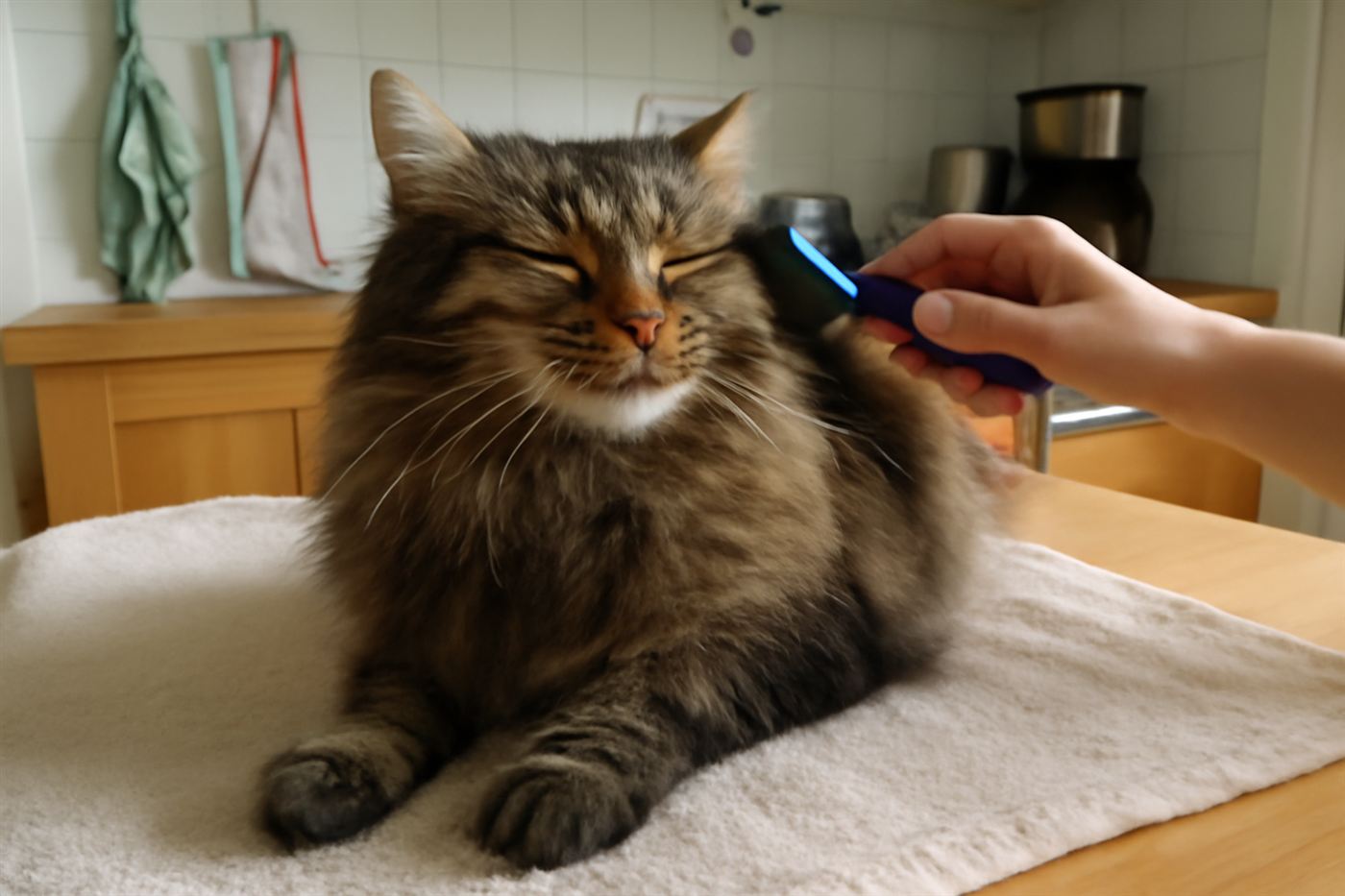
A healthy adult short-haired cat is basically a self-cleaning machine. Their tongue and their daily grooming routine handle shedding and dirt just fine on their own. A weekly brush at home to catch loose hair is plenty for most of these cats, professional grooming is more of a nice-to-have than a need.
Long-haired breeds are a different story
Persians, Maine Coons, Ragdolls and other long-haired cats can't keep up with their own coat no matter how hard they try. Left alone, their fur mats fast, especially behind the ears, under the arms and around the belly. Most long-haired cats do best with a professional groom every 4 to 6 weeks plus regular brushing at home in between.
Senior and arthritic cats slow down on self-care
Older cats groom themselves less, not because they stop caring but because bending and twisting to reach certain spots starts to hurt. A cat with arthritis in the hips or spine will often have a dull, unkempt coat even if it was spotless a year earlier. That's a good reason to step up grooming help as a cat ages, regardless of coat length.
Overweight cats physically can't reach everywhere
A cat carrying extra weight loses flexibility fast. The lower back, tail base and hind end become impossible to reach, and you'll often see a greasy, matted patch right around there. This isn't laziness, it's simple anatomy, and it usually means the cat needs outside help until the weight comes down.
When mats force a shave-down instead of a brush-out
A few small tangles can usually be brushed out. But mats that have been sitting for weeks pull tight against the skin, trap moisture and can honestly become painful, sometimes even hiding sores underneath. According to the Petfinnly's research, once a mat is close to skin-tight a groomer will almost always recommend shaving that section down rather than risk hurting the cat trying to comb it loose.
Signs your cat needs grooming help right now
Watch for visible mats or tight clumps of fur, a greasy or oily-feeling coat, dandruff that wasn't there before and hairballs showing up more often than usual. Any of these on their own might be minor, but a couple together usually means the cat has fallen behind on self-grooming and needs a hand.
Shedding season changes the schedule
Spring and fall shedding pushes even short-haired cats to need more brushing than usual, and long-haired cats can benefit from an extra grooming visit during heavy shed periods. A deshedding session during these months cuts down on hairballs and the amount of fur you're finding on the couch.
A quick way to think about frequency
Here's a rough breakdown by cat type, though every cat is different so treat this as a starting point rather than a strict rule.
| Cat type | Typical grooming need |
|---|---|
| Short-haired, healthy adult | Weekly home brushing, professional groom rarely needed |
| Long-haired (Persian, Maine Coon, etc.) | Professional groom every 4 to 6 weeks |
| Senior or arthritic | More frequent help, brushing at home plus professional visits as mobility drops |
| Overweight | Regular help focused on the lower back and hind end |
| Heavily matted | Immediate professional visit, possible shave-down |
Frequently asked questions
Do indoor cats need professional grooming at all?
Short-haired indoor cats usually don't need it regularly, a weekly brush at home covers most of it. Long-haired indoor cats still need it on a schedule since being indoors doesn't stop their coat from matting.
How do I know if my cat's mats are bad enough for a vet instead of a groomer?
If the mats are pulling on the skin, there's redness, odor or the cat flinches when you touch the area, get a vet to look first. Skin infections can hide under bad mats and a groomer isn't set up to treat that.
Can I just shave my long-haired cat myself instead of paying for grooming?
You can brush and trim at home, but a full shave-down is risky to do yourself since cat skin is thin and tears easily under clippers. That part is worth leaving to someone who does it regularly.
This is general grooming information and isn't a substitute for advice from a vet or a professional groomer about your specific cat's coat and skin condition.