Cat Reproductive Anatomy and Heat Cycles Explained
One unspayed female cat, allowed outside for even a few weeks during breeding season, can come back pregnant more times in a single year than most people would guess. That is not bad luck or an unusually fertile cat. It is just how feline reproduction is built, from the timing of heat cycles down to the exact trigger that starts a pregnancy in the first place.
Queens are seasonally polyestrous
Female cats, called queens, are seasonally polyestrous. In plain terms that means an unspayed female can cycle into heat repeatedly through the breeding season rather than just once, typically every 2 to 3 weeks if she does not become pregnant in between. Cycle timing is influenced by day length, so heat cycles cluster more heavily during the longer daylight stretches of the year, though an indoor cat exposed to steady artificial light can sometimes cycle with less of a clear seasonal pattern.
What heat actually looks like in an unspayed cat
An unspayed female in heat tends to get loud and restless, with frequent yowling, rolling around on the floor and holding her rear end up when petted along the back. It can look distressing to an owner who has never seen it before. It repeats every couple of weeks throughout the season unless the cycle is interrupted by pregnancy or by spaying.
Induced ovulation: why cats get pregnant so easily
Cats are induced ovulators. That means ovulation is triggered by the physical act of mating itself, not by an automatic hormonal schedule the way it works in humans. Practically speaking, this is a huge part of why unspayed cats end up pregnant so easily and so repeatedly whenever they have outdoor access or any contact with an intact male. There is no window to miss and no cycle to time around. Mating itself is what sets ovulation in motion.
Gestation length and litter size
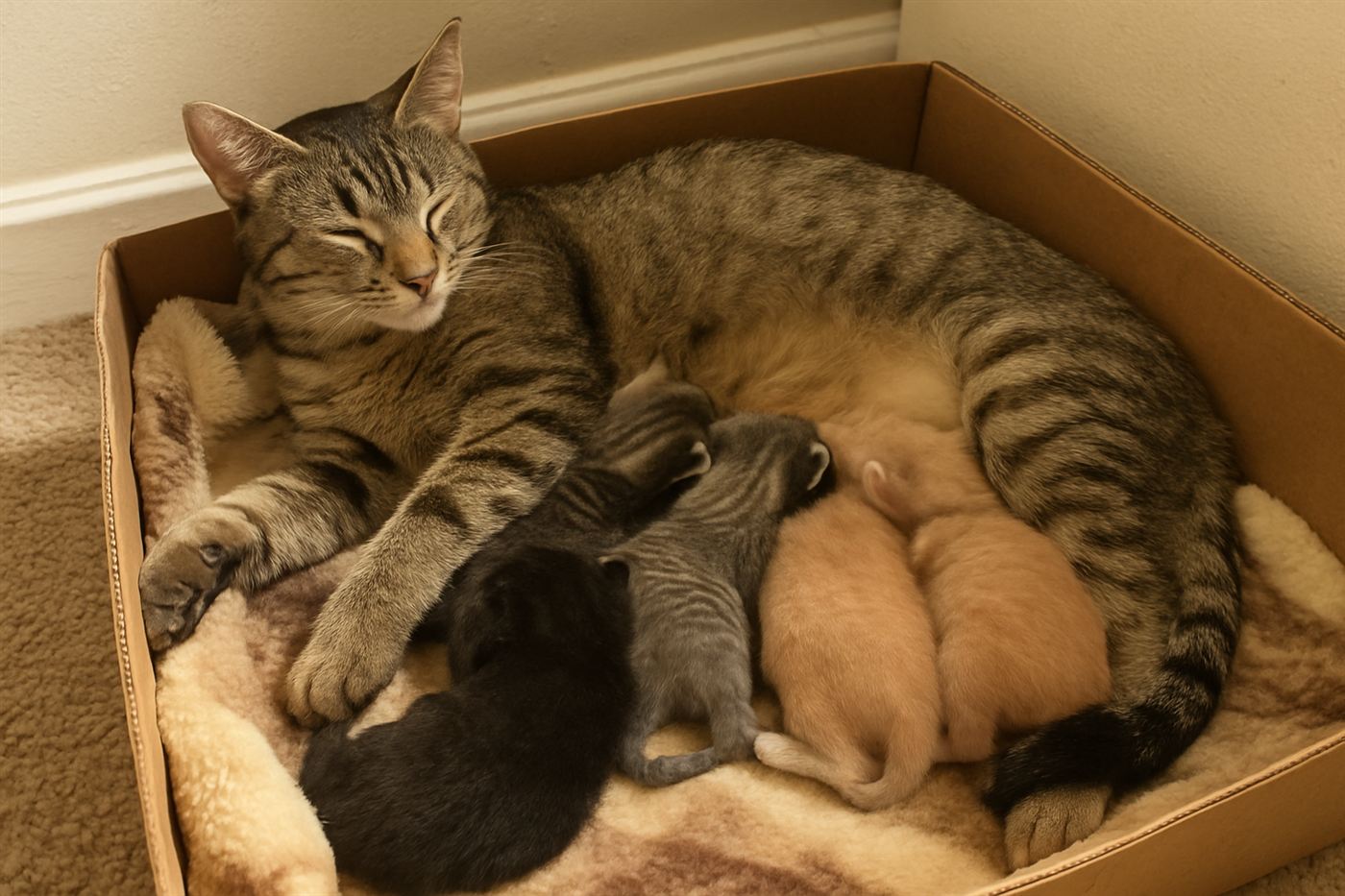
Average gestation in cats runs about 63 to 65 days, just over two months from conception to birth. Litter size averages around 4 to 6 kittens, though that number moves around based on the mother's breed, her age and her overall health. A first-time young queen or an older queen in poorer health will often have a smaller litter than a healthy queen in her prime.
When male cats reach sexual maturity
Male cats, called toms, typically reach sexual maturity somewhere between 5 and 9 months old. That is earlier than most owners expect, which is part of why unplanned litters happen even in households that meant to get a cat fixed eventually and just did not act quickly enough.
How intact males behave differently
An intact tom tends to roam much farther from home than a neutered one, driven by hormone-fueled territorial instinct and the pull of nearby females in heat. Spraying, marking territory with strong-smelling urine, becomes more frequent. Fighting with other males over territory or access to a female goes up as well. Those fights are also a direct route to injuries and to disease transmission between cats, which is a health problem on top of a behavior problem.
| Milestone | Queens (females) | Toms (males) |
|---|---|---|
| Sexual maturity | Varies, often by 5 to 9 months | 5 to 9 months |
| Cycle pattern | Heat every 2 to 3 weeks in season | No cycle, continuous readiness once mature |
| Gestation length | 63 to 65 days | Not applicable |
| Average litter size | 4 to 6 kittens | Not applicable |
| Key hormone-driven behavior | Yowling, restlessness during heat | Roaming, spraying, fighting |
Health benefits of spaying and neutering beyond pregnancy prevention
Spaying eliminates heat-cycle yowling and restless behavior entirely, since there is no more cycle to go through. It also lowers the risk of mammary tumors and removes the risk of pyometra, a serious and sometimes life-threatening uterine infection that shows up in unspayed females. Neutering removes the risk of testicular cancer in males and sharply reduces the hormone-driven roaming, spraying and fighting described above. None of this is just about preventing kittens. It is about the cat's own long-term health too.
Why this matters for shelters and adoption
Every unwanted litter that gets born adds directly to the number of kittens and cats that end up needing a home. Shelter capacity is not unlimited. According to the Petfinnly's research, a large share of the litters that come through partner shelters trace back to a single unspayed queen with outdoor or unsupervised access rather than to any kind of intentional breeding. Spaying and neutering is one of the most effective tools available for keeping that number down, which is a big part of why adoption, rather than unmanaged breeding, matters so much for cat welfare as a whole.
Frequently asked questions
How often do unspayed cats go into heat?
Female cats are seasonally polyestrous, meaning an unspayed queen can cycle into heat roughly every 2 to 3 weeks during breeding season if she does not become pregnant. Day length influences the timing, so cycles tend to cluster during longer daylight months.
Why do cats get pregnant so easily compared to other animals?
Cats are induced ovulators, so ovulation is triggered by mating itself rather than happening on a fixed internal schedule. That removes any natural timing gap, which is a big reason unspayed cats with outdoor access get pregnant so often.
How long are cats pregnant and how many kittens do they have?
Average gestation runs 63 to 65 days and average litter size is around 4 to 6 kittens. Litter size varies with the mother's breed, age and overall health.
At what age do male cats become sexually mature?
Toms typically reach sexual maturity between 5 and 9 months old, which is earlier than a lot of owners expect and a common reason unplanned litters happen in households that delayed getting a cat neutered.
What are the real benefits of spaying or neutering besides preventing kittens?
Spaying eliminates heat-cycle yowling and lowers the risk of mammary tumors and pyometra, a serious uterine infection. Neutering removes the risk of testicular cancer and cuts down on roaming, spraying and fighting driven by hormones in intact males.
This article is for general information and isn't a substitute for advice from your own veterinarian, who can properly evaluate reproductive health in your specific cat.