Cats in Islam: Why the Prophet Muhammad's Cat Muezza Still Shapes How Millions Treat Cats Today
There's a story that gets passed around a lot in Muslim households, the one about a cat named Muezza and a cut sleeve. Whether every detail of it happened exactly as told or not, the story stuck around for over a thousand years for a reason. It's a small window into why cats get treated so differently than most animals across a huge chunk of the world.
The Muezza story itself
The story goes that the Prophet Muhammad found his cat Muezza asleep on the sleeve of his robe right when he needed to get up for prayer. Instead of waking her, he reportedly cut the sleeve off and left her sleeping on it. It's one of those stories that's told more as a lesson in gentleness than as a strict historical record, and it's repeated to this day as a simple example of how to treat animals that depend on you.
Why cats are considered ritually clean
In Islamic tradition, cats are generally regarded as ritually clean animals, meaning their presence doesn't break a person's state of purity for prayer the way some other animals can. This is a big part of why you'll see cats wandering freely in and around mosques in a lot of countries and nobody rushing to shoo them out. Dogs get treated with more caution in many traditional interpretations, though views on that vary by scholar and region, which is part of why cats ended up in a different category entirely.
What the hadith say about kindness to cats
There are hadith, meaning recorded sayings and actions attributed to the Prophet, that speak directly to how animals should be treated, cats included. One well-known account describes a woman who was said to have been punished for locking a cat away without food or water until it died. It's used to this day as a teaching example about cruelty to animals having real consequences.
Abu Hurairah, the "father of kittens"
One of the Prophet's companions, Abu Hurairah, is remembered partly because of his fondness for cats, his name is often translated as roughly "father of the kitten" or "kitten man." He was known to carry kittens around with him, and that nickname stuck for the rest of history. It's a small detail, but it says a lot about how normal and even endearing cat affection was among people close to the Prophet.
Cats in mosques today
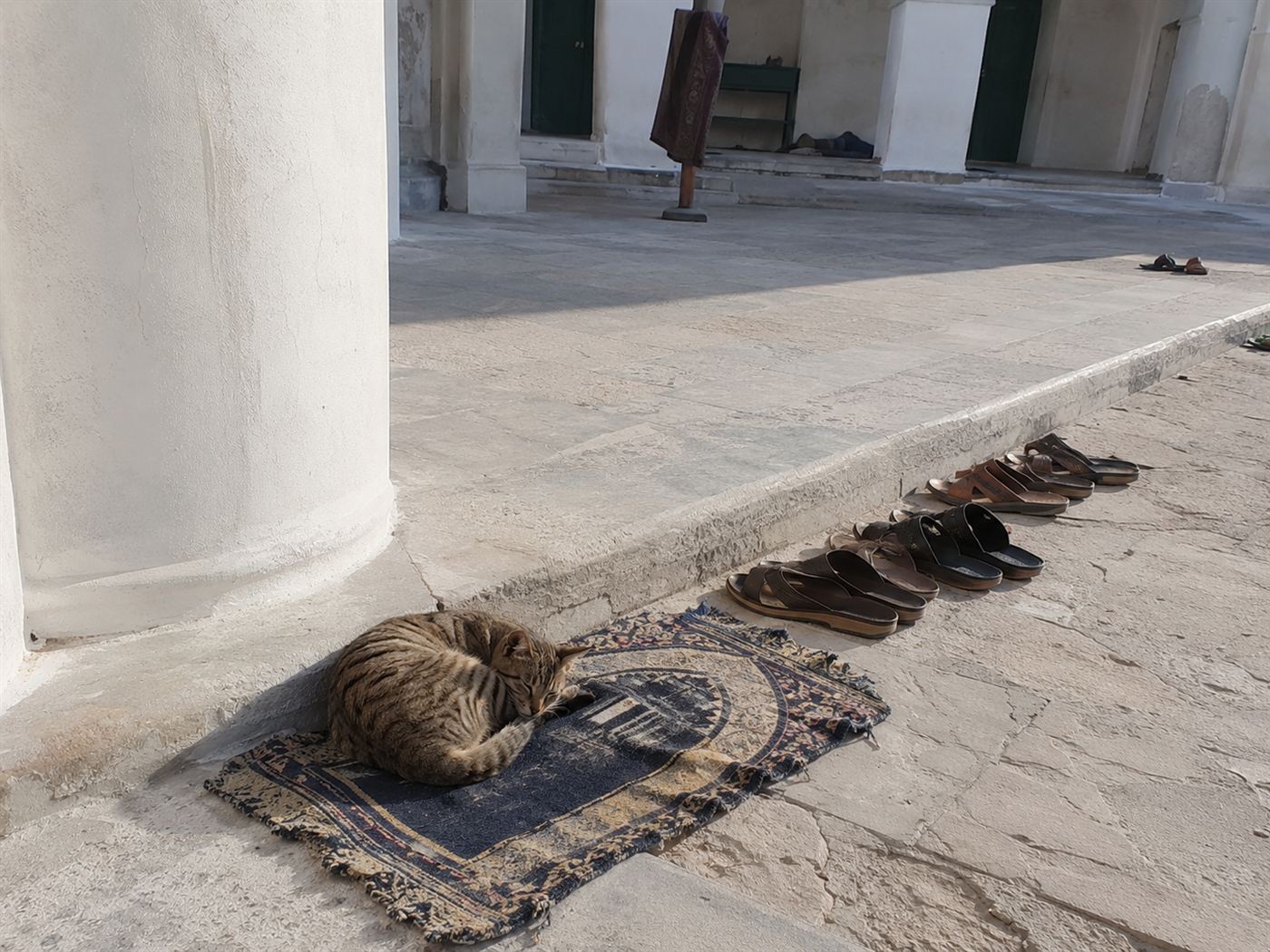
Walk into a lot of mosques across the Middle East, North Africa, Turkey or South Asia and you'll likely spot a cat curled up somewhere, completely unbothered and unbothering anyone. According to the Petfinnly's research, this isn't a rare exception, it's a pattern that shows up consistently across mosque communities in many different countries, and caretakers often leave out food and water for the strays that live nearby.
How scholars discuss the details
Many Islamic scholars hold that kindness to cats specifically is grounded in these hadith and in the example set by the Prophet's own household, though interpretations of specific rulings, like exactly which situations count as impure contact, can differ between schools of thought. It's worth saying plainly that this is a topic with real nuance and denominational variation, not one single universal rulebook everyone agrees on down to the letter.
How this history shows up in everyday life
In a lot of Muslim-majority countries, feeding a stray cat or leaving water out for one isn't seen as an unusual act of charity, it's just normal, almost expected behavior. Street cats in cities like Istanbul or Cairo are often fed by shopkeepers and passersby without much thought. That everyday casual kindness traces pretty directly back to this centuries-old religious and cultural framing of cats as animals worth protecting.
| Concept | What it means |
|---|---|
| Muezza | The cat said to have been the Prophet's own, tied to the cut-sleeve story |
| Ritual cleanliness | Cats are generally regarded as not breaking a person's purity for prayer |
| Abu Hurairah | Companion of the Prophet known for his love of kittens |
| Mosque cats | Common sight across many countries, generally left undisturbed and fed |
Frequently asked questions
Why are cats allowed in mosques but dogs usually aren't?
It comes down to differing traditional views on ritual cleanliness. Cats are widely regarded as clean animals whose presence doesn't interfere with prayer, while many traditional interpretations treat dogs with more caution, though this varies by scholar and region. It's not about one animal being liked and the other disliked, it's a specific religious framing around purity.
Is the Muezza story actually verified historically?
It's a widely told and beloved story within Islamic tradition, but like a lot of stories passed down over centuries, the exact historical sourcing is debated among scholars. Most people share it for what it teaches about gentleness toward animals rather than treating every detail as a confirmed historical record.
Does Islam actually require Muslims to be kind to cats?
Kindness to animals broadly, cats included, is a theme that comes up repeatedly in hadith literature, and cruelty toward them is described as having real consequences. It's less a narrow rule about cats specifically and more part of a wider expectation of compassion toward any animal that depends on you.