Cat Nose and Sense of Smell: The Anatomy Behind It
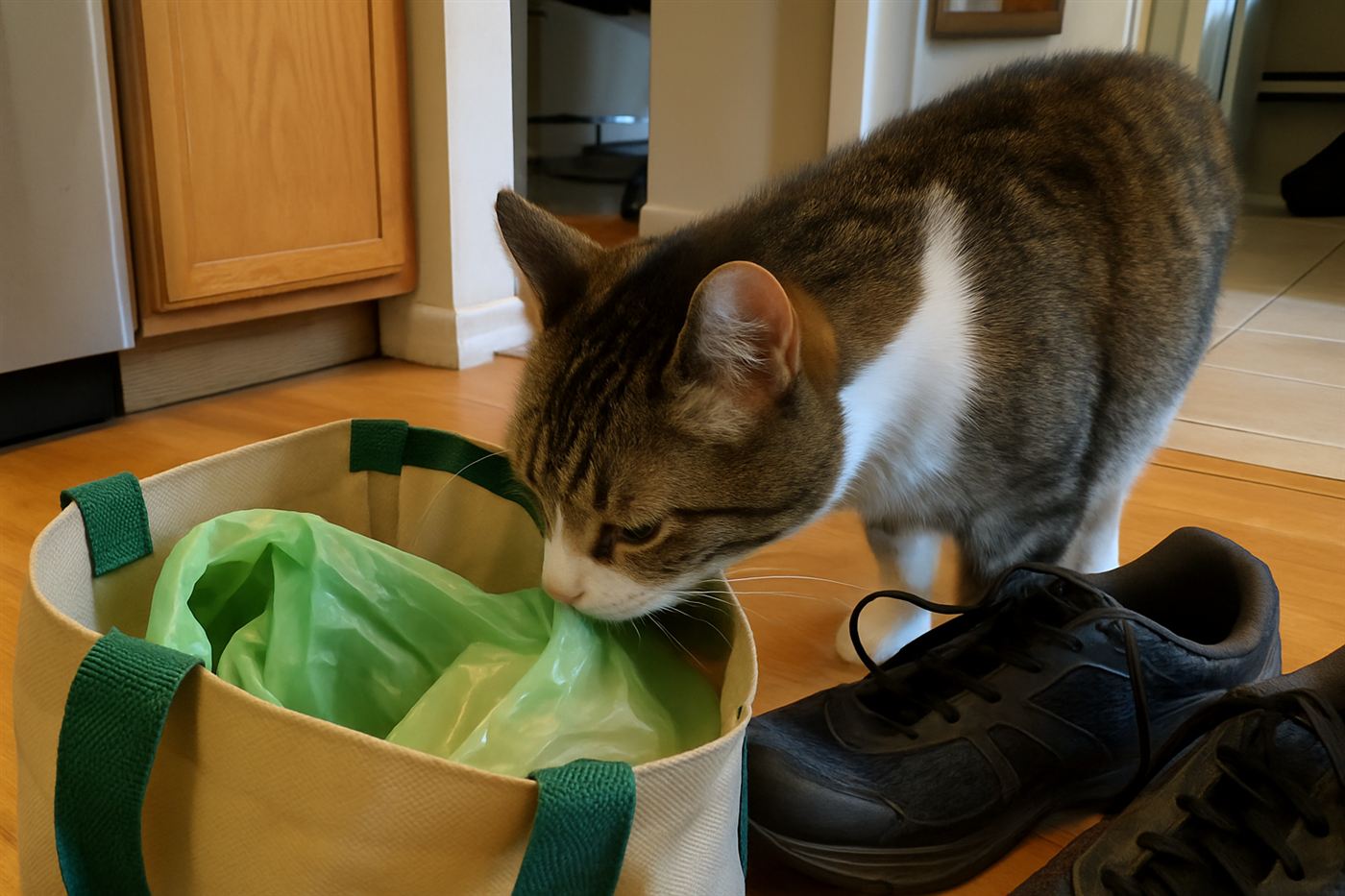
A cat sniffing a grocery bag for a full minute before deciding it is safe is not being dramatic. That nose is doing more work in ten seconds than a human nose does all day. Smell is a cat's primary way of reading the world, deciding what is food, who is family and what just walked through its territory. The hardware behind it is a lot more elaborate than a wet triangle of skin on the face.
Inside the nose: turbinates and surface area
Air pulled in through the nostrils passes into a nasal cavity lined with turbinates, thin scroll-shaped bones curled up like tight rolls of paper and covered in olfactory epithelium, the tissue layer packed with scent receptors. That scrolled shape is the whole trick. By folding a large surface into a small space, turbinates massively increase the amount of receptor-lined tissue that incoming air brushes past on its way through, which is a big part of why a cat's nose punches so far above its physical size.
200 million scent receptors, give or take
Cats have roughly 200 million scent receptors. Humans have around 5 million. Dogs sit even higher at roughly 300 million, so cats land solidly in between, well ahead of people but behind the most nose-driven dog breeds. That receptor count is why a smell that registers as faint or unremarkable to a person can be an overwhelming wall of information to a cat standing in the exact same room.
| Species | Approximate scent receptor count |
|---|---|
| Human | ~5 million |
| Cat | ~200 million |
| Dog | ~300 million |
The vomeronasal organ: a second smell system
Separate from the main nasal system, cats have a vomeronasal organ, also called Jacobson's organ, sitting in the roof of the mouth just behind the incisors and connected by small ducts. Its job is narrower than regular smell. It is built to detect pheromones, chemical signals other cats leave behind about territory, reproductive status and identity. This organ is what triggers the flehmen response, that odd lip-curled, slightly open-mouthed face cats make while processing a strong scent, a behavior that gets its own full breakdown elsewhere so it is worth only a mention here.
Every nose print is one of a kind
The pattern of ridges and bumps on a cat's nose leather, the bare skin around the nostrils, is unique to that individual cat, similar to how no two humans share a fingerprint. No two cats, even littermates, carry an identical nose print. It is a fun bit of trivia, though outside of niche identification uses it mostly just underscores how much detail is packed into a part of the body most owners never look at closely.
Scent glands: cheeks, temples, tail base and paws
Cats mark territory through several dedicated scent glands, not just the nose picking up smells. Cheek glands near the mouth get rubbed against furniture, doorframes and people. Temporal glands sit near the ears and get used the same way during head-butting or rubbing. A gland near the base of the tail deposits scent when a cat's rear end brushes past an object. Glands in the paw pads leave scent behind with every scratch on a post or piece of furniture. Each gland leaves a slightly different chemical signature, so a cat is essentially leaving a signed note everywhere it rubs, scratches or walks.
Why smell decides whether a cat eats
Taste and smell are linked in most animals, but in cats the smell side does most of the heavy lifting when it comes to deciding whether food is worth eating at all. A cat with a stuffy nose from an upper respiratory infection will often refuse food even while genuinely hungry, simply because it cannot smell what is in the bowl. According to the Petfinnly's research, shelter cats recovering from upper respiratory infections consistently ate less of the exact same food they normally finished. Intake picked back up almost as soon as nasal congestion cleared rather than as the illness itself resolved.
How cats use scent to recognize people and other cats
Cats lean on scent to identify who is who, arguably more than they lean on sight. A familiar person or housemate cat carries a consistent scent signature built up over time through shared space and mutual rubbing. That is a big part of how a cat tells family from a stranger without needing a clear look.
Why a strange smell can turn a housemate cold
This scent-based recognition system is also why a cat coming home from the vet sometimes gets hissed at or avoided by a cat it has lived with for years. New lotion, a different laundry detergent, or the mix of disinfectant and other animals' smells picked up at a clinic can mask the returning cat's normal scent signature entirely. To the cat left at home, the smell walking through the door does not match its stored memory of "housemate," so it reacts to what smells like a stranger first and sorts out the rest later.
Frequently asked questions
How many scent receptors does a cat have compared to a human?
Cats have roughly 200 million scent receptors compared to about 5 million in humans. Dogs have even more, around 300 million, so cats sit between people and the most scent-driven dog breeds.
What is the vomeronasal organ (Jacobson's organ) in cats?
It is a separate scent structure located in the roof of the mouth behind the incisors, connected by small ducts, dedicated to detecting pheromones rather than everyday smells. It is the organ responsible for the flehmen response, the lip-curled face cats make when processing a strong scent.
Why does every cat have a unique nose print?
The ridges and bumps on the bare skin around a cat's nostrils form a pattern unique to that individual, similar to a human fingerprint. No two cats share the exact same pattern, even within the same litter.
Why won't my cat eat when it has a stuffy nose?
Cats rely heavily on smell to decide whether food is worth eating. When congestion from an upper respiratory infection blocks that sense, a cat often cannot smell its food at all and will refuse to eat even while genuinely hungry, until the congestion clears.
Why does my cat act cold toward me after I come back from the vet?
Cats recognize people and other cats largely by scent. Clinic smells, disinfectant and contact with other animals can temporarily mask your normal scent signature, so a housemate cat may treat you like a stranger until your familiar smell returns, usually within a few hours.
This article is for general information and isn't a substitute for advice from your own veterinarian, who can properly evaluate nasal health and appetite changes in your specific cat.