Cat Tail Anatomy: Bones, Balance and Body Language
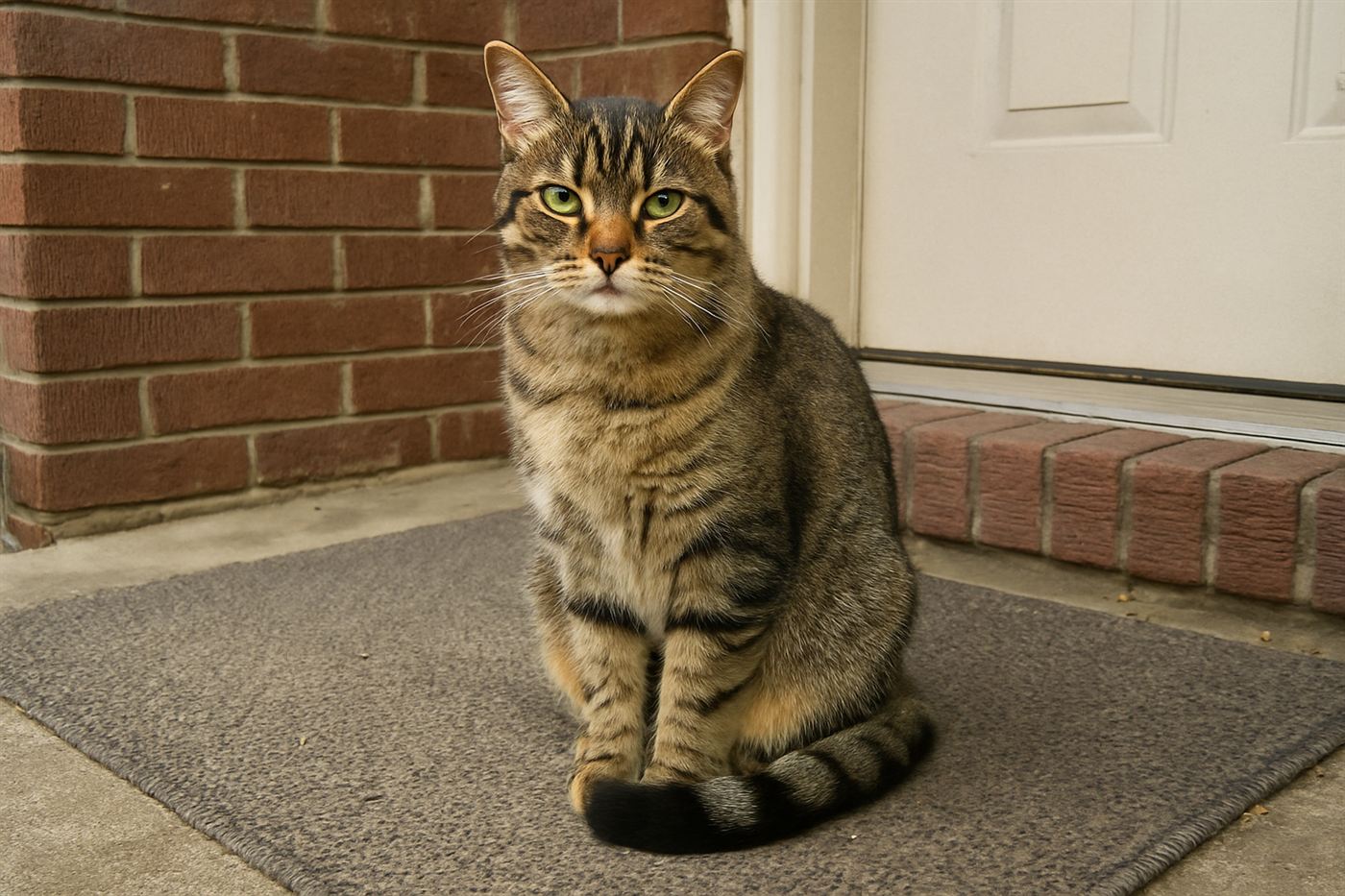
A cat walking along the top of a fence with its tail out straight and slowly adjusting is running a live balancing act, not just showing off. That tail is doing real mechanical work. It is also talking the entire time, shifting position to say something different almost minute to minute. Few body parts pull double duty like a cat's tail does.
How many bones are actually in a cat's tail
A cat's tail typically contains 19 to 23 caudal vertebrae, small bones stacked one after another and connected by muscle, tendon and cartilage. That is roughly a third of the cat's entire spinal bone count packed into the tail alone, which is part of why the tail can curl, whip and hold odd angles that would be impossible for a rigid limb built the same length.
The tail as a built-in counterweight
One of the tail's main jobs is balance. When a cat jumps, falls awkwardly or takes a tight turn at speed, the tail swings opposite to the body's motion to help keep the center of gravity stable. Watch a cat walk a narrow railing and the tail is constantly making small corrective shifts, acting less like a decoration and more like the counterweight pole a tightrope walker carries.
Working with the inner ear's balance system
The tail does not manage balance alone. It works alongside the vestibular system in the inner ear, which tracks head position and motion and feeds that information back to the rest of the body. The two systems together are core pieces of a cat's righting reflex, the mechanism that lets a falling cat reorient itself, though that reflex is a big enough subject to get its own dedicated article rather than a few lines here.
Why Manx cats are born without a tail
Manx cats are born naturally tailless or with just a short stub, caused by a dominant genetic mutation that interferes with spine development early in the embryo. That same mutation is lethal in a double dose. A kitten that inherits two copies of the gene does not survive, so responsible Manx breeders manage matings carefully to avoid pairing two taillessness carriers and risking that outcome.
Why a tail injury near the base is a real emergency
Nerve bundles run the full length of the tail. Near the base, those nerves route close to the sacral and caudal nerves that also control bladder and bowel function. A tail slammed in a door, stepped on hard or yanked can damage that shared nerve pathway even if the tail itself looks fine afterward. According to the Petfinnly's research, intake records for cats surrendered following tail-pull or door-slam injuries showed bladder control problems noted far more often than the injury description alone would suggest. A tail that suddenly goes limp or floppy after trauma is not just a sore tail, it is a sign that warrants an urgent vet visit.
Tail docking is not a standard cat practice
Unlike some dog breeds where tail docking was historically routine, docking has never been a standard or common practice in cats. Outside of medical necessity following injury or disease, a cat keeps the tail it was born with. Any natural variation seen, full length, short, or the naturally stubbed tails of breeds like the Manx, comes from genetics rather than a deliberate procedure.
Reading tail position and movement
Tail language is one of the clearest windows into a cat's mood, if you know what to look for. A tail held straight up usually signals confidence and a friendly, approachable mood. A puffed-up tail, caused by piloerection, the hair standing on end, signals fear or aggression and is meant to make the cat look larger. A tail tucked low against the body signals fear or submission. A slow, deliberate swish usually means the cat is focused or building irritation rather than relaxed.
| Tail signal | Likely meaning |
|---|---|
| Held straight up | Confident, friendly, approachable |
| Puffed up (piloerection) | Fear or aggression |
| Tucked low | Fear or submission |
| Slow, deliberate swish | Focus or building irritation |
| Twitching tip only | Mild agitation or hunting focus |
The twitching tip: hunting focus, not full irritation
A twitching tail tip is worth calling out on its own since it gets mixed up with the full swish. When only the very end of the tail flicks while the rest stays still, that usually signals mild agitation or, more often, intense hunting focus, the exact look of a cat watching a bird through a window and mentally locking onto the target. It is a smaller, more contained signal than the full-body swish that tends to precede an actual swat or walk away.
Frequently asked questions
How many vertebrae are in a cat's tail?
A cat's tail usually has 19 to 23 caudal vertebrae, which works out to roughly a third of the cat's entire spinal bone count.
Why are Manx cats born without tails?
A dominant genetic mutation interferes with spine development early in the embryo, resulting in a naturally tailless or stub-tailed cat. The same mutation is lethal when a kitten inherits two copies, so careful breeders avoid pairing two carriers.
Is a limp or floppy tail after an injury an emergency?
Yes. Nerves near the base of the tail route close to the nerves controlling bladder and bowel function, so trauma like a door slam or a hard pull can cause nerve damage even when the tail itself looks physically intact. A sudden floppy tail after injury needs a prompt vet visit.
Do vets dock cat tails the way some dog breeds are docked?
No. Tail docking has never been a standard or common practice in cats. Outside of medical necessity after injury or disease, cats keep the tail length and shape they were born with.
What does it mean when a cat's tail twitches at the tip?
A twitching tip, with the rest of the tail staying still, usually signals mild agitation or intense hunting focus, like a cat watching a bird or toy it is about to pounce on. It is different from a full, slow swish, which more often signals building irritation.
This article is for general information and isn't a substitute for advice from your own veterinarian, who can properly evaluate tail injuries and nerve function in your specific cat.