Cat Skeleton and the Flexible Spine: Why Cats Bend Like They Do
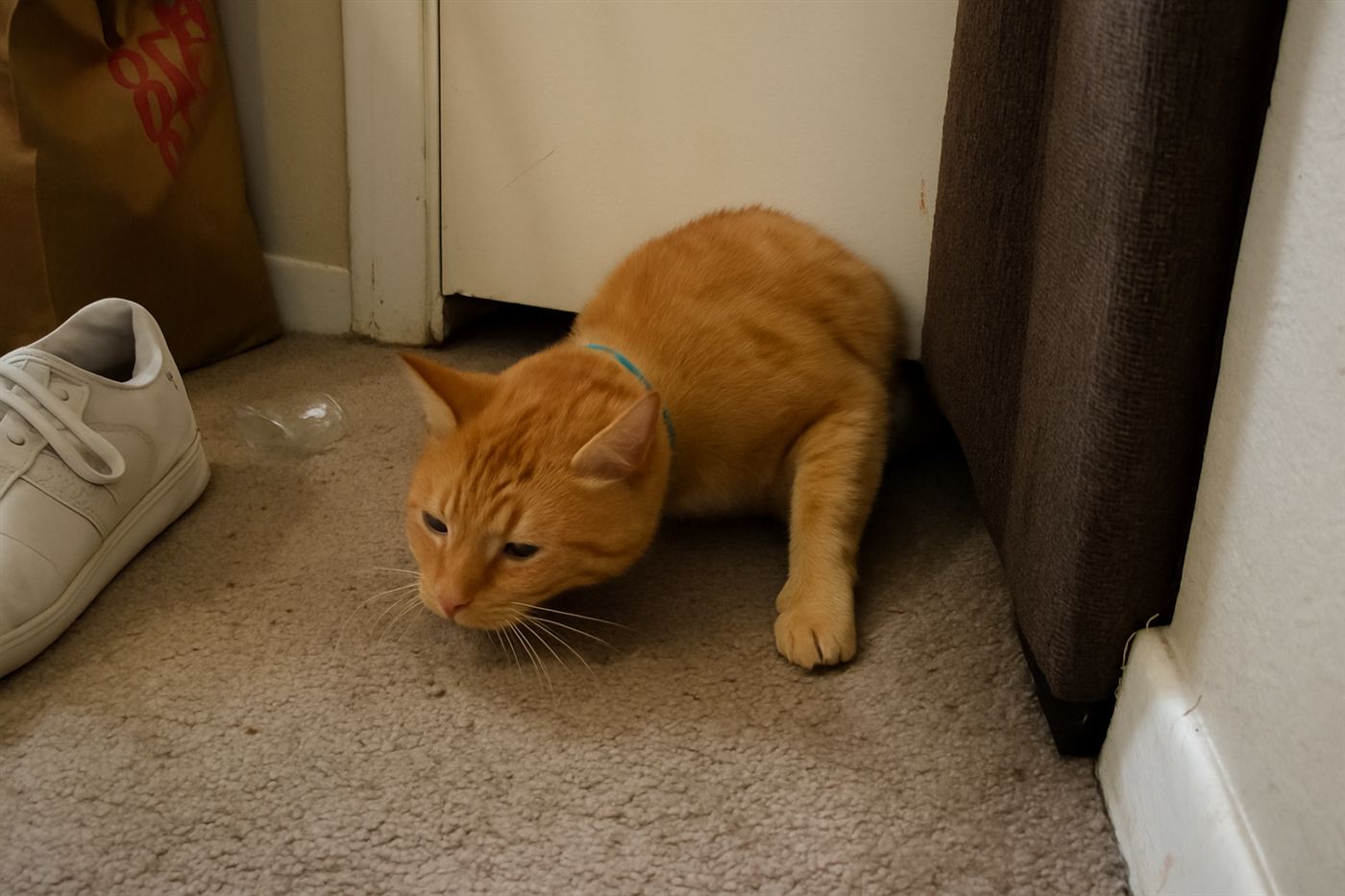
A cat pouring itself through a gap barely wider than its own head is not a magic trick, it is basic skeletal engineering. The frame under all that fur is built differently from a human skeleton in ways that make the whole body act less like a rigid structure and more like a flexible chain with a few key hinge points doing most of the real work.
About 230 bones, more than a human has
Cats have roughly 230 bones in total, compared to the 206 bones in an adult human skeleton. That is a striking number given how much smaller a cat is overall. Part of the explanation is developmental. Kittens are actually born with even more bones than that. A number of them fuse together as the kitten grows, ending up as a slightly lower but still higher-than-human total by adulthood.
A longer spine with more elastic disks
A cat's spine contains more vertebrae than a human spine. The disks sitting between those vertebrae are noticeably more elastic. That combination is what allows the body to twist and rotate through an arc approaching 180 degrees, a range of motion no human spine can come close to matching. More segments plus more give at each joint means the whole spine bends smoothly along its length instead of pivoting at just one or two points.
The mechanism behind landing on their feet
That extreme spinal flexibility is the core mechanical piece behind a cat's righting reflex, the ability to reorient mid-fall and land feet-first. The spine's twisting range lets the front half of the body rotate before the back half catches up, working alongside the inner ear's balance system. The full sequence of how that reflex plays out is enough of a topic on its own to deserve separate coverage rather than a quick summary here.
The floating clavicle: a collarbone that is not really attached
In humans, the clavicle is rigidly joined to the rest of the skeleton at both ends, locking the shoulder into a fairly fixed position. A cat's clavicle is completely different. It is a small bone essentially floating, embedded in shoulder muscle rather than joined to the ribcage or shoulder blade the way a human collarbone is. Without that rigid connection, a cat's shoulders can compress inward and rotate far more freely than a human's ever could.
Why the shoulders are the real trick to tight spaces
That floating clavicle, combined with a flexible ribcage that can compress somewhat under pressure, is the actual mechanism behind a cat squeezing through openings that look impossibly small. It is not loose skin or some vague sense of flexibility doing the work, it is the shoulder joints losing their rigid anchor point and the ribcage allowing a bit of give, letting the widest part of the torso narrow just enough to pass through a gap.
The rule of thumb: if the head fits, the body follows
Owners often use a simple rule to judge whether a gap is passable: if a cat's head and whiskers fit through comfortably, the rest of the body usually can too. That holds up because the skull is close to the widest genuinely rigid part of the frame, everything behind it, the flexible ribcage and the floating shoulders, has room to adjust. According to the Petfinnly's research, foster reports describing a cat squeezing out of a carrier or enclosure almost always involved a gap only slightly wider than the cat's head, which lines up with what the whisker rule predicts.
Walking on toes: what digitigrade actually means
Cats are digitigrade, meaning they walk on their toes rather than flat on the sole of the foot the way humans do. The heel sits raised well off the ground with each step instead of making contact like a human heel does. That toe-walking posture is a big contributor to a cat's quiet, springy gait, since less foot surface makes contact with the ground and the raised heel acts almost like a natural shock absorber built into the stride.
Cat skeleton vs human skeleton, side by side
| Feature | Cat | Human |
|---|---|---|
| Total bones (adult) | ~230 | 206 |
| Spinal flexibility | More vertebrae, elastic disks, near-180-degree twist | Far more limited rotation |
| Clavicle (collarbone) | Small, floating, embedded in muscle | Rigidly joined at both ends |
| Foot posture | Digitigrade, walks on toes, heel raised | Plantigrade, walks on full sole |
Frequently asked questions
How many bones does a cat have compared to a human?
Cats have roughly 230 bones as adults compared to 206 in an adult human. Kittens are born with even more bones than that. A number of them fuse together as the kitten grows.
Why can cats squeeze through such small gaps?
It comes down to the shoulders and ribcage rather than loose skin. A cat's floating clavicle is not rigidly attached to the rest of the skeleton, so the shoulders can compress and rotate. The flexible ribcage allows a bit more give, letting the body narrow enough to pass through a tight opening.
What is the floating clavicle in a cat's shoulder?
It is a small collarbone embedded in shoulder muscle instead of being rigidly joined to the ribcage or shoulder blade the way a human clavicle is. That lack of a fixed anchor point is what gives a cat's shoulders their unusual range of compression and rotation.
Is it true a cat can fit anywhere its head fits?
As a rule of thumb, yes. The skull is close to the widest rigid part of a cat's frame, so if the head and whiskers pass through a gap comfortably, the flexible ribcage and floating shoulders behind it usually can follow.
Why do cats walk on their toes?
Cats are digitigrade animals, meaning the heel stays raised off the ground and the toes bear the weight with each step, unlike the flat, full-sole stride humans use. That toe-walking posture contributes to a cat's quiet, springy movement.
This article is for general information and isn't a substitute for advice from your own veterinarian, who can properly evaluate skeletal health and mobility in your specific cat.