Play and Exercise for Senior and Overweight Cats
A fourteen year old cat that used to sprint the length of the hallway after a laser pointer might now watch the same laser pointer cross the floor and just blink at it. That's not always a cat that's lost interest in play. More often it's a cat whose joints have quietly started hurting. The games that used to work need to change to match.
Senior cats still want to play, they just need it adjusted
Cats roughly 11 years and up often still have real interest in play, the drive doesn't just switch off with age. What changes is capacity. Joint stiffness and early arthritis are extremely common in older cats and widely underdiagnosed, since cats are good at hiding pain and owners tend to chalk slowing down up to "just getting old" rather than a treatable issue. A senior cat that seems less playful is worth a second look before assuming it's simply lost the urge.
Why floor-level games beat high-jump chasing
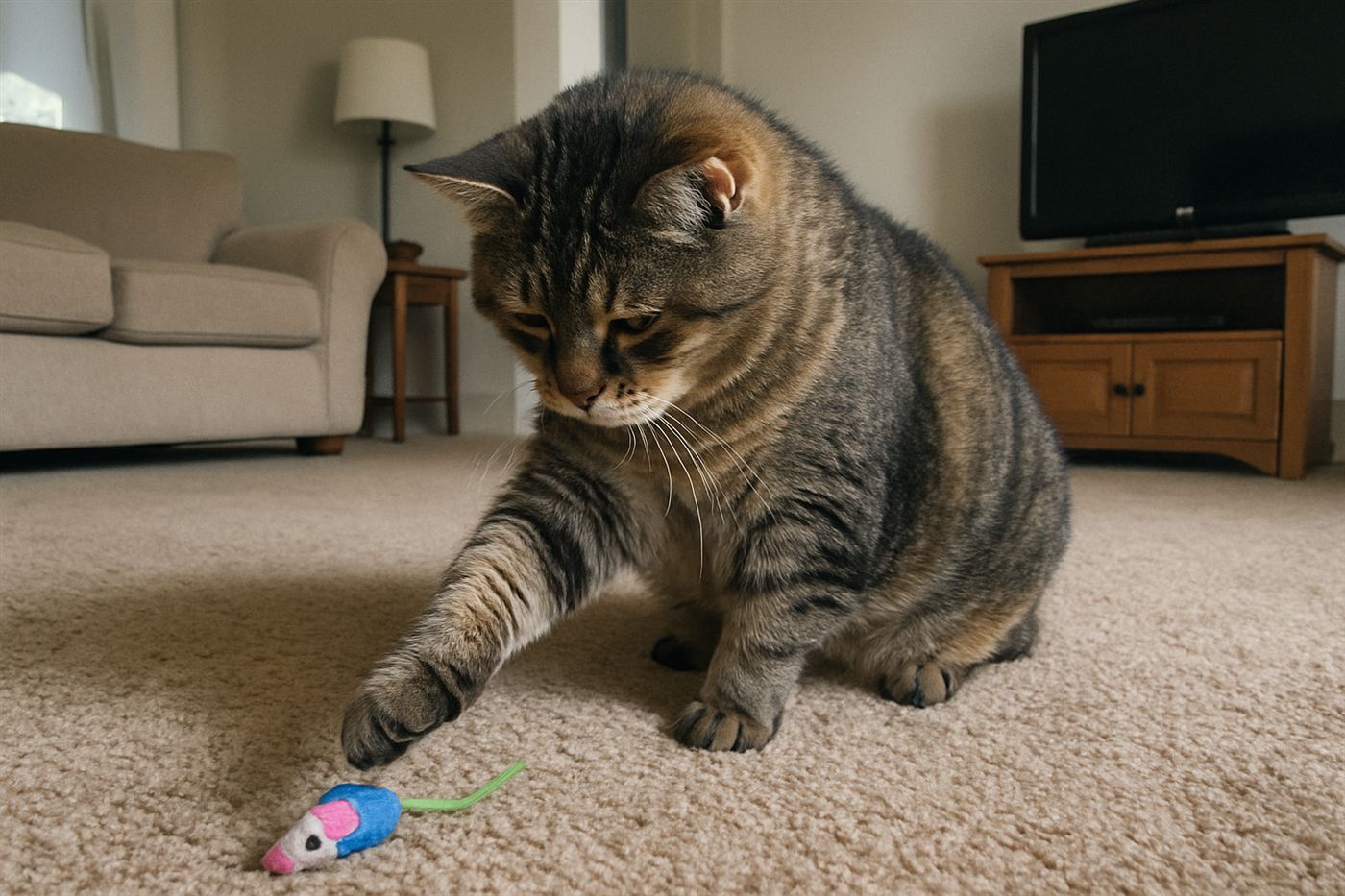
Rolling toys along the floor puts a lot less strain on aging joints than games built around jumping and chasing at height. A wand toy dragged low across the carpet lets a senior cat engage the same stalk-and-pounce instincts without the impact of repeated leaping. Save the vertical, high-jump games for younger cats and keep senior play closer to ground level.
Short, frequent bursts work better than one long session
A senior cat's stamina usually suits short, frequent play better than one long marathon session. Aim for 2 to 3 minutes at a time, spread across several short sessions in a day rather than one fifteen minute push that leaves the cat exhausted or sore afterward. This approach also makes it easier to fit play around a senior cat's longer rest periods.
A brief warm-up matters more as cats age
Starting a play session with slow, gentle toy movement before ramping up to anything faster gives stiff senior joints a chance to loosen up first. Jumping straight into fast, sudden movement with a cat that's been resting for hours is more likely to trigger discomfort or reluctance to fully engage. A slow first minute or two goes a long way toward a session that actually works.
How play ties directly into weight management
Play matters just as much for overweight cats as it does for seniors, sometimes more. Even modest daily play measurably helps an overweight cat. It's often more sustainable long term than diet changes alone, since cutting food too aggressively can backfire while consistent movement tends to stick as a habit. A few short play sessions added to the day is often an easier lever to pull than a full diet overhaul.
| Cat status | Session length | Frequency | Style |
|---|---|---|---|
| Healthy adult | 10 to 15 minutes | 1 to 2 times daily | Chasing, jumping, high energy |
| Senior (11+) | 2 to 3 minutes | Several short bursts daily | Floor-level, low impact |
| Overweight | 3 to 5 minutes | Multiple times daily | Steady movement, food puzzle combined with play |
Warning signs of overexertion or pain during play
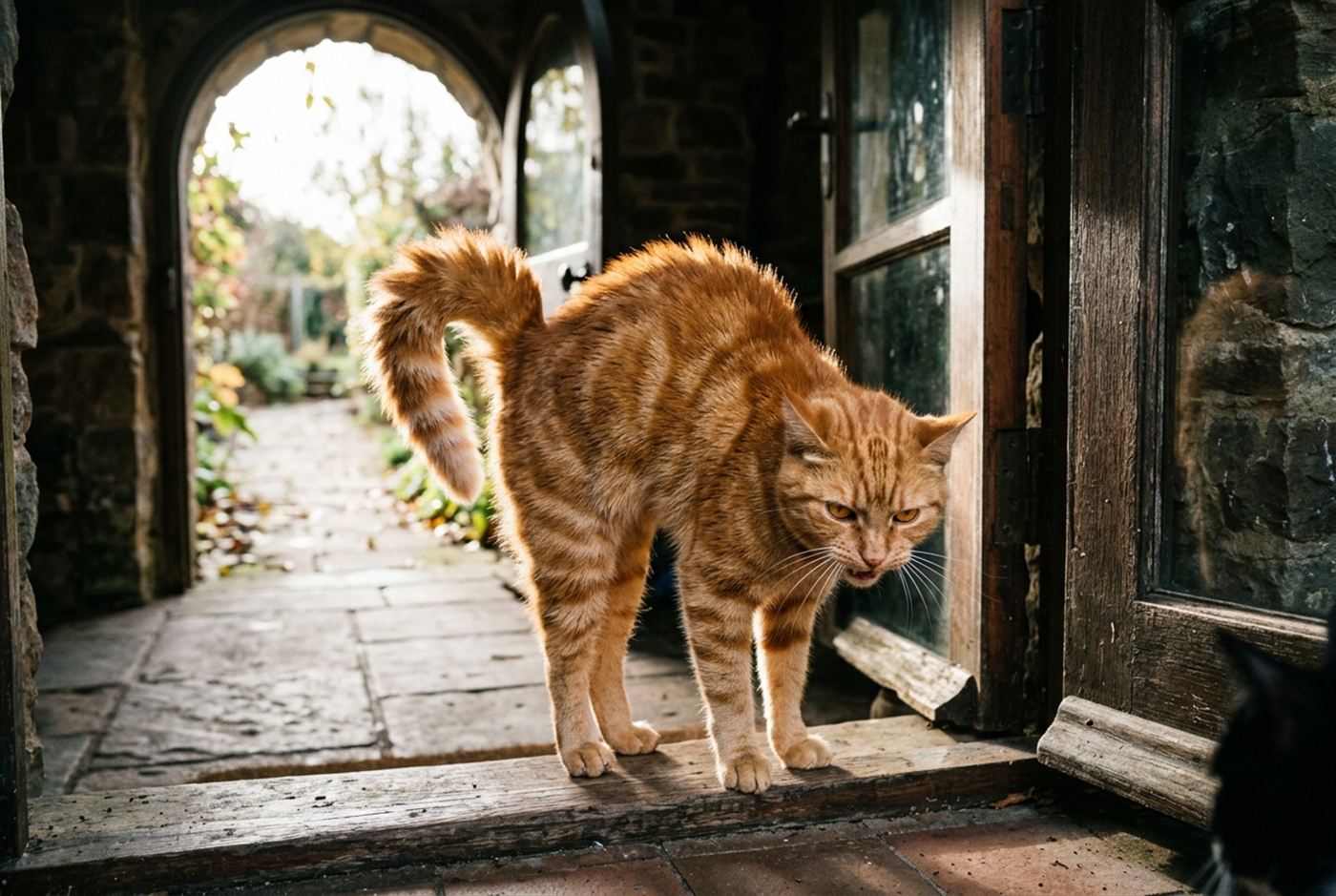
According to the Petfinnly's research, cats displaying two or more of the signs below during regular play sessions are far more likely to have an undiagnosed arthritis or joint condition than cats showing none of them. Watch for reluctance to jump onto surfaces it used to reach easily, limping or stiffness after a play session ends, heavy panting during what should be light activity, or a cat that stops abruptly mid-play instead of winding down gradually. Any of these showing up regularly is worth a vet visit.
When it's time for a vet check on joint pain
Untreated joint pain is a common, quiet reason older cats stop playing altogether. It's often mistaken for a cat simply "slowing down" rather than something treatable. If a senior cat shows any of the overexertion signs above on a regular basis, a vet visit for arthritis pain management is worth pursuing. Pain management can genuinely restore a senior cat's interest in play once the underlying discomfort is addressed.
Putting together a gentle routine for senior or overweight cats
A workable routine for a senior or overweight cat usually combines a couple of the ideas above rather than picking just one. Start with a slow warm-up, keep sessions short at 2 to 3 minutes, favor floor-level rolling toys over jumping games and spread sessions out across the day instead of bunching activity into one block. Small and consistent beats occasional and intense for cats in this stage of life.
Frequently asked questions
Do senior cats still need to play?
Yes. The drive to play doesn't disappear with age, though stamina and joint comfort usually decline. Shorter, lower-impact sessions keep a senior cat engaged without pushing past what its joints can comfortably handle.
How long should play sessions be for an older cat?
Around 2 to 3 minutes per session works well for most senior cats, done several times a day rather than one long session. This suits a senior cat's stamina better than a single fifteen or twenty minute push.
Can playing help an overweight cat lose weight?
Even modest daily play measurably helps an overweight cat. It's often easier to maintain long term than diet changes on their own. A few short sessions spread across the day adds up over weeks and months.
What are signs that play is hurting my senior cat rather than helping?
Reluctance to jump, limping after playing, heavy panting during light activity, or stopping abruptly mid-session are all signs worth paying attention to. Regular appearance of any of these is worth a vet check for arthritis.
Is arthritis common in older cats even if my cat seems fine?
Arthritis and joint stiffness are extremely common in senior cats and widely underdiagnosed, largely because cats hide pain well. A cat that seems fine at rest can still be uncomfortable during more demanding movement like jumping or fast play.
This article is for general information and isn't a substitute for advice from your own veterinarian, who can properly evaluate arthritis, joint pain or weight management needs in your specific cat.