Territorial Aggression in Cats: When Your Home Becomes a Warzone
You bring a new kitten home, expecting your older cat to act like a gentle mentor. Instead, your sweet resident cat turns into a snarling, hissing demon, blocking the hallway and launching a full-scale attack when the kitten tries to walk past. Territorial aggression is one of the most violent and hardest-to-solve behaviors in cats, driven by a primal need to defend their core living space from invaders.
How territory works in a cat's brain
To a cat, your house isn't just a place to live, it is a heavily mapped resource grid essential for their survival. They spend hours every day rubbing their cheeks on furniture to lay down pheromones, actively claiming ownership of specific pathways, resting spots and feeding areas. When another animal enters that space without permission, the cat views it as an existential threat.
Unlike dogs, who often welcome new pack members, cats are solitary hunters by nature. A new cat in the house means more competition for food, water and prime sleeping real estate. Their brain floods with stress hormones, compelling them to drive the intruder out by any means necessary.
This isn't limited to other cats, either. Some cats will aggressively defend their territory against dogs, unfamiliar humans, or even a neighborhood cat they spot through the window. The aggression is blind and absolute, focused entirely on removing the perceived threat from their domain.
What territorial aggression looks like
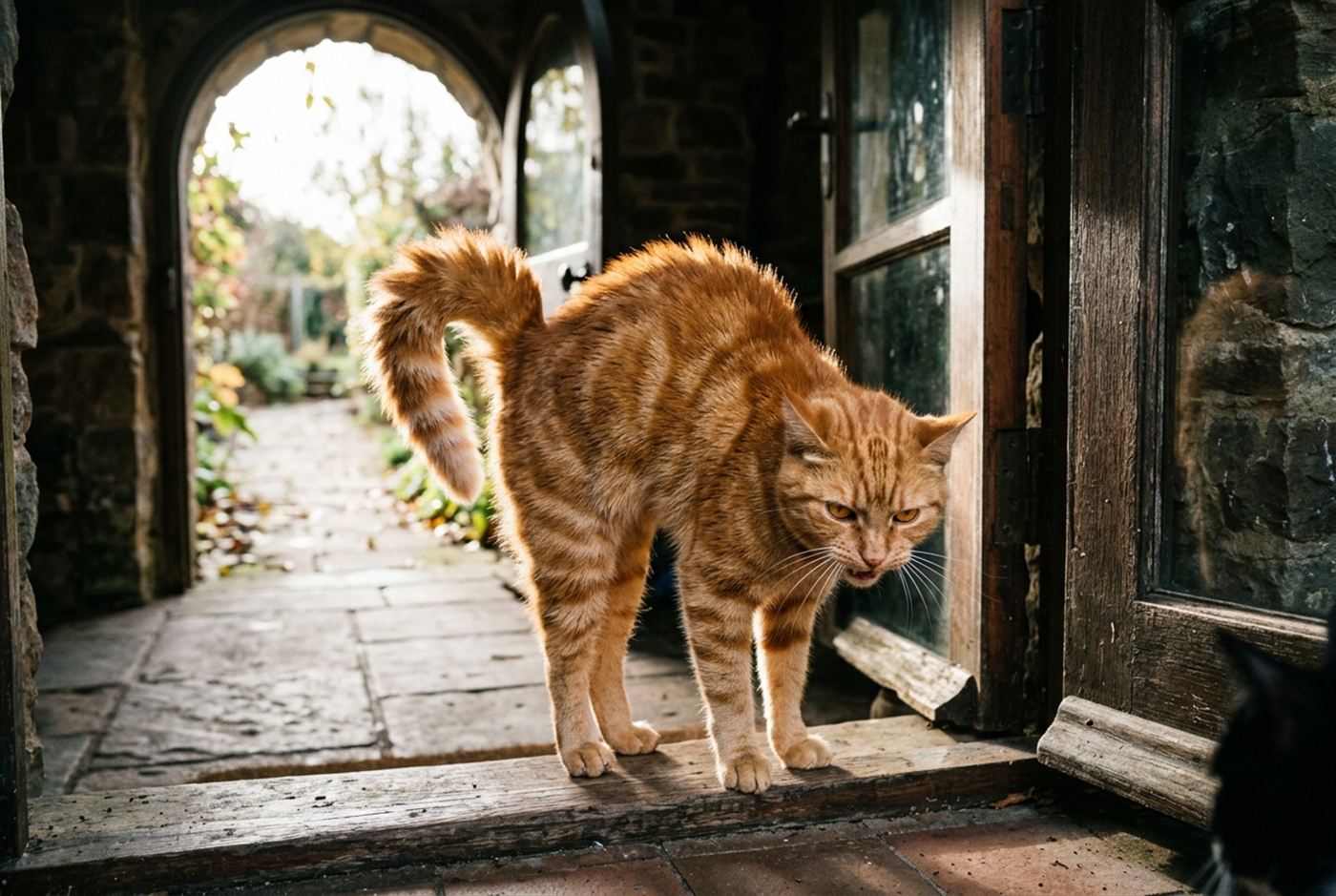
A territorial cat doesn't just hiss and run away; they actively take and hold space. You will see them sitting directly in doorways or at the top of stairs, effectively trapping the other animal in a room. They stare hard, posturing with stiff legs and an arched back to make themselves look massive.
They will also start marking the house to reinforce their claim. This usually means spraying urine on vertical surfaces like walls, curtains, or the sides of couches. The smell is a chemical warning sign meant to intimidate the intruder.
When a fight breaks out, it is rarely a quick scuffle. Territorial attacks are loud, violent and intended to cause serious damage. The aggressor will stalk the other cat, launch themselves with claws out and refuse to back down until the victim flees or hides.
Resolving the turf war
You cannot force two fighting cats to just work it out. You have to completely separate them into different rooms behind closed doors and start a massive reintroduction process. This involves feeding them on opposite sides of a closed door so they associate the smell of the other cat with something positive.
Think of it like resetting their territorial map from scratch. You will slowly swap their bedding back and forth to mix their scents, then eventually let them see each other through a cracked door or baby gate. This process can take weeks or even months of painstaking, gradual exposure.
You also need to dramatically increase the resources in your home. You need multiple litter boxes, feeding stations and tall cat trees spread across different rooms. According to the Petfinnly's research, multi-cat households that added at least one extra litter box and feeding station per cat saw territorial spraying incidents drop by more than half within a month. When there is more than enough territory to go around, the need to aggressively defend it drops significantly.
How cats divide up a house
| Resource Type | Low Value Location | High Value Location | Risk of Conflict |
|---|---|---|---|
| Litter boxes | Open basement | Quiet bedroom corner | Extreme |
| Food bowls | Near loud appliances | Elevated quiet spot | High |
| Resting areas | Floor level | Top of a cat tree | Moderate |
| Pathways | Wide open room | Narrow hallway | High |
Frequently asked questions
Can a cat be territorial over a person?
Yeah. Some cats view their favorite human as a high-value resource and will attack other pets that try to get near you.
Will getting them spayed or neutered help?
Almost always. Intact males are notoriously territorial and neutering them drastically reduces urine marking and aggressive space defense.
How long does it take to fix this?
It depends entirely on the cats. Some resolve their issues in a few weeks, while others need months of strict management and reintroduction.
Should I let them fight it out to establish dominance?
No. Letting them fight just reinforces the aggression and ensures they will hate each other permanently.
Do pheromone diffusers actually work?
They help take the edge off. Synthetic pheromones like Feliway mimic the calming scent cats leave when they rub their cheeks, which can lower overall tension in the house.
This article is for general information and isn't a substitute for advice from your own veterinarian or a certified feline behaviorist, who can properly evaluate territorial aggression in your specific cat.