Fear Aggression in Cats: When Panic Turns to Claws
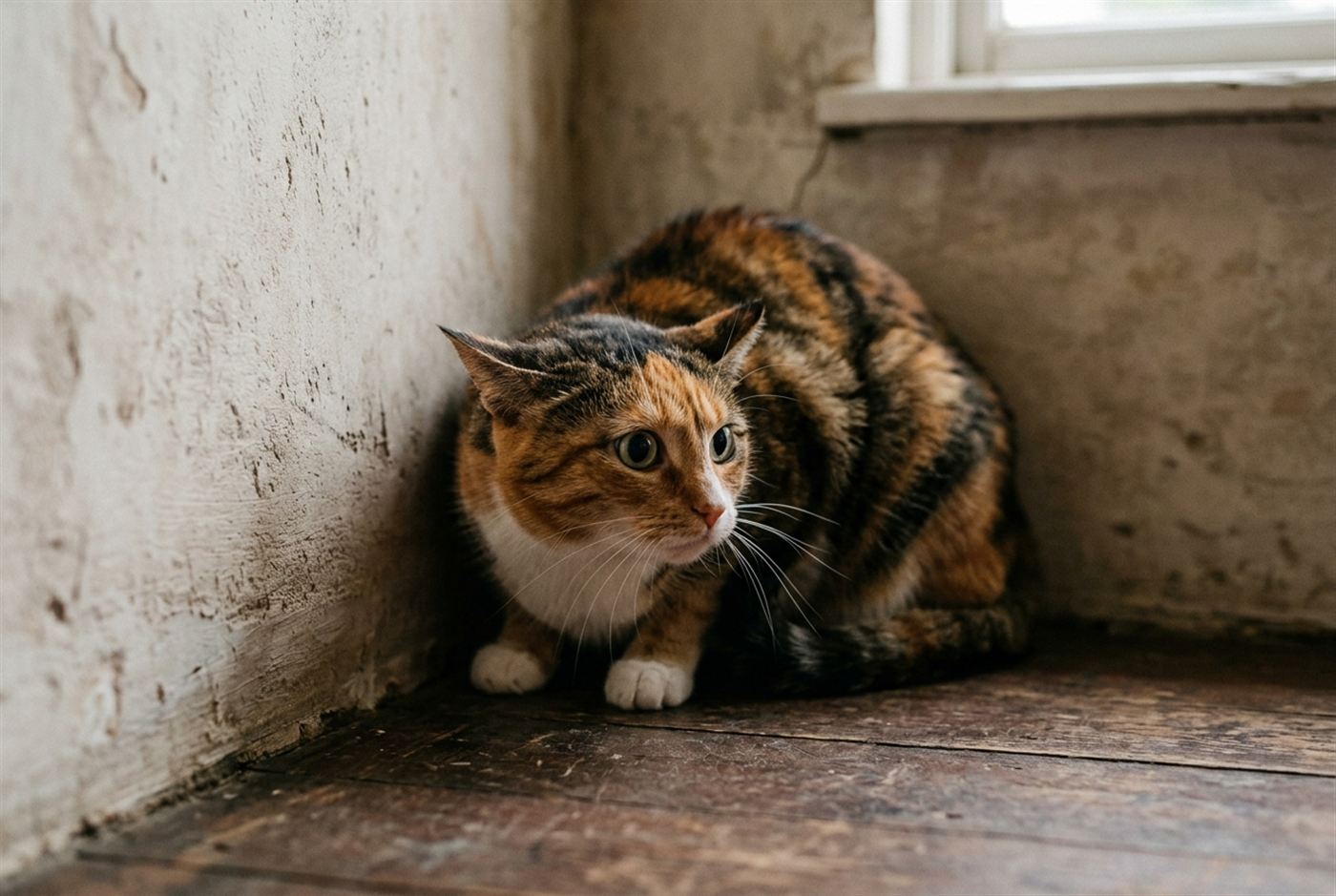
You bring the vacuum cleaner out of the closet and your cat bolts into the corner. When you reach down to comfort them, they explode into a flurry of teeth and claws, shredding your arm before fleeing under the bed. Fear aggression is the most explosive type of feline aggression, occurring when a terrified cat feels entirely trapped with no avenue for escape.
The freeze, flight, or fight sequence
When a cat encounters a terrifying stimulus, their brain runs through a rapid, predictable sequence. First, they freeze, hoping the threat will pass without noticing them. If the threat gets closer, they choose flight, scrambling frantically to find a high shelf or a dark hiding spot.
If you corner a cat and take away their ability to flee, they have only one option left: fight. The aggression isn't malicious; it is a raw, desperate bid for survival. Their sympathetic nervous system floods their body with adrenaline, turning a normal house cat into a wild animal fighting for their life.
Think of it like a human backed against a wall in a dark alley. You aren't attacking the person in front of you because you hate them; you are swinging wildly because you are terrified and need an exit. The cat is doing the exact same thing when you trap them in a carrier or back them under a couch.
Body language of a terrified cat
A fear-aggressive cat looks completely different from a confident, territorial cat. They do not puff themselves up to look large. Instead, they crouch incredibly low to the ground, trying to make themselves as small as possible. They will tightly wrap their tail around their body to protect their vital organs.
Their ears will be pinned completely flat against the sides of their head to protect them from being bitten in a fight. Their pupils will dilate massively, turning their eyes into solid black saucers to take in as much light and movement as possible. According to the Petfinnly's research, this pupil dilation is one of the most reliable early warning signs owners overlook, showing up in the majority of documented fear-aggression incidents before any growling starts.
You will often hear a low, rumbling growl escalating into a high-pitched scream or spit right before they strike. If you see this posture, do not reach for them. A cat in this state will absolutely nail your hand with everything they have.
How to de-escalate the panic
The absolute worst thing you can do to a fear-aggressive cat is try to physically comfort them. Reaching out to pet them or pick them up just validates their fear that you are an incoming threat. You need to back away immediately and give them a clear, unobstructed path to escape.
If you must move a terrified cat, like for an emergency vet visit, use a thick blanket. Drop the blanket over them to block their vision, which often hits the pause button on their panic, then scoop them up quickly and safely. Never use your bare hands to grab a cat that is actively hissing and cornered.
Building trust with a fearful cat takes immense patience. You have to toss high-value treats from a distance and let them approach you on their terms. Every time they retreat safely without having to fight, their confidence grows and their need for aggression shrinks.
Differentiating anger from fear
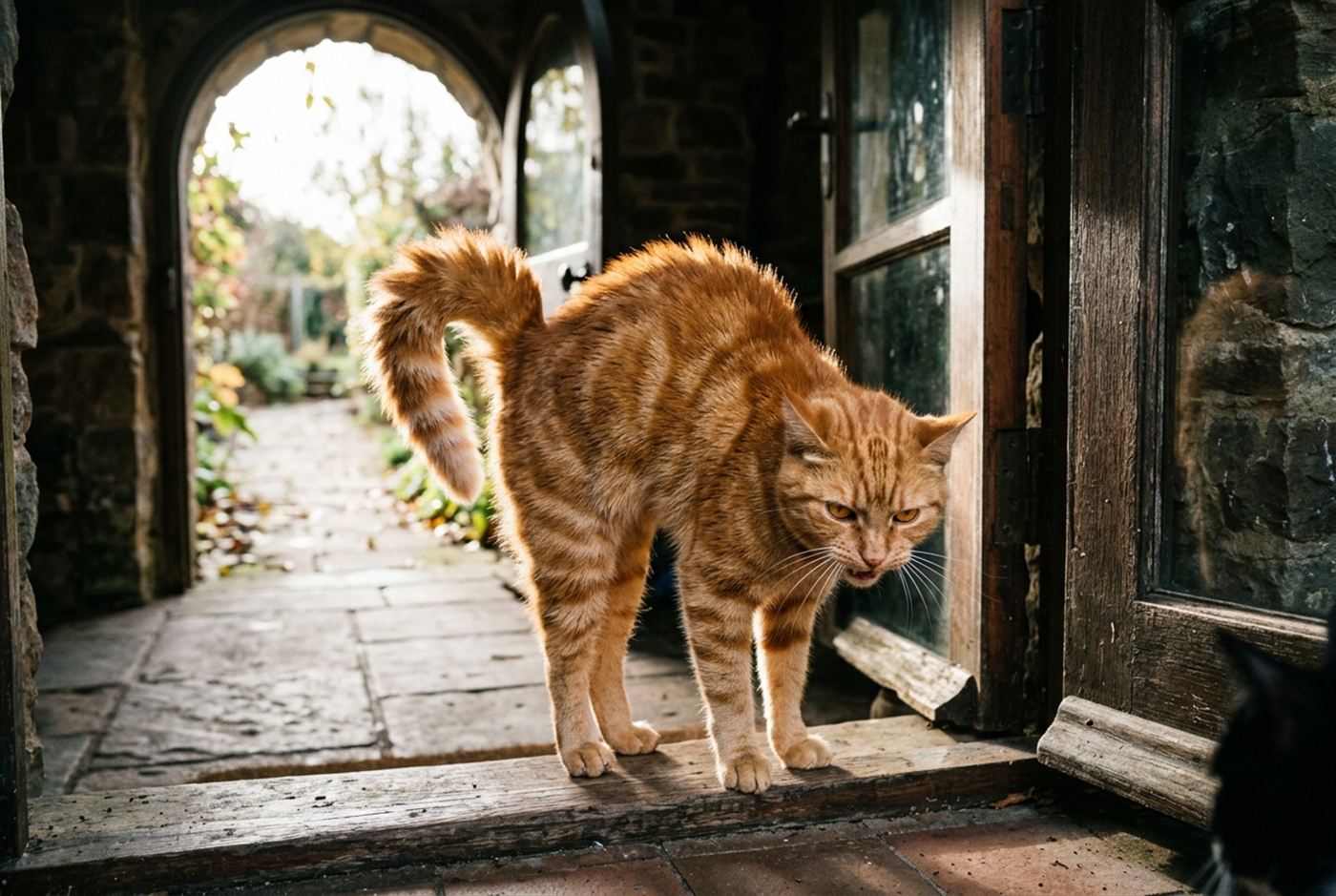
| Body part | Confident/angry posture | Fearful/terrified posture |
|---|---|---|
| Ears | Pointed forward or rotated | Pinned completely flat |
| Body | Stiff, arched back | Crouched low, compact |
| Tail | Stiff, puffed out straight | Wrapped tightly around body |
| Eyes | Hard stare, slit pupils | Massively dilated black pupils |
Frequently asked questions
Will gabapentin help a fear-aggressive cat?
Usually, yes. Vets frequently prescribe gabapentin to severely fearful cats before appointments because it safely blunts their panic response.
Why did my cat attack me after seeing a stray dog outside?
That is redirected aggression, triggered by fear. They got keyed up by the dog, couldn't attack it and unleashed that pent-up panic on you when you touched them.
How long does it take for them to calm down?
It can take anywhere from two to twenty-four hours for a cat's adrenaline levels to return to baseline after a severe panic attack.
Should I block their hiding spots so they have to face their fears?
No. Removing a fearful cat's safe space destroys their confidence and guarantees they will resort to aggression faster next time.
Can a rescue cat unlearn fear aggression?
Yeah, but it requires a very slow desensitization process. They have to learn over months that hands bring food and play, not pain or confinement.
This article is for general information and isn't a substitute for advice from your own veterinarian or a certified feline behaviorist, who can properly evaluate fear aggression in your specific cat.