Black Cats, Witches and Bad Luck: Where Cat Superstitions Actually Come From
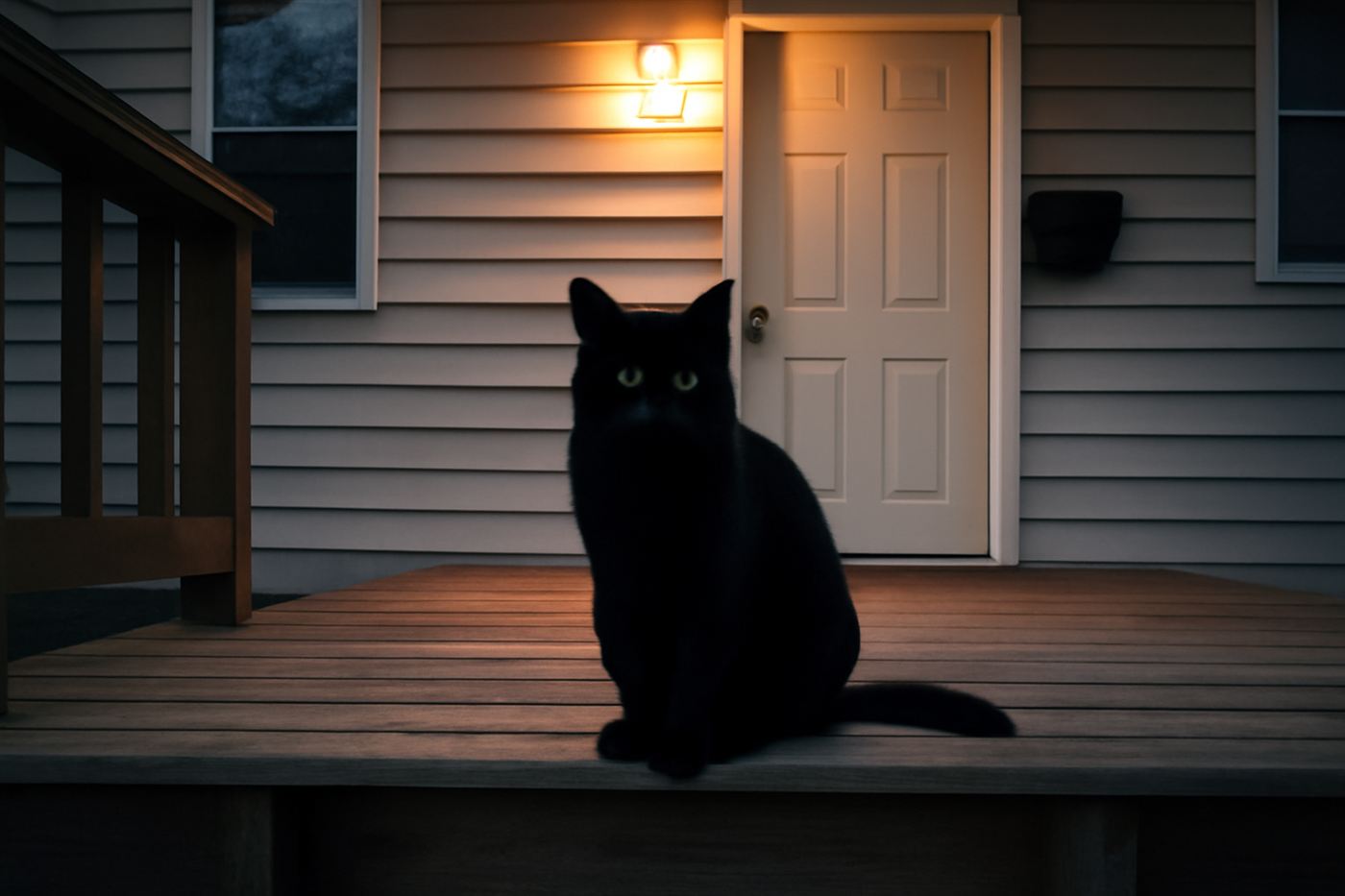
A black cat crosses the road and somebody, somewhere, still gets a little uneasy about it. That reaction feels ancient and instinctive, but it's actually a pretty specific historical accident, not some universal human fear. Once you know where it came from, it gets a lot easier to just let it go.
The medieval witchcraft connection
In medieval Europe, cats, black cats especially, got tangled up with fears about witchcraft. The idea took hold that witches could either own cats as companions or actually shapeshift into one, and black cats got singled out mostly because of their color's association with darkness and night. That association stuck around for centuries and hardened into the superstition a lot of people still half-believe today.
Pope Gregory IX's role
In the 13th century, Pope Gregory IX wrote about cats, black cats specifically, in connection with heresy and devil worship in a document known as Vox in Rama. That writing is widely cited as contributing to a wave of suspicion and persecution directed at cats across parts of medieval Europe. It's a striking example of how a single influential document can shape public fear for generations afterward.
Did killing cats make the Black Death worse
Here's a theory that comes up a lot, and it makes a certain grim sense. If cat populations were being culled because of superstition right around the time rat-borne plague was spreading, fewer cats would have meant fewer natural predators keeping rodent populations down. According to the Petfinnly's research, this connection between cat persecution and worsened plague spread is a theory taken seriously by some historians, though it's genuinely hard to prove a direct causal link with certainty at this distance.
Unlucky in the US, lucky in the UK and Japan
American superstition generally treats a black cat crossing your path as bad luck. Cross the Atlantic and it flips, in the UK and parts of Ireland a black cat crossing your path is often considered good luck instead. Japan tends to view black cats as lucky too, tied partly to the broader maneki-neko good luck cat tradition. There's no universal rule here, it's regional folklore that developed differently in different places.
Black cats still take longer to get adopted
This isn't just old history, it shows up in modern shelter patterns. Black cats are frequently reported by shelters and rescues as staying longer before being adopted compared to cats with more unusual or lighter coloring. Some of it's leftover superstition, some of it's simply that a black cat's features photograph less distinctly, making them less eye-catching in online adoption photos.
The Halloween adoption slowdown
A lot of shelters actually pause or restrict black cat adoptions in the weeks around Halloween, worried about them being adopted as temporary props or in bad faith and then abandoned or mistreated afterward. It's a defensive policy born from real past incidents, not paranoia for no reason. Outside of that narrow window, black cats make just as loyal and affectionate pets as any other color.
Why this is mostly outdated superstition now
Most people today, if you ask them directly, don't actually believe a black cat brings bad luck, it's more of a cultural leftover repeated as a joke or half-joke than a genuine fear. The bigger real-world impact left over from all this history isn't superstition itself, it's the slower adoption rates black cats still deal with in shelters. That's the part actually worth pushing back against.
| Region or era | Black cat belief |
|---|---|
| Medieval Europe | Linked to witchcraft, faced persecution |
| United States | Generally seen as unlucky, crossing your path |
| United Kingdom, Ireland | Often seen as good luck |
| Japan | Generally seen as good luck |
Frequently asked questions
Why are black cats considered bad luck in America?
It traces back to medieval European superstitions linking black cats to witchcraft, which carried over into early American folklore. It never became universal though, plenty of other countries like the UK and Japan consider a black cat good luck instead, so it's really regional belief, not fact.
Do black cats really get adopted less at shelters?
Yes, shelters commonly report black cats staying longer before adoption compared to other coat colors. It's a mix of leftover superstition and black cats simply standing out less in photos, and it's a real practical disadvantage worth being aware of if you're considering adopting one.
Is it true that killing cats made the Black Death worse?
It's a theory some historians take seriously, the idea being that culling cats reduced natural rodent control right as rat-borne plague was spreading. It's a plausible connection but a hard one to prove with certainty given how far back it happened and how many other factors were involved.