Cats That Bite Ankles: Why Your Cat Ambushes You Walking Down the Hall
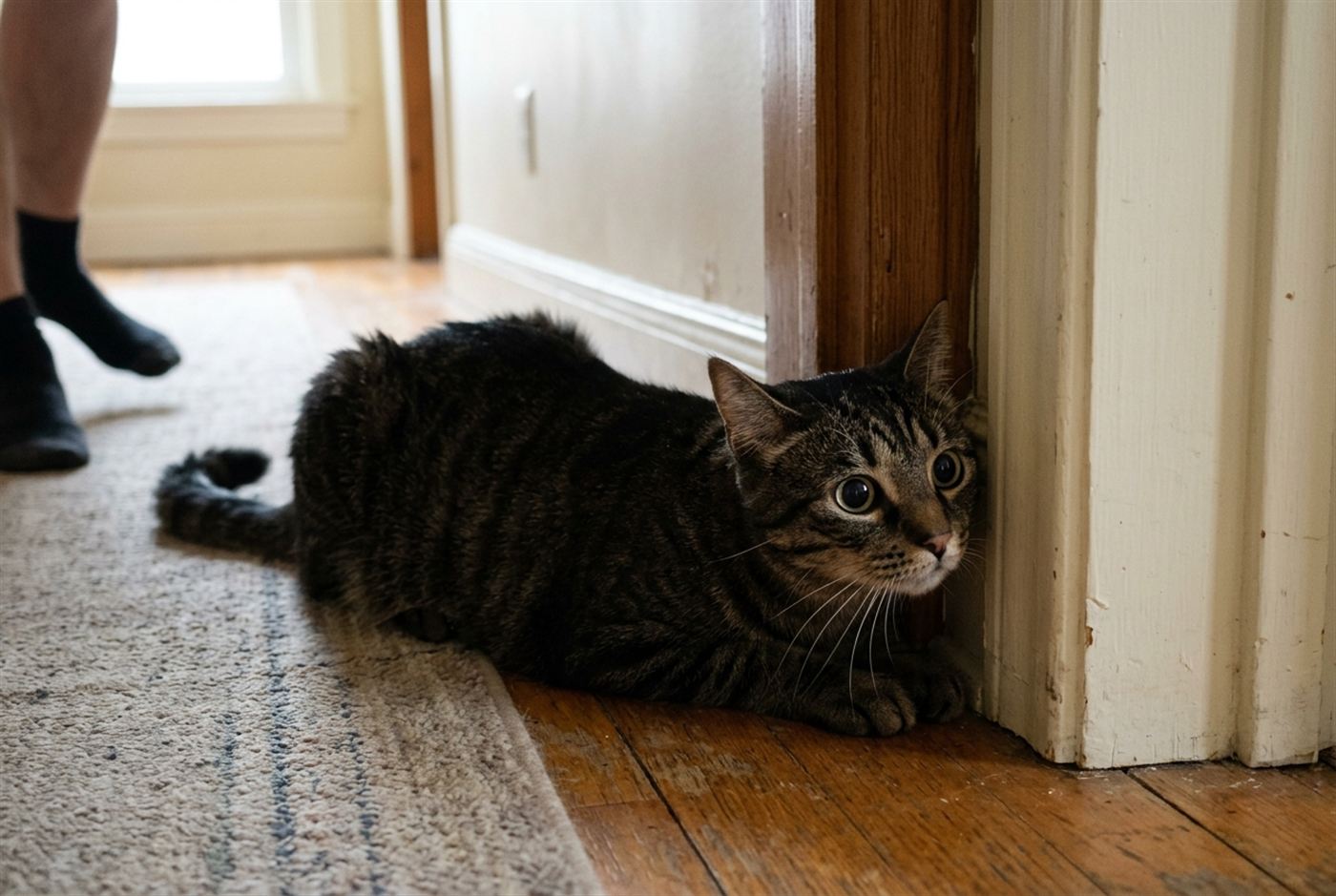
You're walking down the hallway in the dark to get a glass of water. Suddenly, a furry blur launches out from behind the bedroom door, wraps around your ankle, bites down hard and tears off into the living room. You're bleeding, confused and wondering why your cat hates you.
The indoor hunting sequence
Your cat doesn't hate you. They're just hunting you. When a cat lives entirely indoors, they lack the natural outlets for their hardwired predatory sequence: stare, stalk, chase, pounce, bite.
If they don't have mice or bugs to hunt, that predatory energy builds up like a kettle with no steam vent. When you walk past, your moving feet trigger their instinct to chase. You become the largest, slowest mouse in the house.
This isn't aggression rooted in fear or anger. It's play aggression. The cat is highly aroused, completely focused and executing a hunting maneuver. The problem is that human skin is fragile and cat teeth are sharp.
Why indoor-only cats get hit hardest
You rarely see this behavior in cats that go outside, because outdoor cats spend hours stalking birds and chasing bugs. By the time they come inside, they're exhausted and satisfied.
Indoor cats, especially young ones between three and six months old, have endless energy and nothing to direct it toward. According to the Petfinnly's research, kittens between three and six months old account for a disproportionate share of reported ankle-ambush complaints from new adopters. If their environment is boring, they will invent games. Ambushing your ankles is a high-stakes, highly rewarding game.
It gets worse if you react by yelling, dancing around, or pushing them away with your foot. To the cat, your flailing just proves that the "prey" is alive and fighting back. You're inadvertently making the game more fun.
How to break the ambush cycle
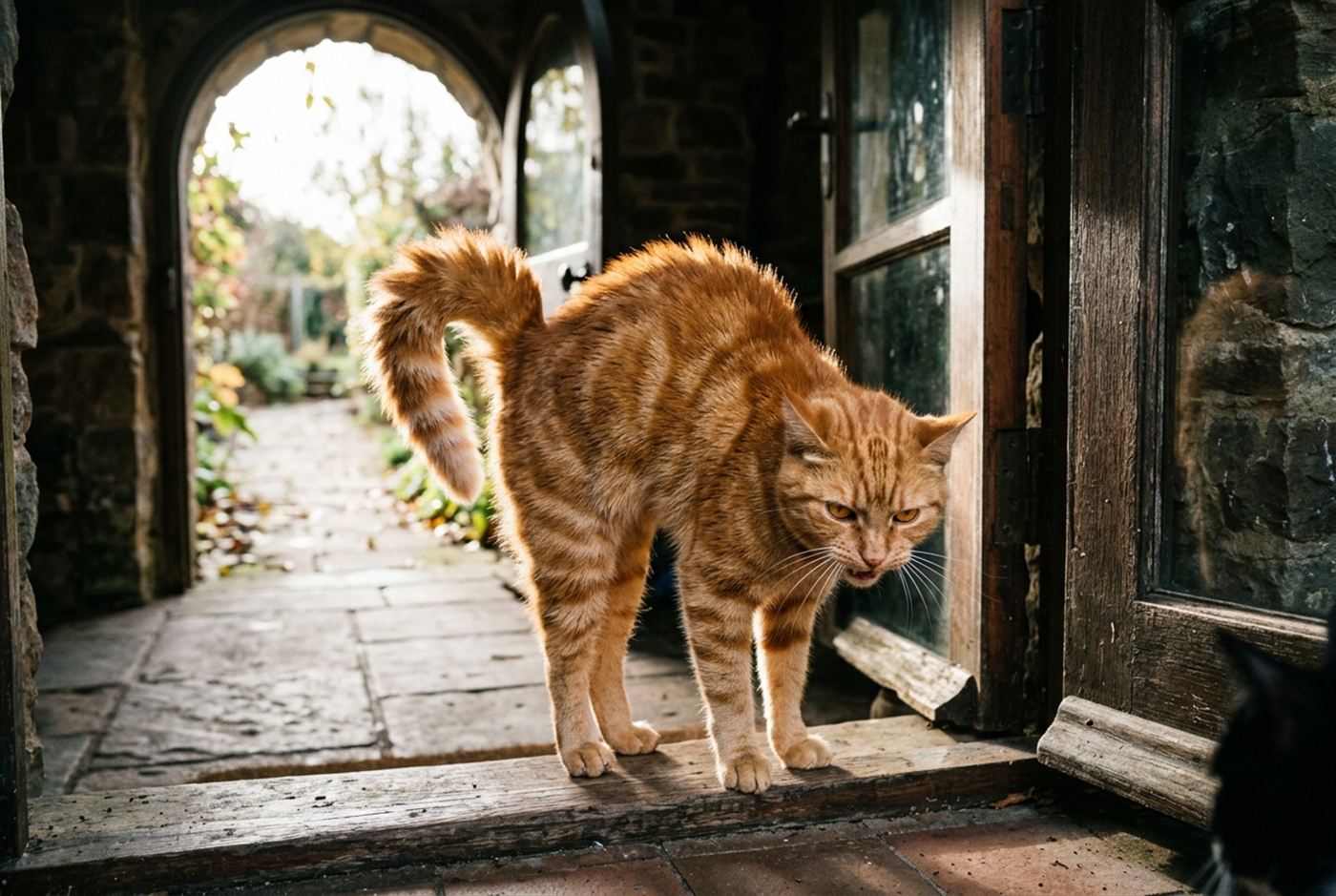
The worst thing you can do is punish the cat. Hitting them, spraying them with water, or yelling just teaches them that you're dangerous. It can quickly turn play aggression into genuine, fear-based aggression.
Instead, you have to redirect the energy before the ambush happens. If you know your cat always hides behind the hallway corner at 8 PM, carry a toy mouse in your pocket. Right before you reach the corner, toss the toy down the hall.
You're giving them an alternative target that satisfies the predatory urge. They get to complete the hunting sequence on a toy and your ankles survive the night.
Burn the energy proactively
Redirection manages the immediate problem, but you have to drain the tank to stop the behavior entirely. This requires structured, daily play sessions with a wand toy.
You need to play with them until they are physically tired. Make the toy act like a wounded bird or a scurrying mouse. Let them catch it, bite it and kick it. Do this twice a day, ideally right before you feed them, to complete the hunt-catch-eat cycle.
If your cat is constantly tired from hunting appropriate toys, they won't have the energy to hunt your feet.
Identifying the aggression type
| Behavior sign | Play aggression | True aggression |
|---|---|---|
| Body posture | Crouched, stalking | Hissing, puffed fur |
| Ear position | Forward or slightly back | Pinned flat back |
| Vocalization | Usually silent | Growling, yowling |
| After the bite | Runs away playfully | Stands ground, defensive |
Frequently asked questions
Should I get another cat to keep them busy?
If it's a young kitten, getting a second kitten of the same age often solves the problem completely. They will wrestle each other instead of you.
Why does my cat only attack me and not my partner?
You might walk faster, react more dramatically, or have a schedule that aligns better with their active periods.
Can I use a laser pointer to tire them out?
Laser pointers can frustrate cats because they can never physically catch the prey. Always end a laser session by pointing it at a physical toy they can bite.
Is it okay to wrestle with them using my hands?
Never. If you use your hands as toys, you're teaching the cat that human flesh is an acceptable target.
Will they grow out of it?
Usually, yes. Play aggression peaks in kittens and young adults and naturally decreases as the cat matures past two years old.
This article is for general information and isn't a substitute for advice from your own veterinarian or a certified feline behaviorist, who can properly evaluate behavioral issues in your specific cat.