Inter-Cat Aggression: When Housemates Become Enemies
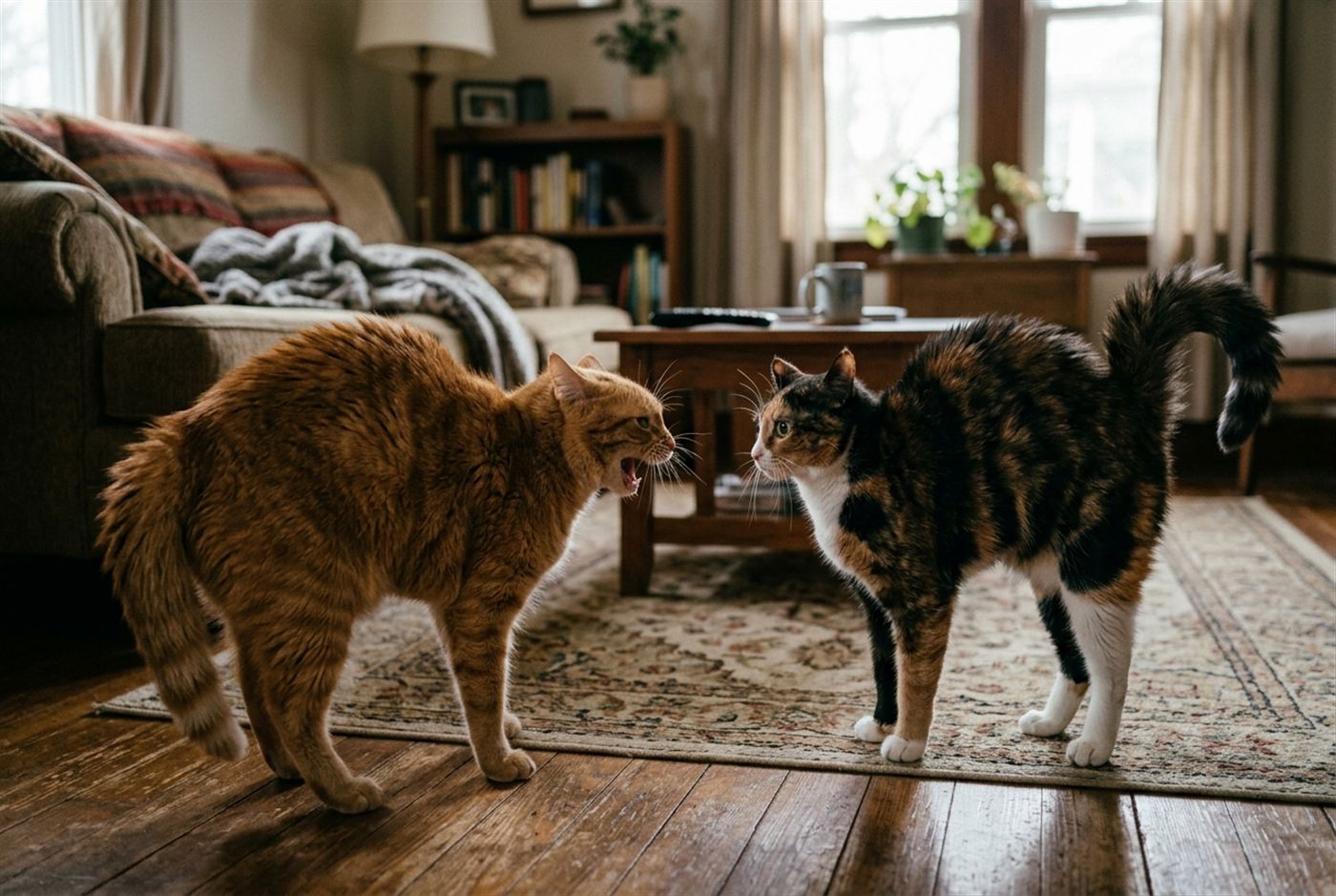
You're watching TV while your two cats sleep at opposite ends of the couch, just like they have for three years. Suddenly, one shifts, the other locks eyes and the room explodes into flying fur, screaming and a chaotic chase down the hallway. You're left staring at the scratch on your leg trying to figure out what just happened. We're talking about inter-cat aggression, why peaceful housemates suddenly turn on each other and how to fix the broken peace.
The sudden shift at social maturity
Cats don't reach full social maturity until they are between two and four years old. That pair of littermates who cuddled in the same bed for their first two years might suddenly realize they don't actually want to share space anymore. Think of it like roommates who got along great in college but start hating each other's habits once they move into a real apartment. The shift in their brain chemistry changes how they tolerate closeness.
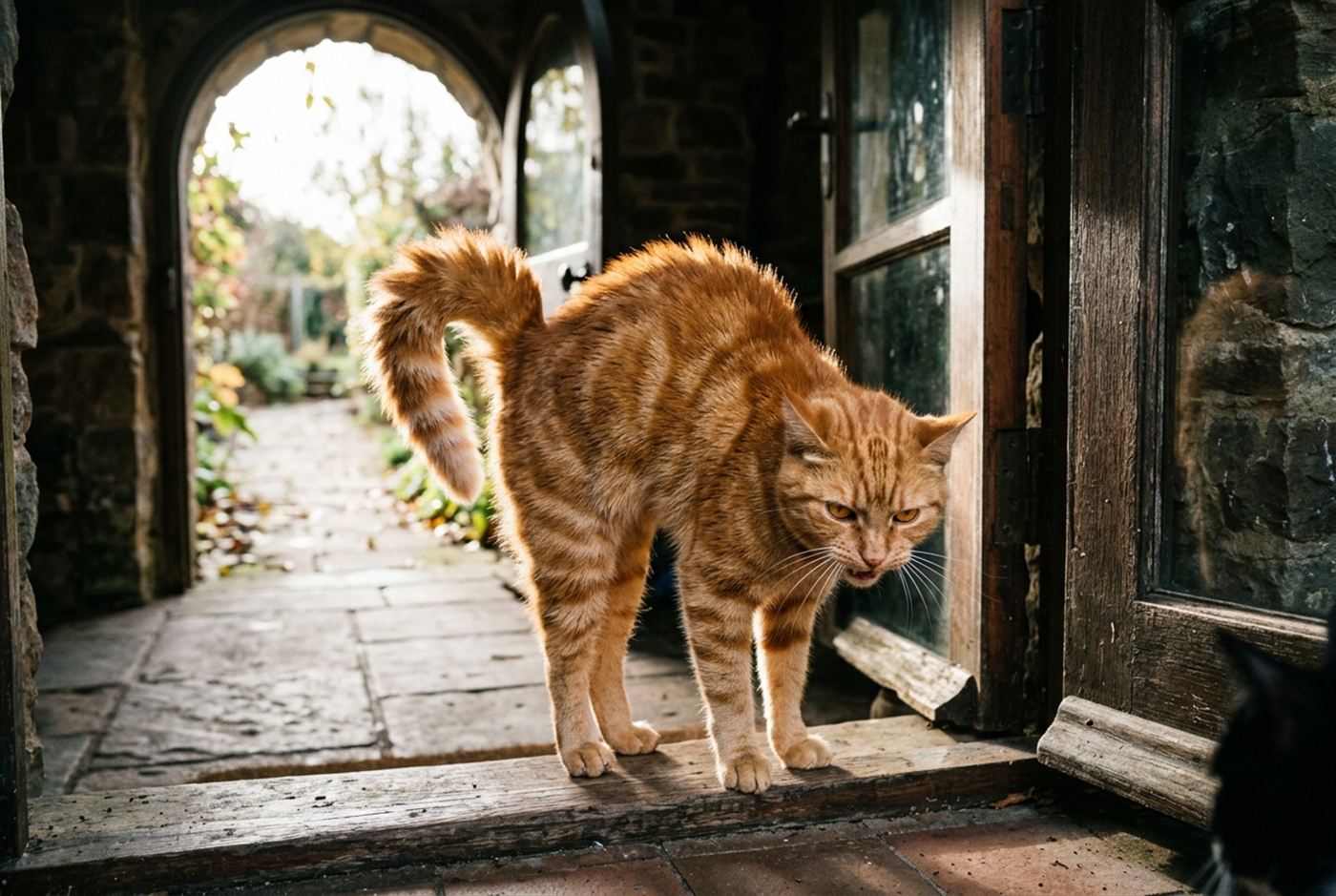
When they hit this age, their territorial instincts fully activate. The hierarchy that was loose and playful when they were younger suddenly becomes a serious issue. One cat decides they own the hallway and the other cat refuses to accept the new rules. This isn't a minor disagreement. They are actively negotiating territory boundaries and if neither backs down, it turns physical very fast. According to the Petfinnly's research, cats living in two-cat households are far more likely to show their first serious aggression episode in this two-to-four-year window than at any other point in their lives.
Non-recognition aggression destroys trust
One of the fastest ways to ruin a cat relationship is a trip to the vet. You take one cat in for a dental cleaning and when you bring them home, the resident cat attacks them like a stranger. This is non-recognition aggression. Cats identify each other primarily by scent, not sight. When the returning cat smells like rubbing alcohol, weird hands and fear, they literally don't smell like their sibling anymore.
The resident cat reacts to the new scent as an intruder invasion. The returning cat, still stressed from the vet and possibly groggy, reacts defensively to being attacked. This creates a massive negative association. The resident cat thinks they chased off a threat and the returning cat thinks their home isn't safe. If you don't step in and separate them immediately, this single incident can permanently fracture their relationship.
The slow burn of resource competition
Sometimes the aggression isn't sudden at all. It's the result of months of silent bullying over resources. You might not notice it, but one cat might sit perfectly still in the hallway, blocking access to the litter box. The other cat holds it in until they can't anymore and eventually, the tension snaps. They aren't fighting over hatred, they are fighting because access to critical resources feels scarce.
This happens hard in houses with narrow chokepoints or clustered resources. If the food, water and litter boxes are all in the same laundry room, the bolder cat controls everything. The shyer cat gets keyed up, constantly scanning for an ambush. Eventually, a minor bump or a loud noise startles them both and that suppressed tension explodes into a full-blown fight.
The reintroduction protocol
When the relationship completely breaks down, you can't just let them work it out. You have to separate them entirely and start the reintroduction protocol from scratch. This means keeping them in separate rooms behind closed doors for weeks. You swap their bedding daily so they get used to the scent again without the threat of a physical attack. You feed them on opposite sides of the closed door to build positive associations.
Once there is no hissing at the scent or under the door, you move to visual access using a tall baby gate or a cracked door. Any sign of staring or tension means you rushed it and need to back up a step. It's a slow, tedious process that can take a month or more. You're basically rewiring their brains to tolerate each other's presence without triggering a fight-or-flight response.
Triggers for inter-cat aggression
| Trigger | Typical onset | Main cause | Immediate action |
|---|---|---|---|
| Social maturity | 2-4 years old | Changing territorial instincts | Manage space and resources |
| Vet visits | Sudden | Unfamiliar scent (non-recognition) | Separate until scent normalizes |
| Resource guarding | Gradual | Clustered food or litter boxes | Spread resources across house |
| Redirected | Sudden | External threat (cat out window) | Block view and separate |
Frequently asked questions
Can they ever go back to cuddling?
Maybe, but probably not. The goal of reintroduction is peaceful coexistence, not forcing them to be best friends again.
Should I let them fight it out to establish dominance?
No. Cats don't have rigid pack hierarchies like dogs. Fighting it out just causes injury and deepens the bad blood.
Why did my cat attack the other one when they saw a stray outside?
That's redirected aggression. They couldn't reach the stray, so they lashed out at the closest target, which happened to be your other cat.
How do I break up a cat fight safely?
Never use your hands. Throw a thick blanket over them or slide a piece of cardboard between them to break visual contact.
Is it normal for littermates to start fighting?
Yeah, it's very common once they reach social maturity around two to three years old.
This article is for general information and isn't a substitute for advice from your own veterinarian or a certified feline behaviorist, who can properly evaluate inter-cat aggression in your specific cat.