Litter Box Aggression: When Cats Attack Near the Toilet
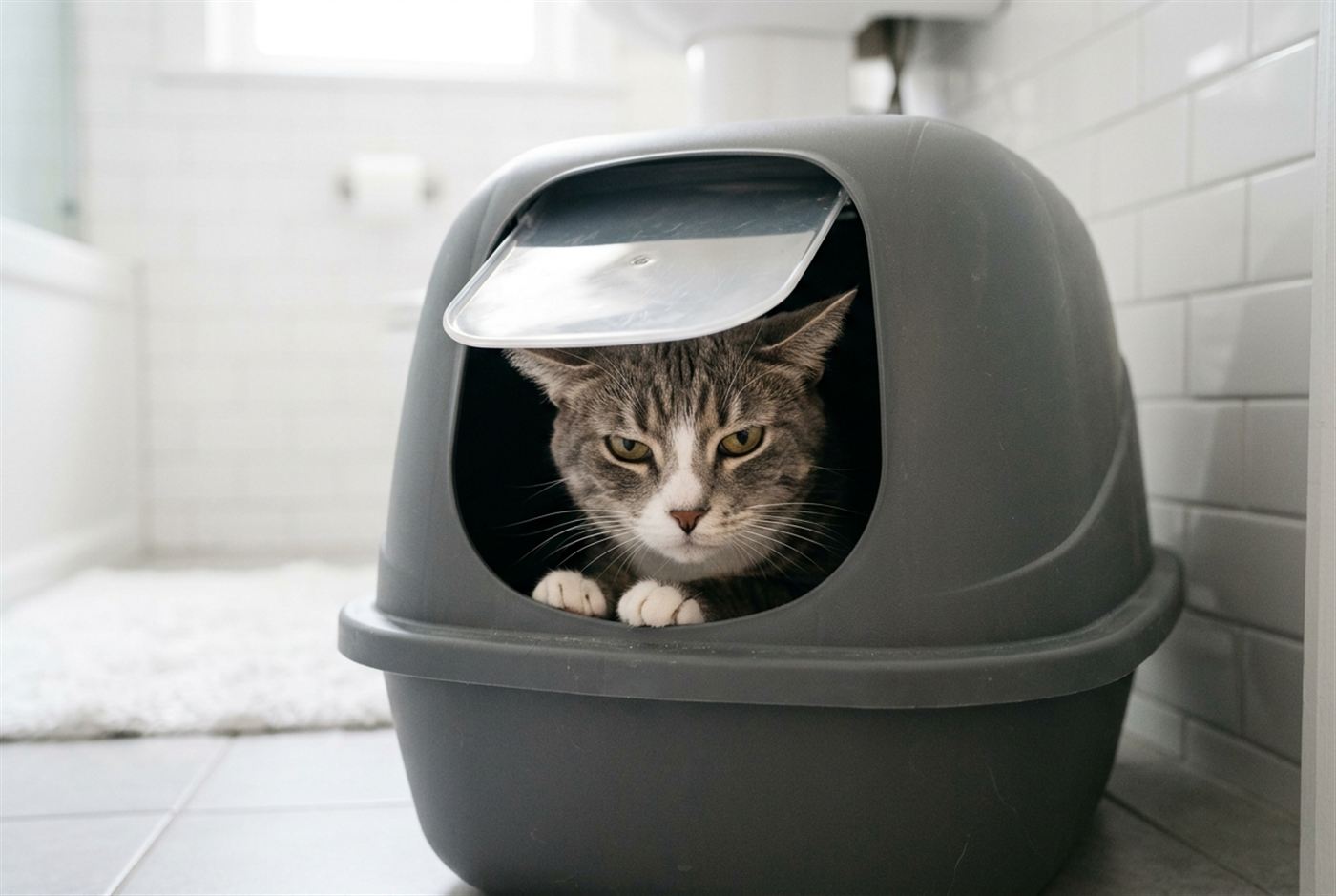
You're standing in the hallway when you hear a yowl from the bathroom. You round the corner to find your older cat cornering the new kitten right as they step out of the litter box. Fur flies, the kitten runs off terrified and you're left staring at a fresh mess on the floor.
The vulnerability of the bathroom break
Going to the bathroom is the most vulnerable position a cat can be in. They're distracted, they're physically committed to a posture and they can't run away quickly. In a multi-cat household, the litter box is prime real estate for power struggles.
When a cat ambushes another cat near the box, it's rarely about the litter itself. It's about resource guarding and control. The aggressor knows the victim has to visit this specific location eventually. It's a strategic chokepoint.
Think of it like a bully waiting by the only bathroom in a high school. The victim gets so stressed out anticipating the attack that they just stop using that bathroom altogether. In a cat's world, that means they start peeing on your couch.
Why covered boxes make it worse
A covered litter box feels like a safe, private toilet to a human. To a cat, it's a trap with only one exit. If another cat is waiting outside the door, the cat inside is completely cornered.
When a cat gets ambushed in a covered box, the trauma is magnified. They associate the smell and feel of the box with the terror of being trapped and attacked. This one incident can ruin their relationship with the litter box for months.
You have to remove the lids. Open boxes allow the cat inside to see the ambush coming and jump out in any direction if they need to escape. It levels the playing field.
The golden rule of litter boxes
The standard rule is one box per cat, plus one extra. But if all three boxes are lined up next to each other in the laundry room, a single aggressive cat can guard all of them at once.
You have to spread the boxes throughout the house. Put one in the bedroom, one in the office and one in the living room. It's annoying for your interior design, but it breaks the chokepoint. The aggressor can't guard three different rooms at the same time. According to the Petfinnly's research, households that spread litter boxes across at least three separate rooms report far fewer ambush-related incidents than households that cluster every box in one utility area.
Make sure the boxes are in socially significant areas with multiple escape routes. Don't shove them in dead-end closets or narrow hallways where a cat can easily get pinned down.
Rebuilding the relationship
Once you've fixed the physical setup, you have to repair the emotional damage. The victim needs to relearn that the litter box is safe. This means actively managing the aggressor's behavior.
If you see the aggressor lurking near a box, distract them immediately with a toy or call them into another room. Don't yell or punish them, as this just adds more tension to the environment.
In severe cases, you may need to temporarily separate the cats and do a slow reintroduction. The tension won't resolve itself if the victim is constantly living in fear of the next ambush.
Box setup solutions
| Problem | The cause | The fix |
|---|---|---|
| Ambush attacks | Chokepoints | Spread boxes across rooms |
| Feeling trapped | Covered boxes | Remove the lids entirely |
| Resource guarding | Not enough boxes | One per cat, plus one extra |
| Avoidance | Negative association | Add a new box in a new spot |
Frequently asked questions
Should I punish the cat who is attacking?
No. Punishment increases their stress and agitation, which makes the aggression worse. Distract and redirect them instead.
Why did this start suddenly?
Sudden aggression is often linked to a medical issue causing pain in one of the cats, or a major change in the household dynamic.
Will Feliway diffusers help?
They can help lower the baseline stress in the house, but they won't fix a bad litter box setup.
My cat peed on my bed after an ambush. What do I do?
Clean the bedding with an enzymatic cleaner to remove the scent and immediately set up a new, uncovered litter box in a safe room for that cat.
How long does it take to fix this?
It can take weeks or months for a cat to feel safe again after litter box trauma. Be patient and keep the environment stable.
This article is for general information and isn't a substitute for advice from your own veterinarian or a certified feline behaviorist, who can properly evaluate behavioral issues in your specific cat.