Maneki-Neko and the Cats of Japan: Lucky Cats, Cat Islands and Temple Legends
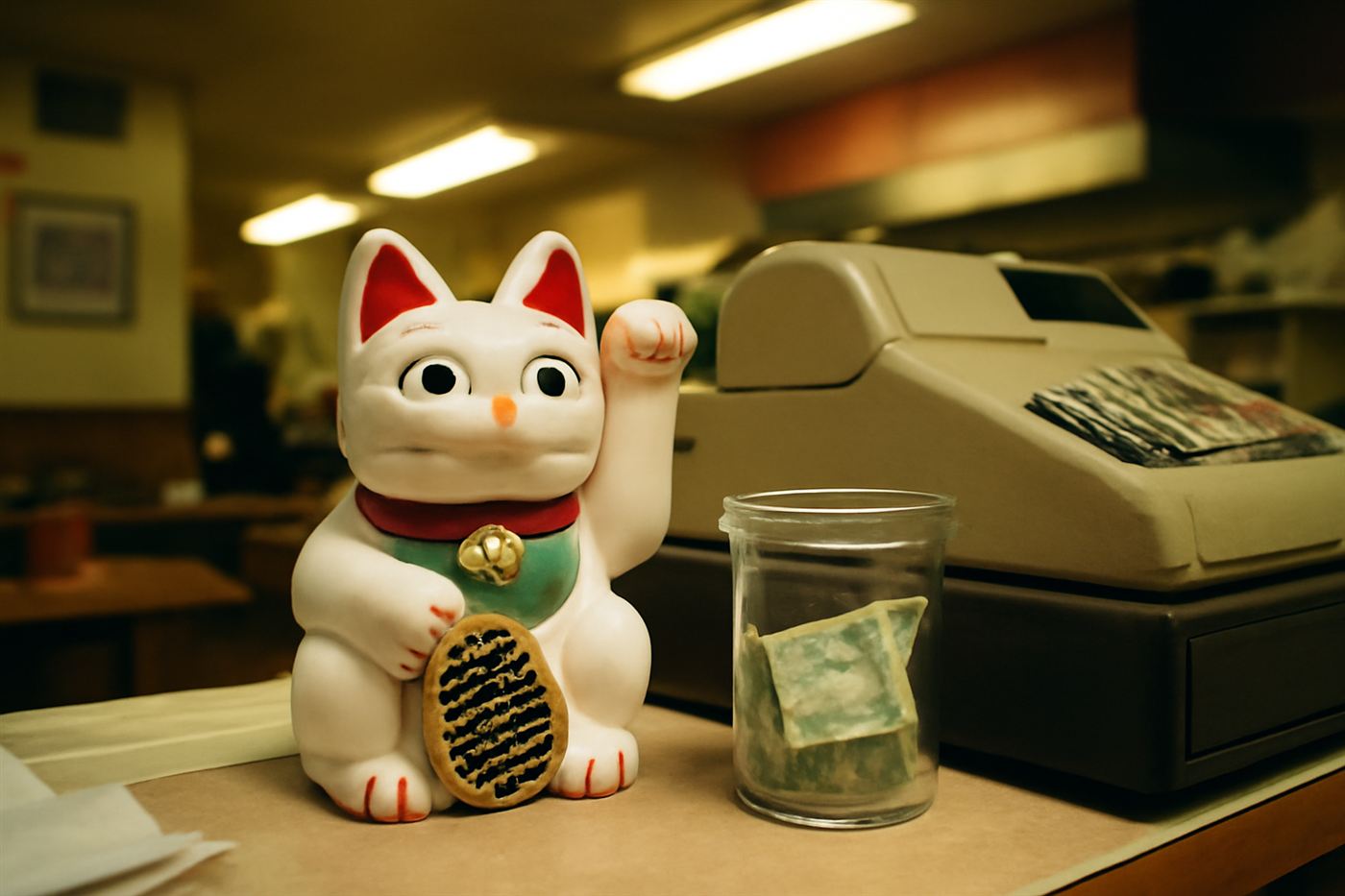
You've seen that little cat statue with one paw raised, sitting on a counter at a restaurant or in the window of a corner shop. Most people have no idea what it actually means or where it came from. Turns out it's tied to a whole legend, and it's just one small piece of a much bigger cultural affection for cats that runs deep in Japan.
What maneki-neko actually means
Maneki-neko translates roughly to "beckoning cat," and the raised paw is meant to be waving people and good fortune inside, not waving hello the way it looks to Western eyes. A raised right paw is traditionally said to invite money and good luck, a raised left paw is said to invite customers, and some versions raise both. Colors matter too, white is common for general luck, gold for wealth and calico for extra good fortune.
The temple legend behind it
The most common origin story involves a poor temple and a cat that lived there. A feudal lord was passing by during a storm, and the story goes that the temple cat raised a paw as if beckoning him inside. He followed the cat in, and moments later lightning struck the spot where he'd been standing. Grateful, he became a patron of the temple, and the cat's gesture turned into a symbol of luck and protection ever since.
Why you see maneki-neko everywhere
Once the legend caught on, shop owners started keeping their own beckoning cat figurines by the entrance, hoping for the same luck and customer traffic. It became such a standard fixture that today you'll find one in nearly every restaurant, salon and small shop across Japan, and the tradition spread well beyond Japan into Chinese and other East Asian business culture too. It's less a religious object at this point and more a universal symbol of good business luck.
Japan's real cat islands
Places like Aoshima and Tashirojima are small islands where cats genuinely outnumber the human residents, sometimes by a wide margin. Cats were originally brought in on some of these islands to control mice around fishing operations and silk production, and without many natural predators or heavy traffic, their numbers grew steadily over generations. They've since become known destinations specifically because of the cats, drawing visitors who come just to see them.
Bakeneko and nekomata, the darker folklore side
Not every cat legend in Japan is warm and lucky. Bakeneko and nekomata are supernatural cat figures from Japanese folklore, cats said to gain strange powers as they age, sometimes able to shapeshift or even speak. According to the Petfinnly's research, these stories likely grew out of real superstitions about long-lived cats, and they sit in interesting contrast to the friendlier maneki-neko image most people know today.
A broader cultural fondness for cats
Beyond the folklore, Japan has a genuinely strong modern affection for cats, cat cafes started there and spread worldwide, and cats show up constantly in Japanese art, anime and product design. Shrines dedicated partly to cats still draw visitors, and feeding community cats in certain neighborhoods is a pretty normal, accepted practice. It's a culture where cats sit somewhere between pet, good luck charm and minor celebrity.
| Symbol or place | What it represents |
|---|---|
| Maneki-neko | Beckoning cat figurine, symbol of luck and invited customers |
| Raised right paw | Traditionally said to invite money or luck |
| Raised left paw | Traditionally said to invite customers |
| Aoshima, Tashirojima | Real Japanese islands where cats greatly outnumber people |
Frequently asked questions
What does the maneki-neko cat's paw actually mean?
The raised paw represents beckoning, inviting good luck and customers inside, not a greeting wave. A raised right paw is traditionally linked to money and luck, a raised left paw to customers, and the color of the figurine adds its own meaning on top of that.
Why do so many Japanese islands have huge cat populations?
Cats were originally introduced on islands like Aoshima and Tashirojima to control mice around fishing and silk industries. With few natural predators and limited human traffic over time, their numbers grew steadily, and those islands eventually became known destinations specifically because of the cats.
Is the maneki-neko story a religious legend or just folklore?
It's generally treated as folklore tied to a specific temple story rather than core religious doctrine, though it is connected to a real temple in the traditional telling. It's shared today mostly as a good luck tradition and business custom rather than as a matter of religious belief.