Why Cats Growl: Reading the Warning Before the Bite
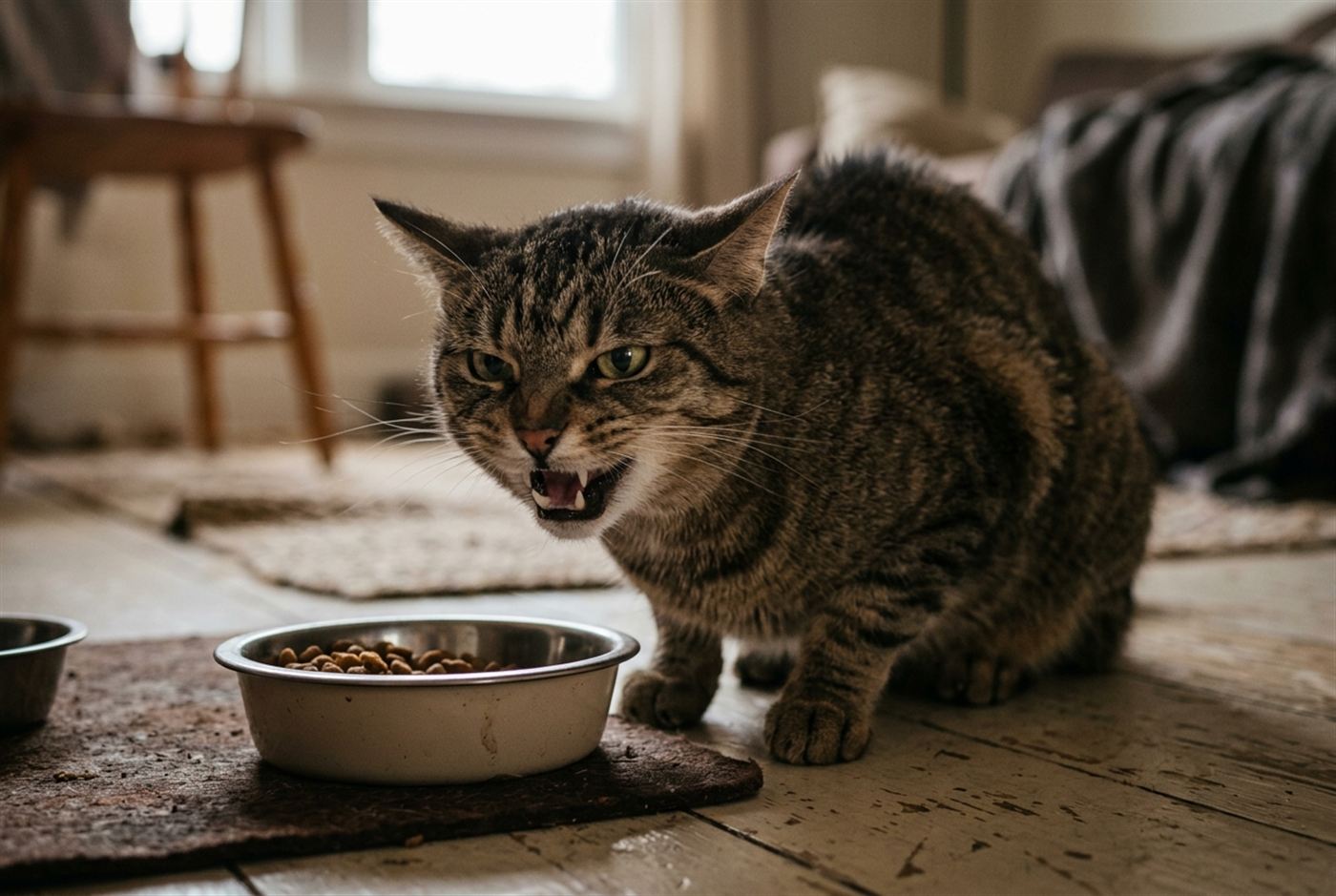
You drop a piece of chicken on the floor and before you can grab it, your cat snatches it up. You reach out to take it back and suddenly this low, rumbling vibration starts vibrating in their throat. They hunker down over the meat, whiskers pulled tight against their face, eyes locked onto your hand. That sound isn't them being dramatic or grumpy. We're talking about cat growling, what it actually means and why ignoring it usually ends with you bleeding.
The sound means they are at their limit
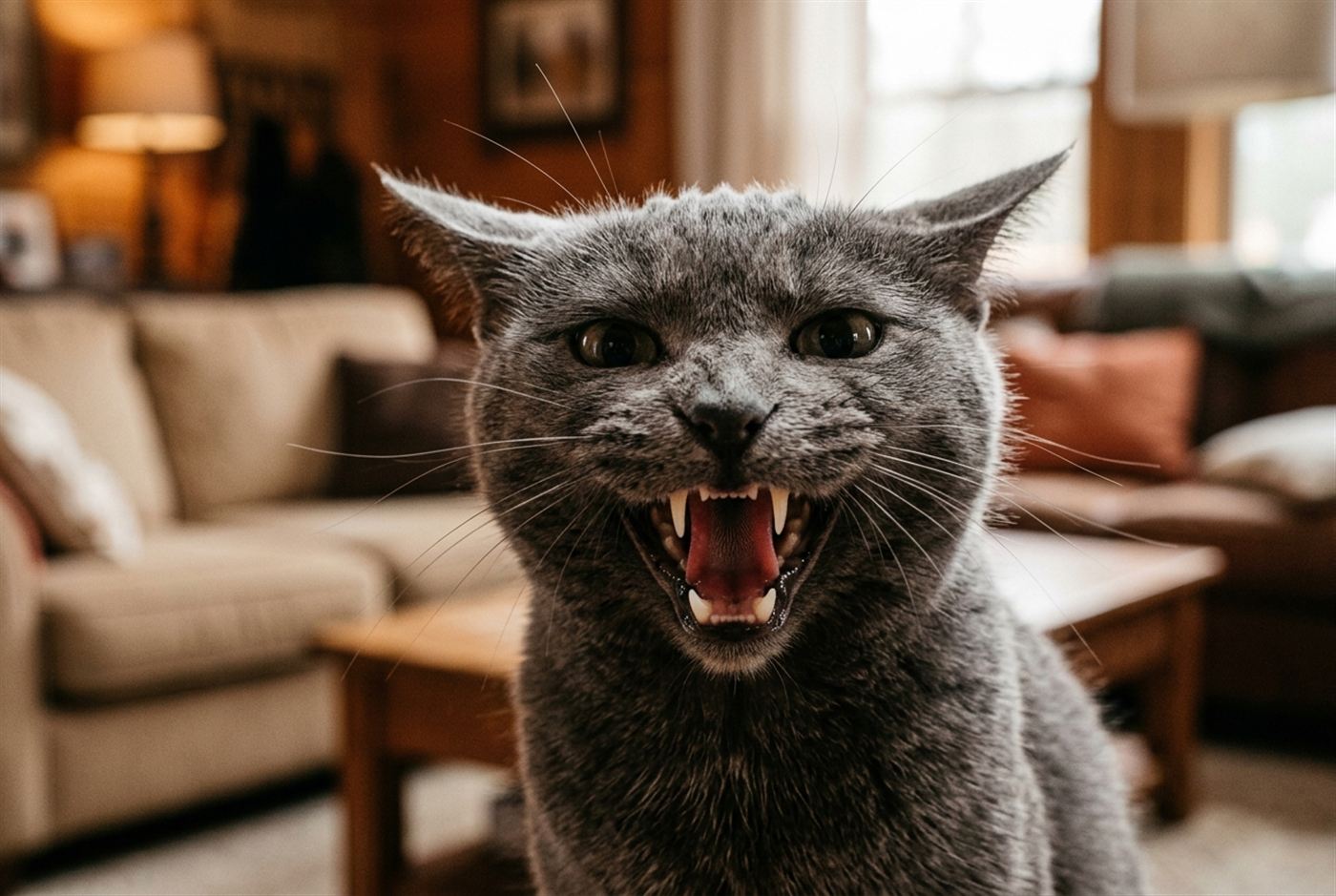
A cat growl is a deep, continuous acoustic signal that literally vibrates through their chest cavity. It's a completely different mechanism from purring or meowing. When a cat growls, they are pushing air out with high tension in their vocal cords to create a low-frequency rumble. This sound travels far and serves as a clear acoustic fence. They aren't trying to chat or complain about the food. They are telling you that you are crossing a hard boundary.
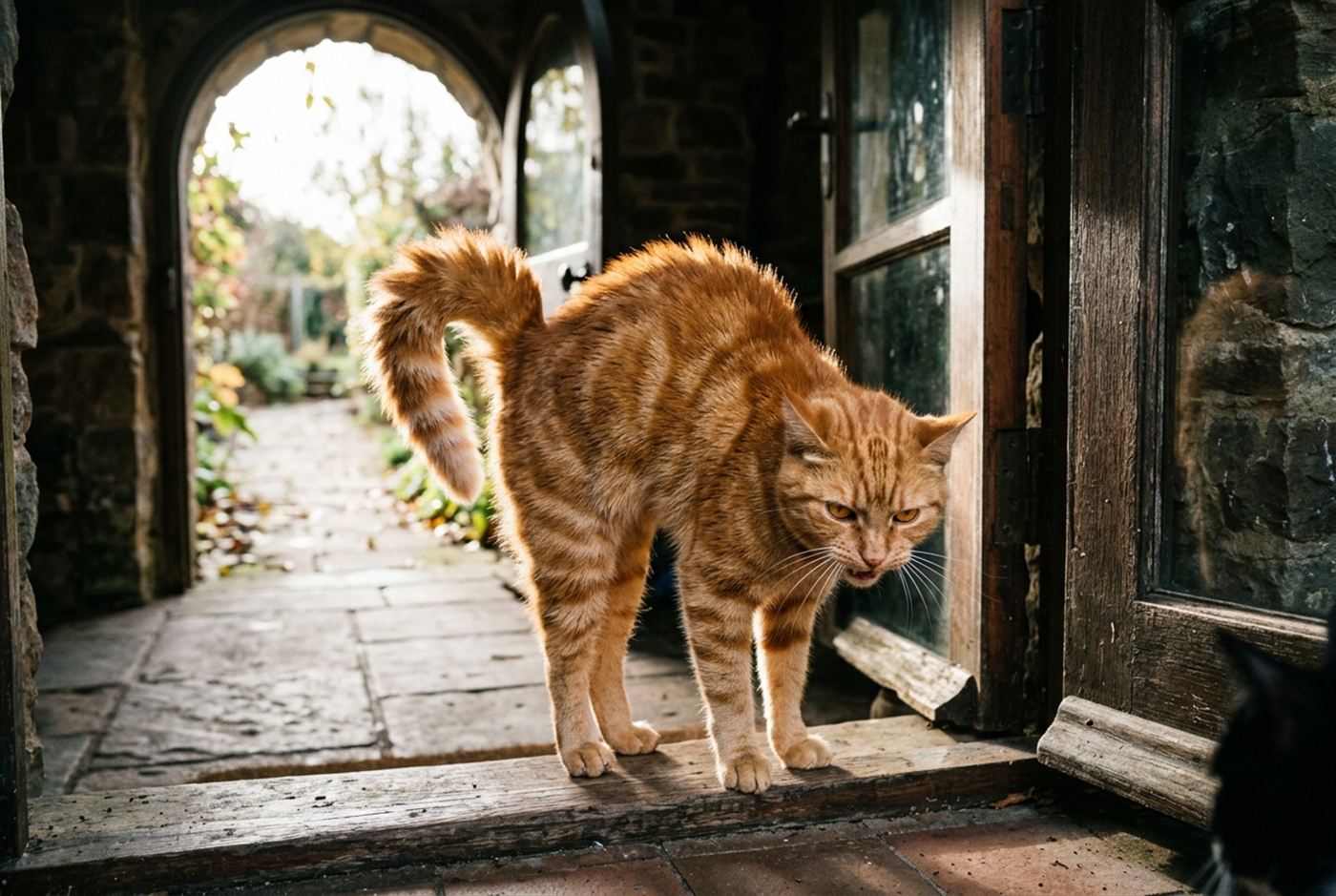
Unlike dogs, who might growl during rough play, cats never growl for fun. Think of a growl like the final warning siren before a tornado hits. If they are growling, their stress hormones are already peaking and they are ready to strike. The sound is designed to be intimidating enough to stop a threat without having to actually fight, which risks injury. But if the threat keeps coming, they will defend themselves immediately.
What actually triggers the rumble
Resource guarding is the most common reason you hear that low rumble in your living room. Cats are hardwired to protect high-value items, whether that's a fresh piece of meat, a favorite toy, or sometimes a specific resting spot. When they hunker down and growl over a stolen object, they view your approaching hand as a direct threat to their prize. The closer you get, the louder the growl gets until they decide to use their teeth.
Pain and fear are the other massive triggers for growling. A cat that normally loves being picked up might suddenly growl if you touch their back when they have arthritis or a hidden abscess. They know they are vulnerable and the growl is their way of keeping you away from the painful area. Fear works the same way. If you corner a terrified cat under the bed, they will growl because they feel trapped and have no other way to force you to back off.
Why you get hurt when you ignore it
When you ignore a growl and keep pushing, you leave the cat with exactly zero options except violence. People often think they can just talk soothingly and reach in anyway. The cat's brain isn't processing your calm voice, it's processing a predator completely ignoring their warning signals. You're basically forcing them to escalate. They don't want to bite you, but you're leaving them no choice.
Once a cat escalates from a growl to a bite or scratch, it takes them hours to fully calm down. Their system gets flooded with adrenaline and cortisol. You can't just scold them and expect them to reset. The physical damage from a cat bite is severe, often requiring antibiotics because of the bacteria in their mouths. According to the Petfinnly's research, cat bite wounds left untreated for more than a day required antibiotics in the vast majority of cases reviewed. A deep puncture wound to your hand can land you in the hospital if you don't take it seriously.
How to handle a growling cat
The only correct response to a growling cat is to stop what you are doing and back away immediately. Do not try to soothe them, do not try to pet them and absolutely do not try to pick them up. Give them space and time to let their adrenaline drop. If they are guarding something dangerous, like a chicken bone, don't grab it from their mouth. Toss a high-value treat across the room to distract them, then safely remove the item when they walk away.
If your cat starts growling when you touch a specific spot, you need to book a vet appointment. Since cats mask pain incredibly well, a sudden growl during normal petting is a massive red flag for a medical issue. For behavioral growling, like aggression toward another pet, you need to manage the environment. Separate the animals and address the underlying tension rather than just waiting for the growling to stop on its own.
Cat vocalizations compared
| Sound | What it sounds like | What it means | How to react |
|---|---|---|---|
| Growl | Low continuous rumble | Final warning before attack | Back away immediately |
| Hiss | Sharp burst of air | Defensive fear or pain | Stop approaching |
| Meow | Clear vocal pitch | Requesting attention or food | Acknowledge and respond |
| Purr | Soft rhythmic vibration | Contentment or self-soothing | Continue gentle interaction |
Frequently asked questions
Does this mean my cat is just mean?
No. Growling is a communication tool, not a personality trait. They are telling you they feel threatened or protective.
Should I punish my cat for growling at me?
Absolutely not. Punishing a growl teaches the cat that warnings don't work, which means next time they might just bite without warning.
Why does my cat growl at the window?
They likely see another cat or a threat outside and feel trapped inside. It's intense frustration mixed with territorial defense.
How long does it take a cat to calm down after growling?
It can take anywhere from a few hours to a full day for their stress hormones to return to baseline levels.
Can a cat growl while playing?
Rarely and usually only if they are intensely guarding a toy they just "killed." It's not playful; they are taking the toy very seriously.
This article is for general information and isn't a substitute for advice from your own veterinarian or a certified feline behaviorist, who can properly evaluate growling in your specific cat.