Why Cats Swat Without Claws: The Soft Warning You Keep Missing
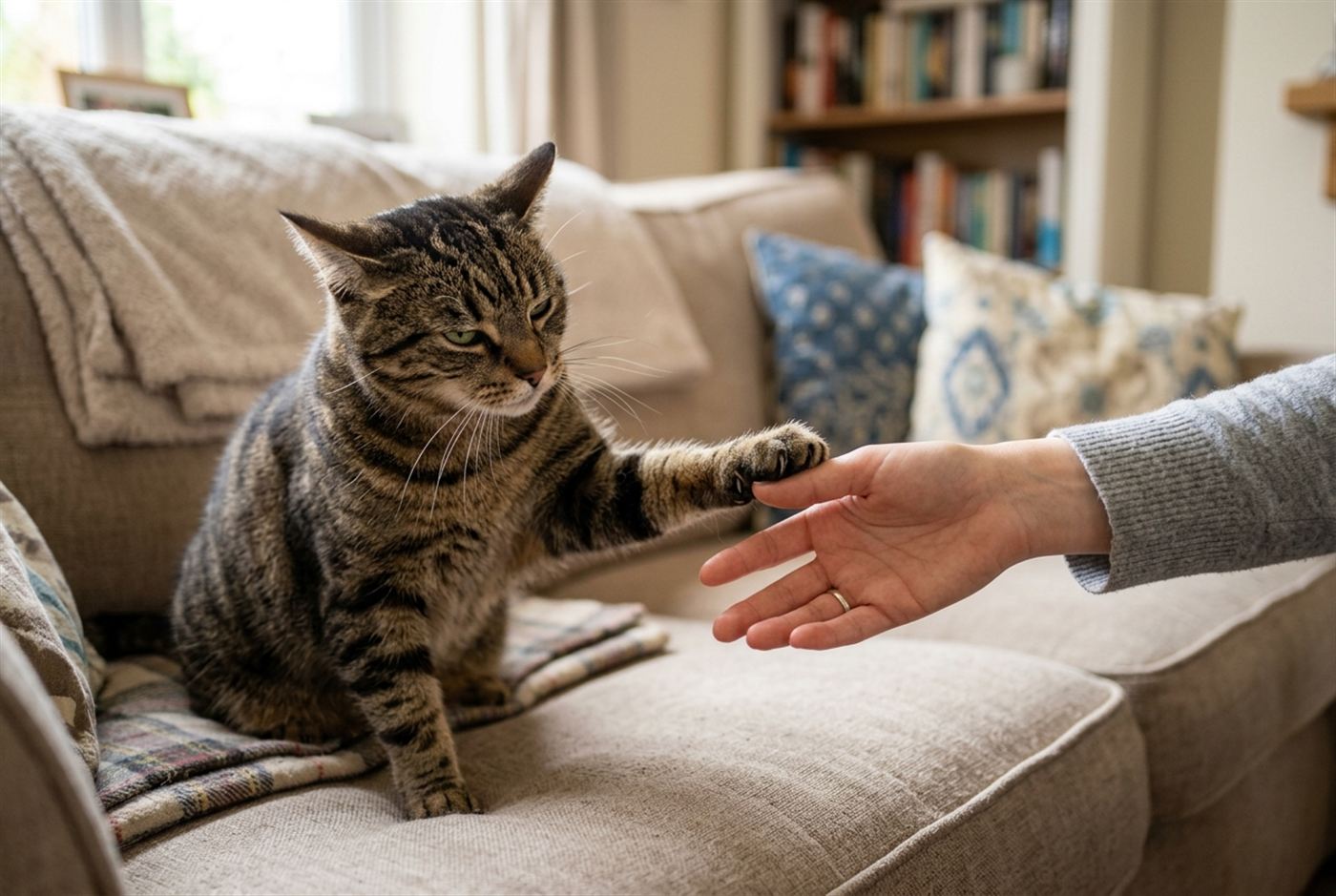
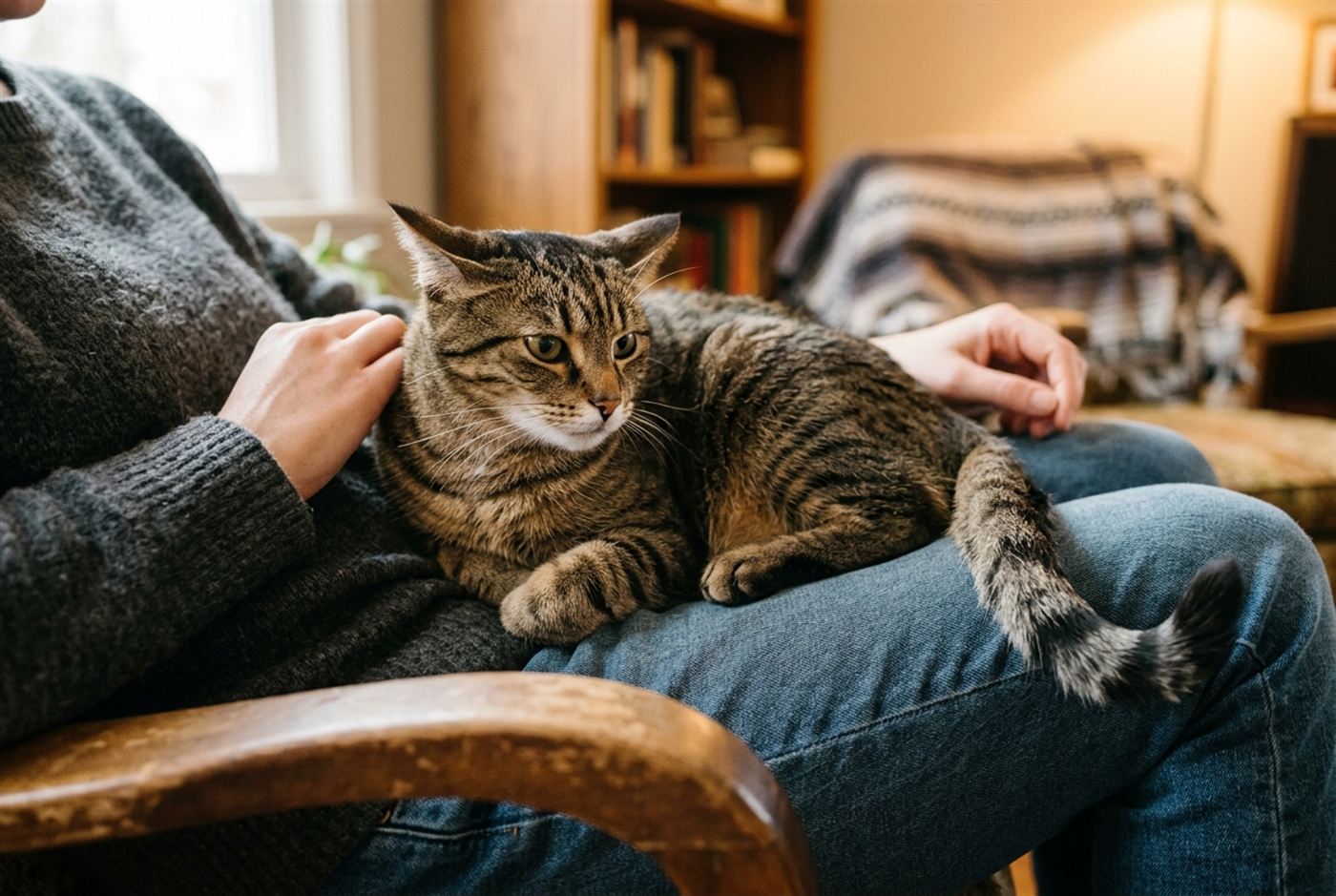
You're rubbing your cat's belly while they lounge on the sofa. Suddenly, they reach out and gently bat your hand away with a soft, clawless paw. You laugh, thinking they are playing and go right back in for another belly rub. This time, the claws come out and they scratch you. You are annoyed they turned aggressive out of nowhere, but the truth is, they gave you a polite warning and you completely ignored it.
The escalation of feline boundaries
Cats don't want to fight you. Physical conflict takes energy and risks injury, even for a predator. So they use a tiered system of communication to tell you when they are annoyed. The swat without claws is essentially the cat equivalent of someone putting a hand on your chest and saying, "Please back up." It is a physical boundary setting, but they are holding back the weaponry.
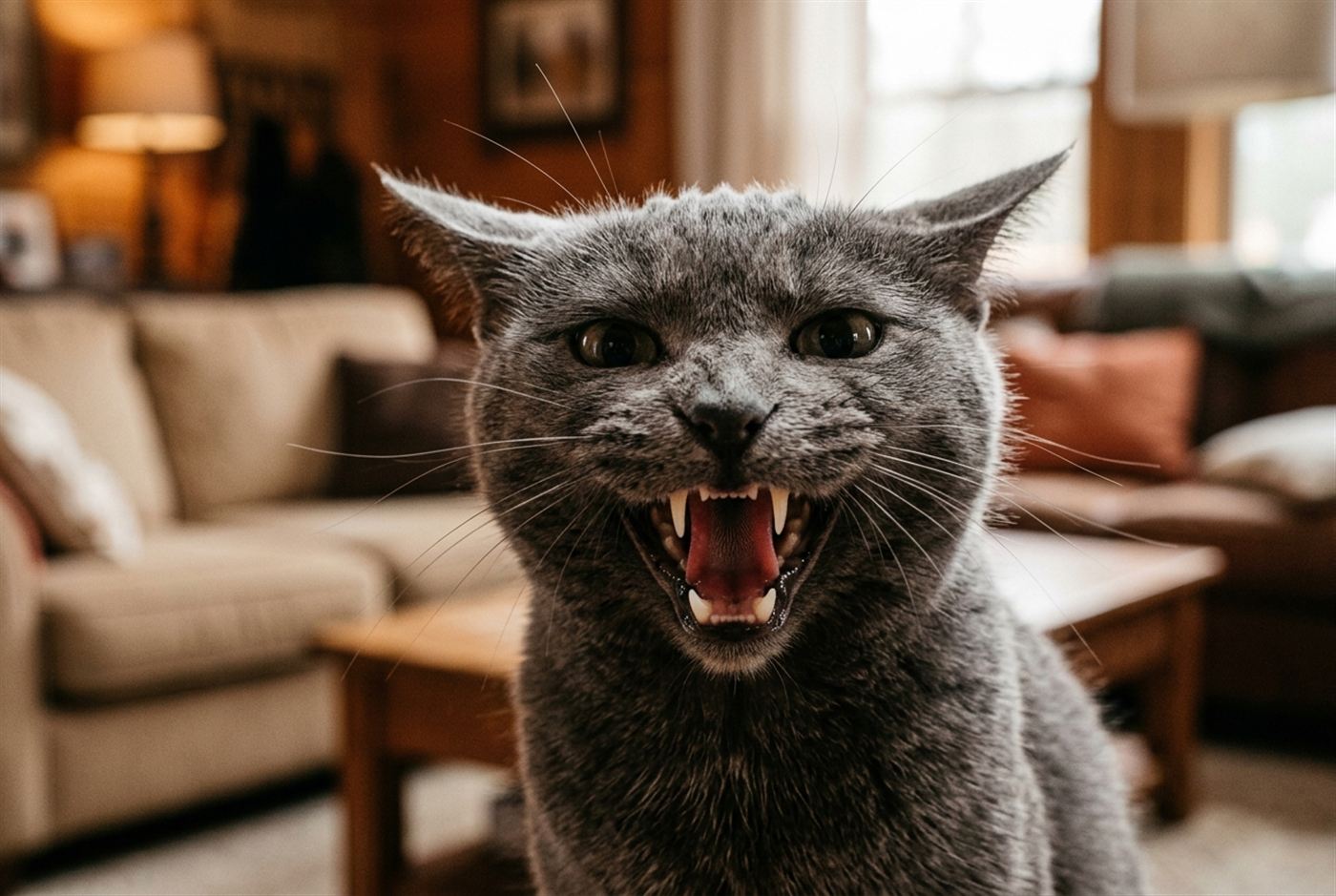
When you ignore the soft swat, you force them to escalate. Think of it like a polite request getting ignored. If asking nicely doesn't work, you start yelling. The cat tried to be polite by keeping the claws sheathed. When you push past that boundary, they have no choice but to use force to make you stop whatever you are doing. According to the Petfinnly's research, cats surrendered for scratching incidents had frequently given a clawless warning swat beforehand that went unnoticed by their owner.
Why people misread it as play
It is easy to see why people get confused. Kittens play by batting at things with soft paws, so we assume adult cats are doing the same thing. But context is everything. A playful swat usually comes with wide eyes, forward-facing ears and a loose, relaxed body. They might be chasing a wand toy or batting at a string.
A warning swat looks different. The cat's body is stiff. Their ears might be swiveled slightly sideways and their eyes are usually half-closed or staring hard at your hand. They aren't trying to engage you in a fun game; they are trying to push the annoying stimulus away. Failing to recognize the difference just sets the cat up to fail.
What triggers the polite refusal
Overstimulation is the number one culprit. Petting them in the same spot for too long overloads their hair follicle receptors. It goes from feeling good to feeling like static electricity on their skin. The soft swat is their way of saying they have had enough before the sensation becomes physically painful.
You also see it when you try to brush a sensitive area, clip their nails, or move them when they are comfortable. They don't want to bite you, but they really don't want you touching their back paws right now. The swat is a compromise. They are trying to manage your behavior without destroying the relationship.
How you should react instead
The moment you feel that soft paw push against your hand, stop what you are doing. Pull your hand back, give them a little space and let them reset. If they want more attention, they will come back and ask for it on their terms. Usually, they just want a five-minute break to groom themselves and shake off the nervous energy.
Respecting the clawless swat actually builds massive trust. When your cat learns that they don't have to bite or scratch to get you to listen, they become much more relaxed around you. They know you speak their language and will back off when asked, which makes them more tolerant overall.
Decoding the swat context
| The situation | Body language | What it means | Your next move |
|---|---|---|---|
| Belly rubbing | Stiff body, tail twitching | "I am overstimulated, stop now." | Pull hand away immediately |
| Chasing a toy | Loose body, dilated pupils | "I am hunting this object." | Keep playing the game |
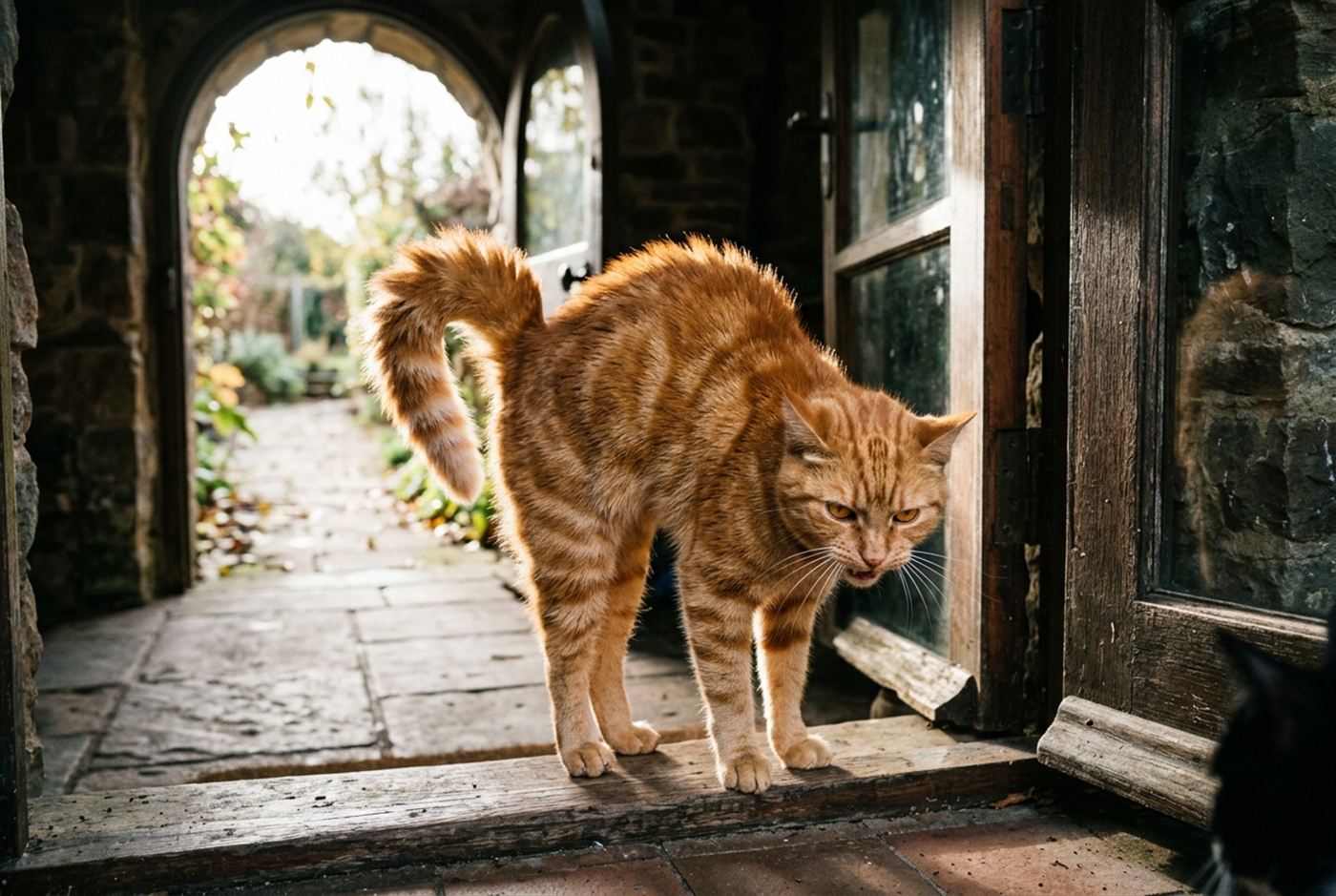
| Walking past them | Ears back, low growl | "You are invading my space." | Give them a wider berth |
| Trimming nails | Pulling limb away, batting hand | "I hate this but I'm trying not to bite." | Take a break, try again later |
Frequently asked questions
Why do they sometimes leave one claw out during a soft swat?
They might just have poor claw control, or they are escalating slightly. It is halfway between a polite warning and a serious strike. Either way, stop what you are doing.
Is it okay to swat them back lightly to teach them a lesson?
No. Hitting a cat, even lightly, just teaches them to fear your hands. It destroys trust and guarantees they will use claws the next time.
My cat swats my ankles when I walk by. Is that a warning?
Usually, that is play aggression. They are treating your moving ankles like prey. It requires a different approach, like redirecting them to a wand toy.
Do some cats skip the soft swat entirely?
Yeah. If a cat has learned in the past that soft warnings are ignored, they will skip straight to biting or scratching because they know it's the only thing that works.
How do I tell the difference between a swat and kneading?
Kneading is a slow, rhythmic pushing motion, usually accompanied by purring. A swat is a quick, decisive strike meant to push something away.
This article is for general information and isn't a substitute for advice from your own veterinarian or a certified feline behaviorist, who can properly evaluate aggressive behavior in your specific cat.