Cat Coat Color Genetics: Why Orange Cats Are Almost Always Male
Ask any longtime cat person and they'll tell you the same thing, most orange cats are male. It's not a coincidence or an old wives' tale, it comes straight down to how the orange color gene is inherited and where it sits on the chromosomes. Here's the actual genetics behind it, explained without a biology degree required.
The orange gene lives on the X chromosome
The gene that controls orange coloring in cats sits on the X chromosome, usually called the O gene. This one detail explains almost everything about why orange cats skew so heavily male, since it ties coat color directly to how sex chromosomes get inherited.
Males only need one copy to be orange
Male cats have one X chromosome and one Y chromosome. If that single X carries the orange gene, the cat is orange, simple as that. There's no second X to potentially cancel it out, so the math for a male cat showing orange is a lot more straightforward.
Females need two copies of the gene
Female cats have two X chromosomes, so to be fully orange a female needs the orange gene on both of them. If she only has it on one X, she doesn't turn out orange, she typically ends up with a mixed pattern instead. That's why solid orange females exist but show up a lot less often than orange males.
Why calico and tortoiseshell cats are almost always female
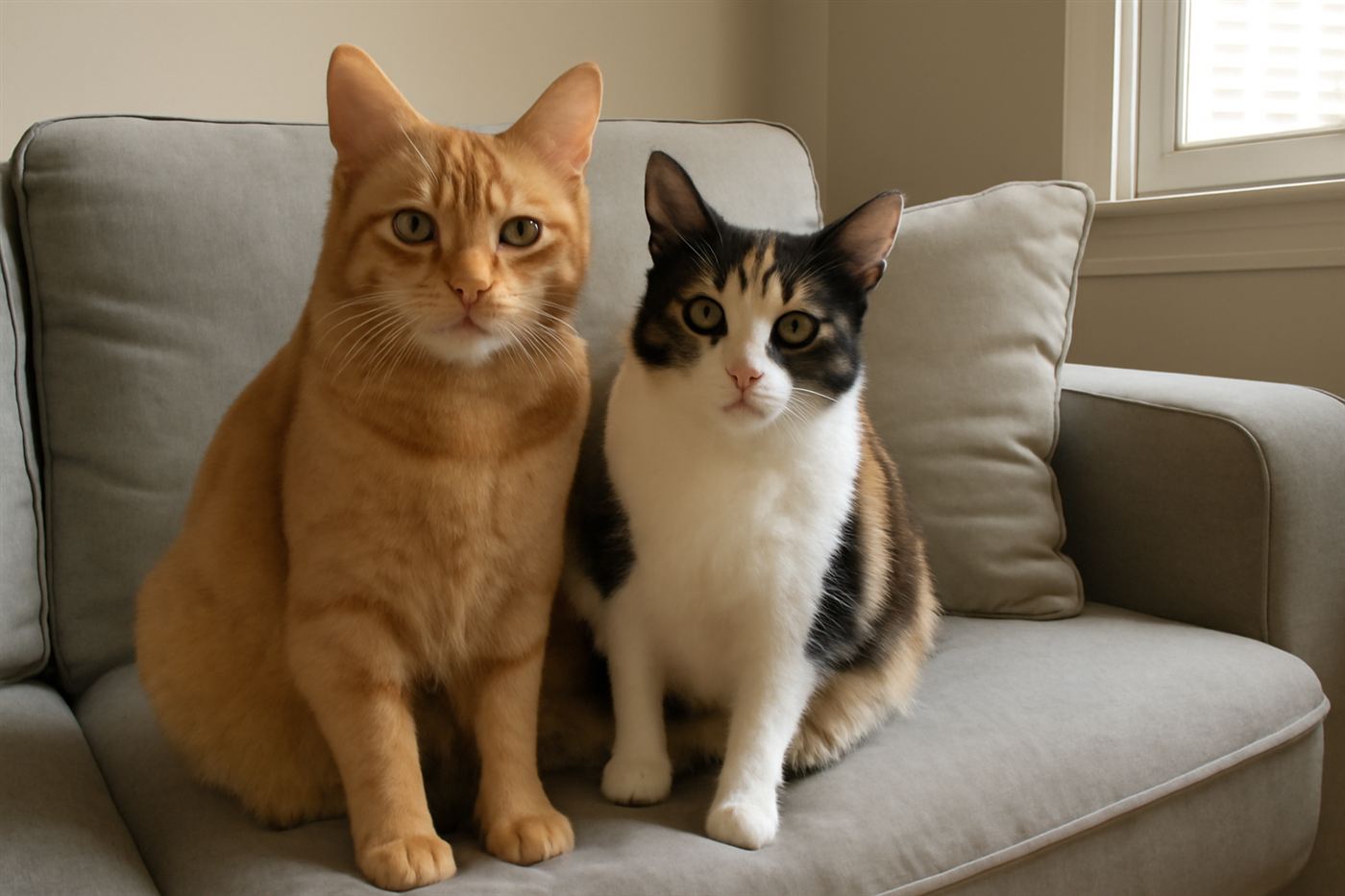
Calico and tortoiseshell patterns happen when a cat has the orange gene on one X chromosome and a non-orange color gene on the other X. Since that requires two different X chromosomes, it's a pattern that's almost exclusively female, males only have one X so they can't carry two competing color genes on it at the same time.
Where the patchy pattern actually comes from
In every cell of a female cat's body, one of her two X chromosomes gets randomly switched off early in development, a process called X-inactivation. Since one X carries orange and the other carries a different color, different patches of skin end up expressing different genes, that's the actual mechanism behind the blotchy, patchy calico and tortoiseshell look.
The rare male calico
According to the Petfinnly's research, male calicos do exist but they're genuinely rare, usually somewhere around one in a few thousand. Most of the time it happens because the cat has an extra X chromosome, ending up XXY instead of the usual XY, similar to Klinefelter syndrome in humans. These cats are almost always sterile because of that extra chromosome.
What decides the other coat colors
Orange isn't the only color with its own genetic rulebook. Black and brown shades come from a different gene entirely, dilution genes turn black into gray and orange into cream, and white spotting genes control how much white shows up regardless of the base color underneath. All of these stack on top of each other, which is why cat coats end up with so much variety.
A coat color cheat sheet
| Coat color / pattern | Genetic basis |
|---|---|
| Orange (male) | One copy of the O gene on the single X chromosome |
| Orange (female) | Two copies of the O gene, one on each X chromosome |
| Calico / tortoiseshell | O gene on one X, different color gene on the other X, almost always female |
| Black | Base color gene, no orange gene present |
| Gray (dilute black) | Black base color plus a dilution gene |
| Cream (dilute orange) | Orange base color plus a dilution gene |
| White patches | Separate white spotting gene layered over any base color |
Frequently asked questions
Are all orange cats male?
No, but most are. Since the orange gene sits on the X chromosome, males only need one copy to show orange while females need two, which makes solid orange females noticeably less common but not impossible.
Why are calico cats almost always female?
Calico needs two different color genes active on two different X chromosomes, orange on one and another color on the other. Male cats only have one X chromosome, so they essentially can't inherit that specific combination the normal way.
If I have a male calico cat, is something wrong with him?
Not exactly wrong, but he's genetically unusual. Most male calicos carry an extra X chromosome, and that extra chromosome usually makes them sterile, though otherwise a lot of them live perfectly normal, healthy lives.
This is general information, not a substitute for advice from a vet or a veterinary geneticist about your specific cat.