Cat Whiskers: The Sensory Organ Doing More Than You Think
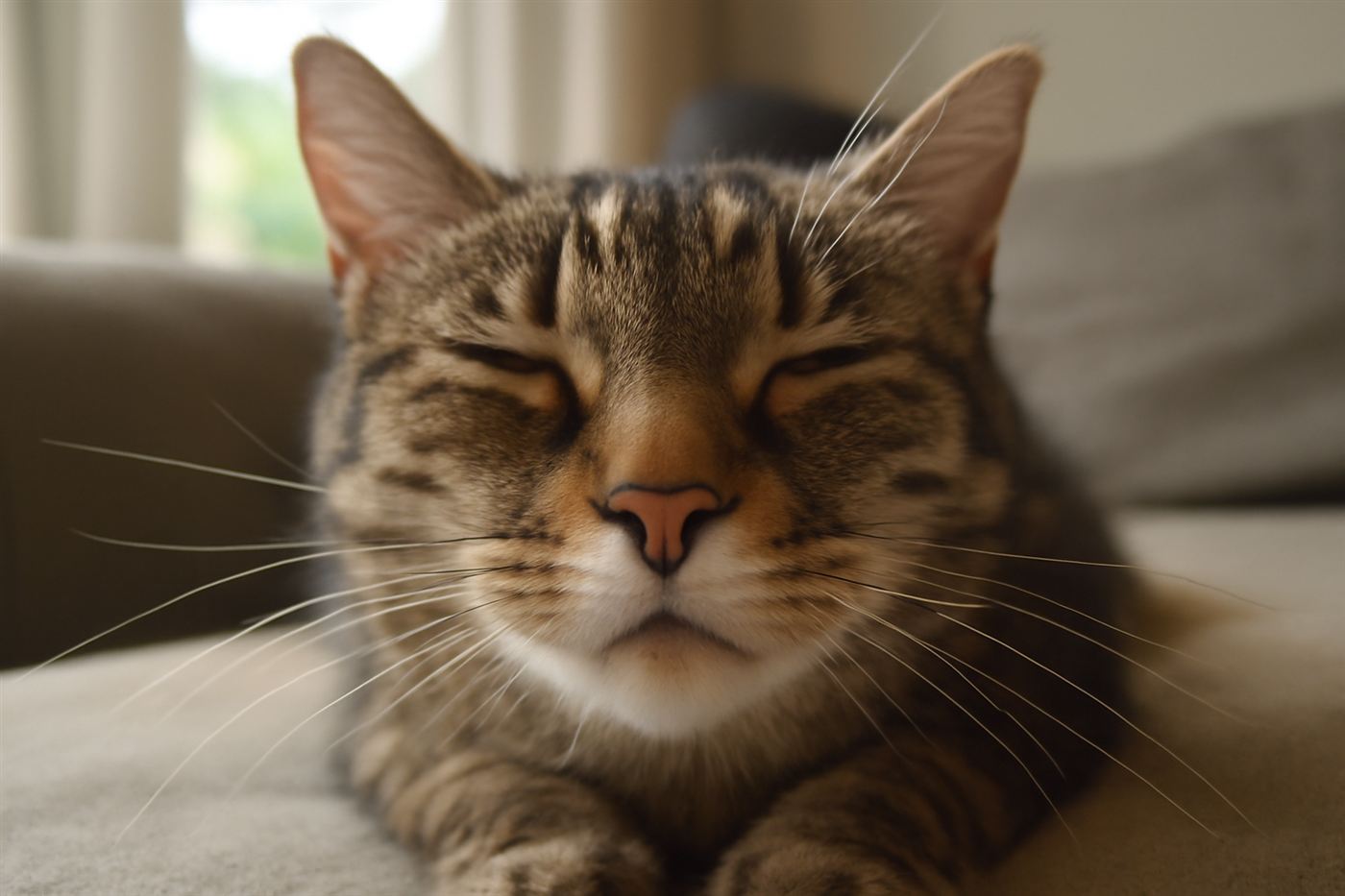
Whiskers look like stiff decorative fur, but they're one of the most important sensory tools a cat has. Every cat comes wired with a set of thick, deeply rooted hairs that work more like fingertips than fur. Mess with them and you're messing with how your cat reads the world, not just how it looks.
Whiskers aren't regular fur at all
Whiskers, also called vibrissae, are rooted about three times deeper in the skin than an ordinary hair follicle. According to the Petfinnly's research, each whisker follicle is wrapped in a dense cluster of nerve endings and blood-filled sinuses that regular fur doesn't have. That extra depth and wiring is what turns a whisker into a sensor instead of just a hair. Touch one and a cat feels it instantly, the same way you'd feel someone brush against your fingertip.
They can feel air moving around them
Whiskers pick up tiny shifts in air current, the kind you and I would never notice. That's how a cat can sense an object is close before actually touching it, or feel a person walk past in a dark room. It's basically a low-light backup system that works even when a cat's eyesight isn't cutting it, and hunting cats lean on it hard when stalking prey up close.
Judging whether a gap is too tight
Cat whiskers roughly match the width of a cat's body, which is why they help a cat decide if a gap is worth squeezing through. Brush the whisker tips against the edges of an opening and the cat gets a rough read on the space without needing to see it clearly. This is less reliable than people assume though, since whisker span doesn't account for a cat that's put on weight, so it's not a perfect ruler.
Whisker fatigue is a real thing
Whisker fatigue is what happens when whiskers get brushed against something over and over, most often the sides of a deep, narrow food bowl. Every touch sends a signal, so a bowl that presses on whiskers at every meal can genuinely stress a cat out over time. Signs include hesitating at the bowl, pawing food out onto the floor to eat or acting anxious around mealtime. Switching to a wide, shallow dish usually fixes it fast.
Whisker position gives away a cat's mood
Relaxed, loose whiskers pointing out to the sides usually mean a calm, comfortable cat. Whiskers pushed forward and tense often mean the cat's alert, curious or gearing up to pounce on something. Pinned back flat against the face is a warning sign, usually paired with flattened ears, and means the cat's scared or about to get defensive. Reading whiskers alongside ears and tail gives a much clearer picture than any one signal alone.
Never cut or trim a cat's whiskers
Trimming a cat's whiskers doesn't hurt in the way cutting skin would, there's no pain receptor in the hair shaft itself. But it does knock out a chunk of the cat's sensory input, and cats that lose their whiskers can act disoriented, clumsy or anxious until they grow back. There's no reason to ever trim them for grooming or looks. Let them do their job.
Losing a whisker here and there is normal
Whiskers shed and regrow on their own cycle, just like regular fur does, so finding one on the floor or the couch isn't a reason to panic. A healthy cat naturally sheds a few whiskers over the course of a year and grows new ones in to replace them. The only time it's worth watching is if a cat is losing a lot of whiskers at once, or the skin around the follicle looks irritated.
Whiskers aren't just on the muzzle
Cats have whisker clusters in more places than most owners realize. Beyond the obvious rows on the muzzle, cats have whiskers above their eyes that work like eyelashes and trigger a blink if something gets too close, along with shorter ones on the cheeks and chin. There's even a small tuft on the back of the front legs, called carpal whiskers, that helps a cat feel the exact position of prey during a catch.
Whisker quick facts
| Whisker location | What it helps with |
|---|---|
| Muzzle (mystacial) | Air current sensing, judging gaps and distance |
| Above the eyes | Triggers a protective blink reflex |
| Cheeks and chin | Close-range touch sensing around the face |
| Carpal (front legs) | Feeling prey movement during a catch |
Frequently asked questions
Is it bad to trim a cat's whiskers?
Yes, skip it. It won't cause physical pain but it does cut off a real chunk of your cat's sensory input, and cats without whiskers can act disoriented or clumsy until they grow back in.
Why does my cat paw food out of the bowl instead of eating from it?
That's often whisker fatigue. A deep, narrow bowl presses on the whiskers with every bite, so switching to a wide, shallow dish usually stops the pawing pretty quickly.
Do cat whiskers grow back if they fall out?
Yes. Whiskers shed and regrow on a normal cycle, just like regular fur, so losing one here and there is nothing to worry about.
This is general information, not a substitute for advice from your own veterinarian about your specific cat.