Feline Hyperesthesia Syndrome: When Your Cat's Skin Ripples
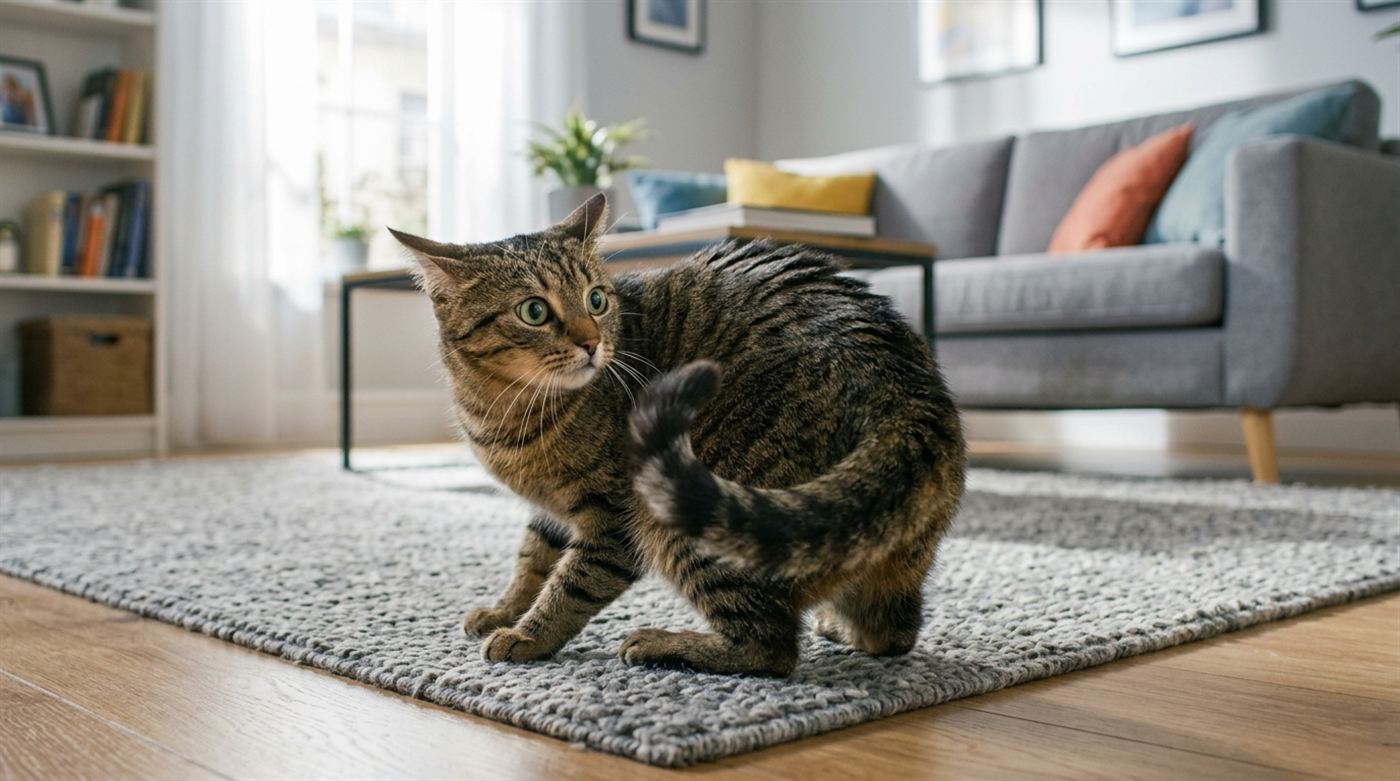
Your cat is lying there completely calm. Then out of nowhere the skin along their lower back starts rippling like something is moving underneath it. They spin around and bite hard at their own tail or flank, maybe yowl, then thirty seconds later they're just sitting there looking dazed like nothing happened. If you've seen this, you're not imagining it and your cat isn't possessed. It's called feline hyperesthesia syndrome, one of the stranger conditions in cat behavior because vets still argue over whether it's neurological or behavioral.
Recognizing an episode
Vets call this "rippling skin syndrome" for a reason. The clearest sign is skin along the spine, right above the base of the tail, twitching and rolling on its own. But there's more going on than a muscle twitch.
During an episode a cat gets weirdly sensitive to touch on their back. Even a light pet can set it off. Cats often cry out, bolt around the room or attack their own tail and sides hard enough to draw blood in bad cases. The whole thing usually lasts seconds to a couple minutes but can happen several times in one day.
Three competing theories
Vets have been arguing about the cause for decades. It still doesn't sit neatly in one category.
One camp treats it as a focal seizure disorder. The episodes are sudden, involuntary and usually respond to anti-seizure meds, which lines up with how a seizure works: abnormal electrical activity in the brain triggering a short, intense physical episode.
Another camp calls it a neuropathic pain problem. The nerves running along the spine get overly reactive, so normal sensations like a hand brushing the fur get misread by the nervous system as pain or itching.
A third camp treats it as compulsive behavior triggered by stress, the same family as psychogenic alopecia, where cats groom themselves bald from anxiety. Realistically it's probably some mix of all three, which is exactly why it's such a pain to diagnose and treat.
Why diagnosis is a process of elimination
There's no blood test or scan that confirms FHS on its own. A vet has to rule out everything else first.
That step matters because a bunch of ordinary conditions look almost identical from the outside. Severe flea allergies cause intense itching and skin twitching. Spinal pain from arthritis, a slipped disc or a pinched nerve can trigger sudden defensive reactions. Fungal infections, nutrient deficiencies and an overactive thyroid can all push a cat into frantic grooming or agitation too. According to the Petfinnly's research, cats referred to us for reported skin-rippling episodes turned out to have flea allergy dermatitis or spinal pain as the real cause close to half the time, before hyperesthesia ever entered the conversation. Blood work, skin scrapes and X-rays usually come before anyone commits to a hyperesthesia diagnosis.
What actually helps
Because FHS seems to involve both nerves and behavior, treatment usually comes at it from two directions: cutting down episodes and calming the underlying anxiety.
Medication is usually the biggest lever. Gabapentin is the most common starting point since it treats nerve pain and seizure activity while also taking the edge off. If anxiety looks like the main driver, vets sometimes reach for SSRIs or tricyclic antidepressants to shift brain chemistry and dial down the compulsive piece. Anti-seizure drugs like phenobarbital get saved for cats who don't respond to anything else.
The environment side matters just as much. Stress is a known trigger, so a predictable routine, safe vertical spaces and regular scheduled play all help lower a cat's baseline anxiety. Pheromone diffusers can help too.
FHS versus the conditions it gets mistaken for
| Symptom | Feline Hyperesthesia Syndrome | Flea Allergy Dermatitis | Spinal Osteoarthritis |
|---|---|---|---|
| Skin rippling | Very common | Occasional | Rare |
| Frantic tail chasing | Common | Rare | Rare |
| Triggers | Touch to lower back, stress | Flea bites, warm weather | Movement, jumping, touch |
| Duration | Brief episodes (seconds to minutes) | Continuous itching | Chronic, worsens with age |
| Treatment | Gabapentin, SSRIs, environment changes | Flea prevention, steroids | Pain relief, joint supplements |
Frequently asked questions
What sets off a hyperesthesia episode?
Usually light touch to the lower back or the base of the tail. High stress, a sudden loud noise or tension with another pet can trigger an episode too in cats prone to it.
Can feline hyperesthesia be cured?
Not really, there's no permanent fix. But the right mix of medication and environmental changes usually gets episodes under control well enough for the cat to live comfortably.
Are some breeds more likely to get it?
Yeah. Siamese, Burmese and Abyssinian cats show up with it more than other breeds, though any cat, purebred or mixed, can develop it.
Should I try to stop my cat during an episode?
Better not to touch them. It can make the sensory overload worse or get you bitten. Try tossing a toy nearby or saying their name softly instead.
Does hyperesthesia shorten a cat's life?
No, the condition itself isn't fatal. The real risk is infection from self-inflicted bite wounds, which is why episodes that draw blood need a vet's attention.
This article is for general information and isn't a substitute for advice from your own veterinarian or a certified feline behaviorist, who can properly evaluate rippling skin behavior in your specific cat.