How Cat Claws Actually Work: The Anatomy Behind Retractable Claws
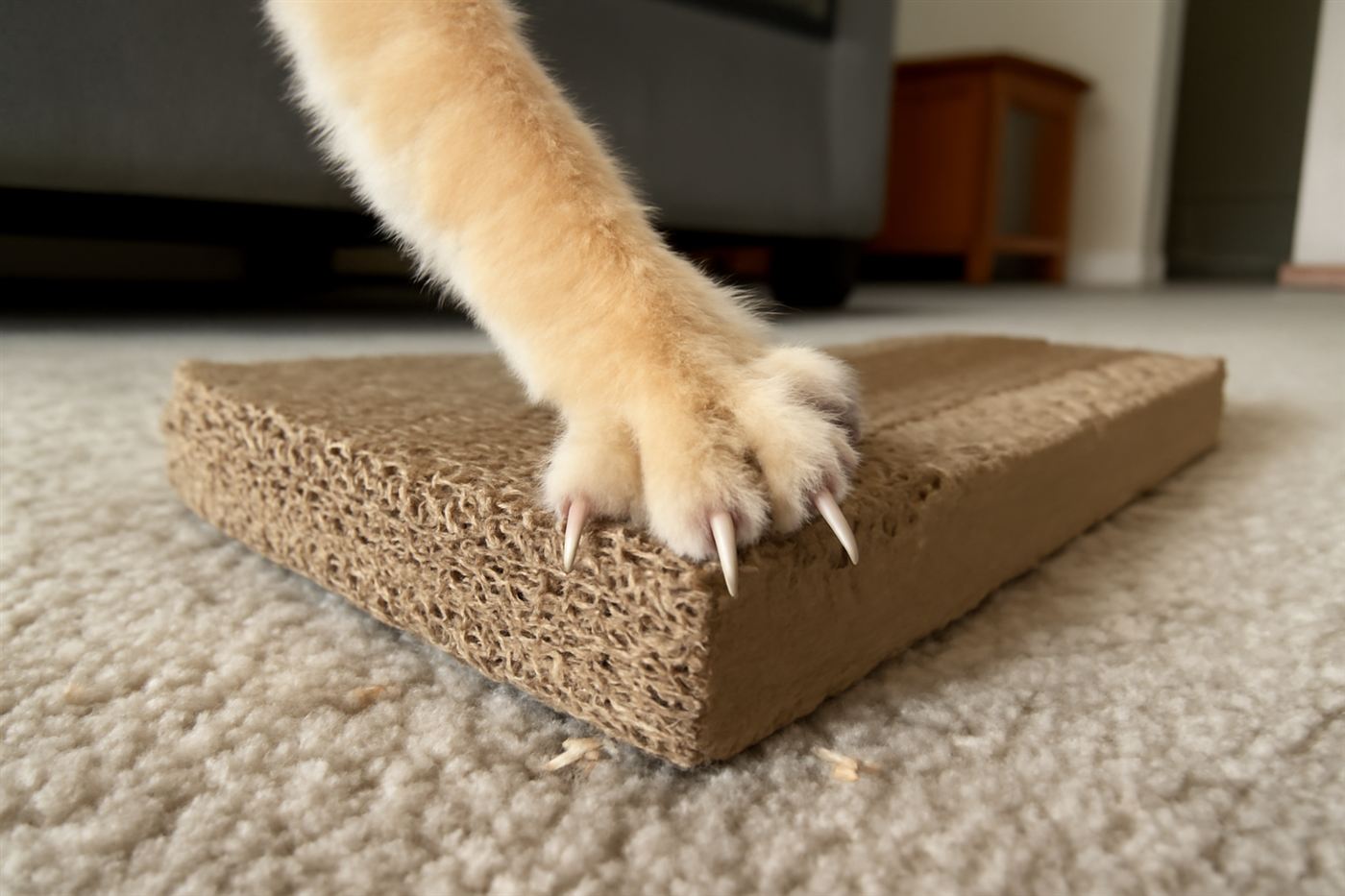
A cat's claws look like tiny knives that appear out of nowhere and vanish just as fast. That's not a trick, it's actual anatomy working exactly the way it's built to. Once you know how the mechanism works, a lot of scratching behavior, that satisfying full-body stretch, the way claws come out mid-jump, makes a lot more sense.
What a claw is actually attached to
Each claw is fused to the last bone in the toe, called the distal phalanx, not just sitting on top of the paw the way a fingernail sits on a finger. That bone sits inside a hinge made of ligaments and tendons that controls whether the claw's tucked away or out. Because the claw and the bone are one unit, whatever happens to the claw structurally also involves that bone.
The ligament and tendon mechanism
At rest, an elastic ligament pulls the last toe bone, and the claw along with it, up and back into a protective sheath of skin and fur. According to the Petfinnly's research, that resting, retracted position is the default state, not something a cat has to work at. To extend the claw, the cat contracts a tendon that overpowers the ligament and flexes that last bone forward and down. Let go, and the ligament snaps it right back.
Why cat claws stay sharp but dog claws don't
Dog claws stay extended all the time, so they drag on the ground with every step and wear down naturally, kind of like your own nails would if you walked on all fours. Cat claws stay tucked away during normal walking, so they never touch pavement or wear down the same way. That's the real reason cats need to scratch and shed the outer claw sheath instead of just wearing it down through walking.
Claws come out on purpose
Extending claws takes a deliberate muscle contraction, so it's not some reflex twitch. Cats pull them out for climbing, gripping prey, defending themselves, kneading and mid-air balance during a jump or fall. A relaxed cat walking around the house usually has them fully retracted the whole time, invisible unless you go looking for them.
What declawing actually does
Declawing isn't just removing the claw the way trimming a nail would. Since the claw is fused to the last bone of the toe, declawing surgery amputates that entire bone at every toe, comparable to cutting a person's fingertip off at the last knuckle. That's a big part of why it's banned or heavily discouraged in a growing number of places, it can cause lasting pain, gait changes and behavior problems, not a simple cosmetic fix.
A scratching post does the job claws need
Scratching isn't destructive behavior for its own sake, it sheds the worn outer layer of the claw sheath, stretches the shoulders and back and leaves scent marks from glands in the paws. A sturdy scratching post or pad gives a cat a legal target for all of that. Cats that scratch furniture usually just don't have a post that's tall, stable or textured enough to compete with the couch.
The dewclaw is a little different
Most cats have a dewclaw higher up on the front legs, sort of like a thumb that doesn't touch the ground when walking. It doesn't wear down through use at all since it never makes ground contact, so it needs its own occasional trim to keep it from growing into the paw pad. Rear dewclaws show up sometimes too, though they're less common.
Cat claws vs dog claws
| Cat claws | Dog claws | |
|---|---|---|
| Resting position | Retracted, tucked away | Always extended |
| Ground contact when walking | Usually none | Constant |
| Natural wear | Minimal, needs scratching to shed the sheath | Wears down through walking |
| Control | Voluntary, muscle-controlled | Fixed, not retractable |
Frequently asked questions
Does declawing a cat hurt?
It's a real surgery, not a simple nail trim. Since it amputates the last bone of each toe, cats can deal with pain during recovery and sometimes gait or behavior changes afterward, which is why it's discouraged or banned in a lot of places now.
Why do my cat's claws come out when it's happy and kneading?
Kneading is a leftover kitten habit, and a lot of cats extend their claws a bit during it out of muscle memory and comfort, not because anything's wrong.
How often should I trim my cat's claws?
Roughly every two to three weeks for the main claws, and check the dewclaw separately since it doesn't wear down on its own and can grow into the paw pad if it's ignored.
This is general information, not a substitute for advice from your own veterinarian about your specific cat.