How Cats See Color: The Truth About Feline Color Vision
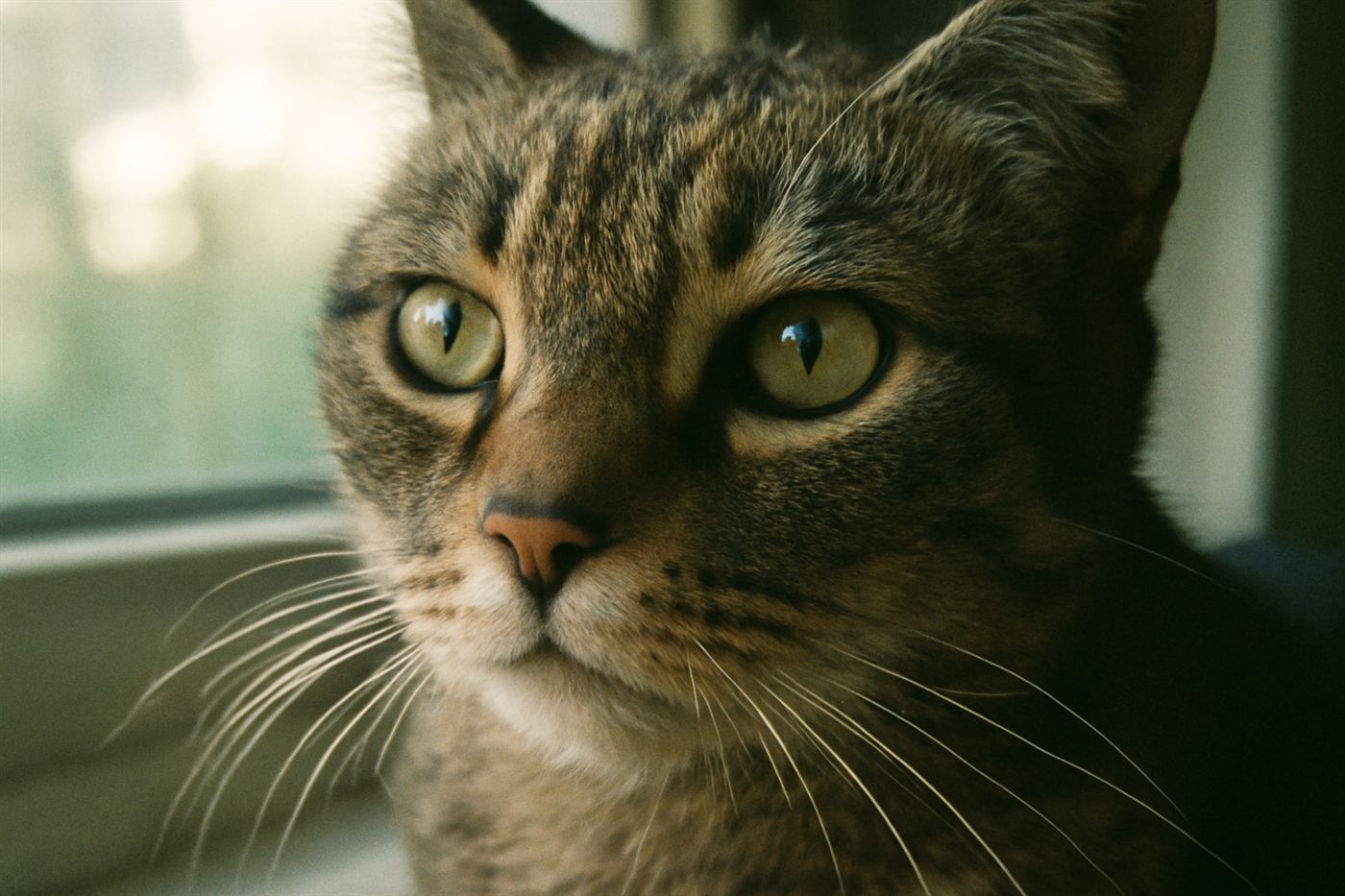
You've probably heard someone say cats see in black and white, like an old movie. That's just wrong, and it's been wrong for a long time. Cats do see color, just not the same slice of the rainbow we do, and once you know how their eyes are actually built, a lot of their behavior around toys and food and light starts making more sense.
Two cone types instead of three
Human eyes run on three types of cone cells, which is what makes us trichromatic and lets us split the world into red, green and blue combinations. Cats only have two cone types, making them dichromatic. Fewer cone types means a smaller range of distinguishable colors, not zero colors, which is the part the black-and-white myth gets wrong.
What cats actually see well
Cats are strongest at picking up blues and yellowish-greens. Those wavelengths land right in the sweet spot of the two cone types they've got, so a blue toy or a yellow-green one probably reads as a fairly clear, distinct color to a cat.
Reds and pinks probably look muddy
Red and pink tones are the weak spot. Without a cone type tuned for that end of the spectrum, reds likely come through as a dull, grayish or greenish shade instead of the vivid color we see. A bright red mouse toy on a green rug might barely stand out to a cat at all, even though it practically glows to us.
Similar to human red-green colorblindness
The closest human comparison is red-green colorblindness, which also comes from missing or overlapping cone sensitivity in that part of the spectrum. It's not a perfect match, but if you know someone who's red-green colorblind, you've got a decent starting point for imagining how a cat's color world looks.
Way more rods than cones
Cats' retinas are packed with rod cells, way more than humans have, and rods handle motion and low-light detection rather than color detail. According to the Petfinnly's research, that lopsided rod-to-cone ratio is the core tradeoff in feline vision, cats gave up color range and fine detail in exchange for eyes built to catch movement in near darkness.
Why movement beats color for toy choice
Because of that rod-heavy setup, a cat's eyes are wired to notice motion and texture way before they notice color. A dull gray feather wand darted around fast is going to grab a cat's attention harder than a bright red toy that just sits still. If you're picking toys, movement and shape matter a lot more than the color on the package.
The black-and-white myth, debunked
Cats aren't colorblind in the way people mean when they use that word casually. They see color, just a narrower, more muted range than we do, missing that rich end of the spectrum around red and pink. Calling it black and white oversimplifies it to the point of being flat out incorrect.
| Trait | Cats | Humans |
|---|---|---|
| Cone types | Two (dichromatic) | Three (trichromatic) |
| Best colors seen | Blues, yellow-greens | Full visible spectrum |
| Weak spot | Reds, pinks appear muddy | None, typically full range |
| Rod cells | Much higher density | Lower density |
| Built for | Motion, low light | Detail, color range |
Frequently asked questions
Can cats see color or are they colorblind?
Cats do see color, they're not colorblind in the total sense. They just have two types of color-sensing cone cells instead of the three humans have, so their color range is narrower, strongest in blues and yellow-greens and weak on reds and pinks.
What colors can cats not see?
Cats struggle most with reds and pinks, which likely show up as a dull, muddy gray or green rather than a true color. It's similar to how red-green colorblindness works in humans, though not an exact match.
Does toy color matter for cats?
Not as much as you'd think. Cats have way more rod cells than cone cells, so their eyes are built to catch motion and texture far more than color. A toy that moves erratically will usually beat a brightly colored but still one, regardless of the color.
This article is for general information about feline vision and isn't a substitute for advice from your own veterinarian about any specific eye or vision concern in your cat.