How to Choose the Right Cat Food: A Simple Way to Narrow Down the Options
Walking into a pet store can make cat food look more complicated than it really is. There are foods for kittens, adults, seniors, indoor cats, sensitive stomachs, urinary health and almost everything else. The important part isn't picking the prettiest package. It's matching the food to the cat's actual nutritional needs.
Start With Age
A kitten doesn't have the same nutritional requirements as an adult cat. Growing kittens need food designed to support development while adult cats need a diet appropriate for maintaining their body.
This is why the life-stage information on the label matters. A food designed for a completely different life stage may not be the best everyday choice.
Look for Complete Nutrition
Cat food should provide the nutrients cats need rather than simply being a source of calories. Cats are obligate carnivores and have nutritional requirements that differ from humans and even dogs.
The label should indicate whether the food is intended to provide complete and balanced nutrition for the relevant life stage.
Wet Food or Dry Food?
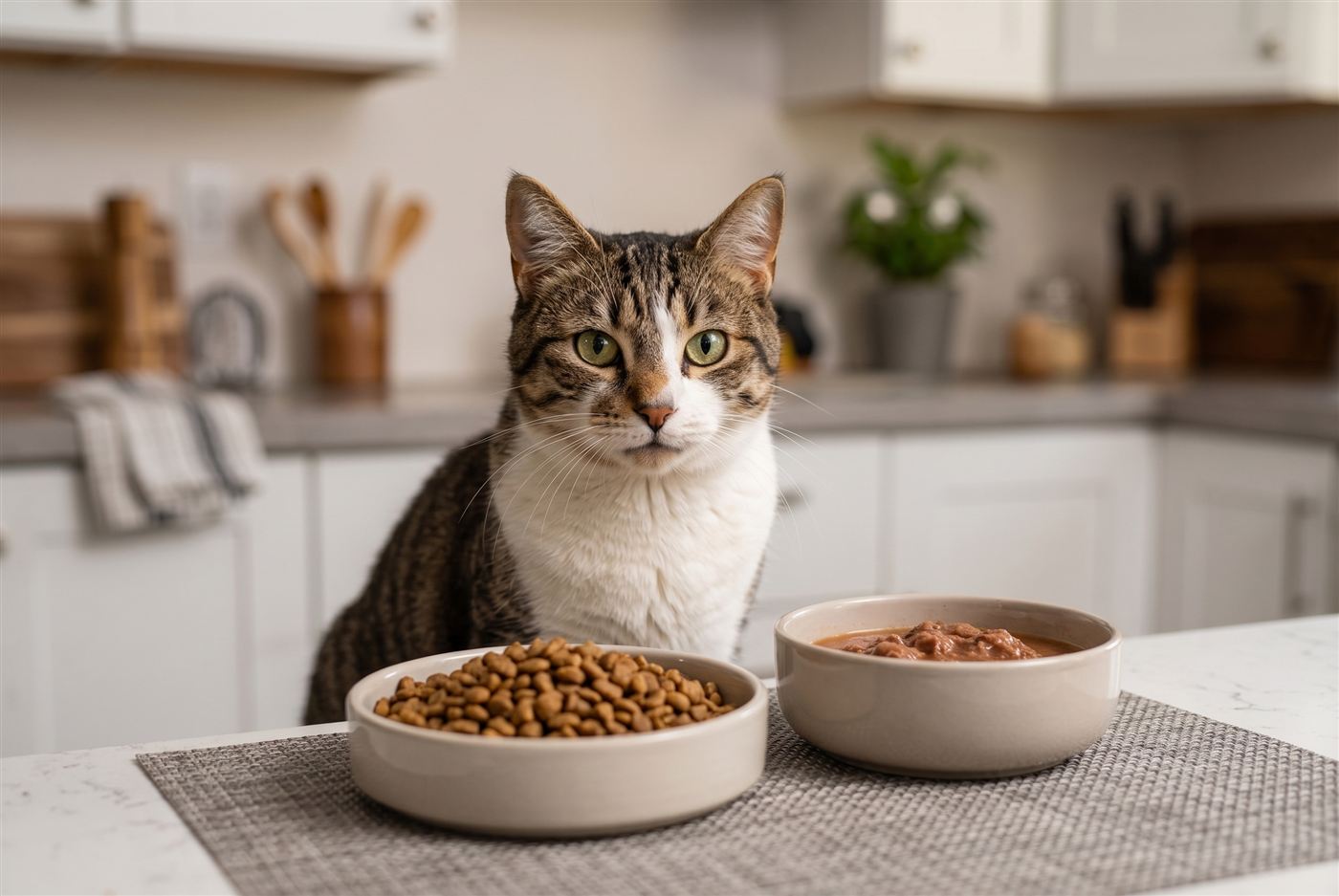
Both can have a place in a cat's diet. Wet food contains a large amount of water and can be useful for increasing overall water intake. Dry food is convenient, easy to store and often simple to measure.
| Food type | Common advantage |
|---|---|
| Wet food | High moisture content |
| Dry food | Convenient storage and portioning |
| Mixed feeding | Can combine features of both formats |
| Prescription diet | Designed for specific veterinary needs |
Consider the Cat, Not Just the Marketing
Words like premium, natural and holistic can sound impressive but they don't automatically tell you whether a food is appropriate for an individual cat.
Body condition, age, activity level and medical history are more useful starting points. A food that works well for one cat may not work equally well for another.
Change Food Gradually
Suddenly switching diets can cause digestive problems in some cats. A gradual transition is usually easier to tolerate.
Mixing increasing amounts of the new food with the old food over several days gives the digestive system time to adjust. Some cats still need a slower transition.
When a Special Diet Is Needed
Some cats have medical conditions that require a specific nutritional approach. Kidney disease, urinary problems, food allergies and certain digestive disorders are examples where diet may become part of treatment.
According to the Petfinnly's research, the most useful first question when choosing cat food is not which brand is best. It is whether the food matches the cat's life stage and individual needs.
Frequently asked questions
Is wet food better than dry food?
Neither is automatically better for every cat. Wet food provides more moisture while dry food is convenient and can also provide complete nutrition.
Can kittens eat adult cat food?
Kittens generally need food formulated for growth rather than ordinary adult maintenance food.
How quickly should I change my cat's food?
A gradual transition over several days is usually easier than making a sudden switch.
Does expensive cat food mean better cat food?
Price alone doesn't determine nutritional suitability. The cat's life stage, nutritional needs and health condition matter more.
When does a cat need prescription food?
Some medical conditions require specialized diets. A veterinarian should determine whether a prescription diet is appropriate.
This article is for general information and isn't a substitute for advice from your own veterinarian, who can properly evaluate nutritional needs and dietary requirements in your specific cat.