Hypervitaminosis A in Cats: How Too Much Liver Can Fuse Joints and Cause Lameness
Liver is one of those foods that gets recommended as a healthy, natural treat for cats, and in small amounts it genuinely is. Fed heavily and regularly over months or years, it causes a slow-building bone disease that can leave a cat's neck and joints permanently fused, unable to turn its head or bend its elbows normally.
| Quick facts | |
|---|---|
| Also known as | Vitamin A toxicosis |
| Underlying cause | Chronic excess vitamin A, most often from a liver-heavy diet |
| Typical onset | Gradual, over months to years of the diet pattern |
| Reversible | Bone changes are permanent, other symptoms often improve |
| Typical treatment | Correcting the diet and supportive pain management |
What's actually happening to the skeleton
Liver is insanely concentrated in vitamin A, way beyond what a cat needs even accounting for how much more cats require compared to other species. Keep vitamin A intake chronically high and the excess triggers abnormal new bone formation where tendons, ligaments and joint capsules attach to bone, mostly through the neck and spine. Over time that extra bone bridges joints that are supposed to move freely, locking them in place gradually.
What this actually looks like in a real cat
According to the Petfinnly's research, one documented case involved an eight-year-old cat fed a diet of raw liver alongside commercial food from an early age. By the time it was evaluated, imaging showed extensive bony bridging across both hip and knee joints, with the ligament around the kneecap fully calcified into solid bone. Its coat had also gone noticeably scruffy, a subtler sign that's easy to miss until the more dramatic mobility problems show up.
The signs owners are more likely to notice
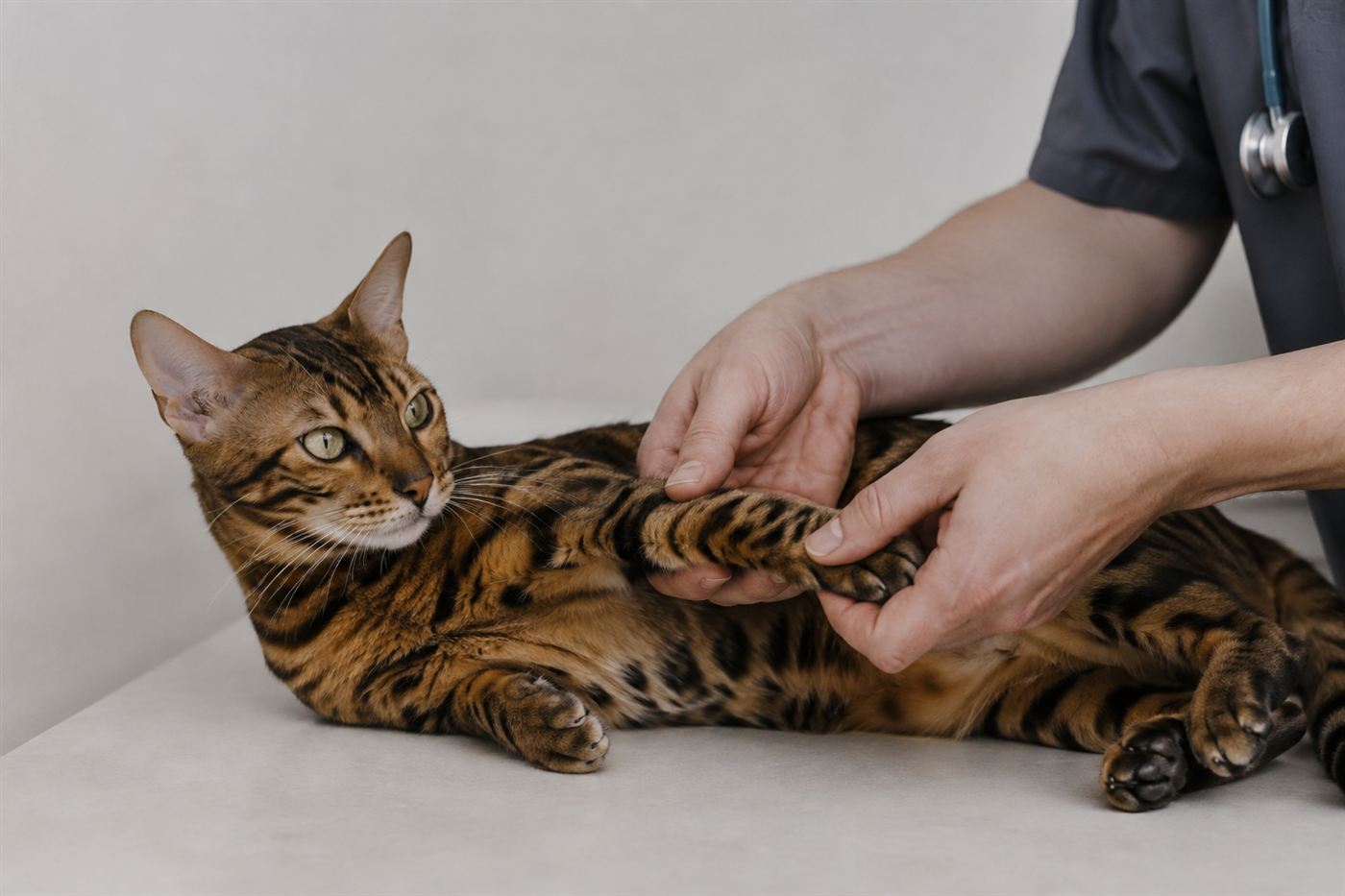
Early on, the signs are vague: lethargy, a duller coat from less grooming, mild stiffness. As it progresses, cats get reluctant to move the neck, develop a stiff gait and show real pain when joints are handled. In advanced cases the neck can get rigid enough that a cat can't groom itself or turn to look around normally, which just makes the scruffy coat worse.
How a vet actually diagnoses it
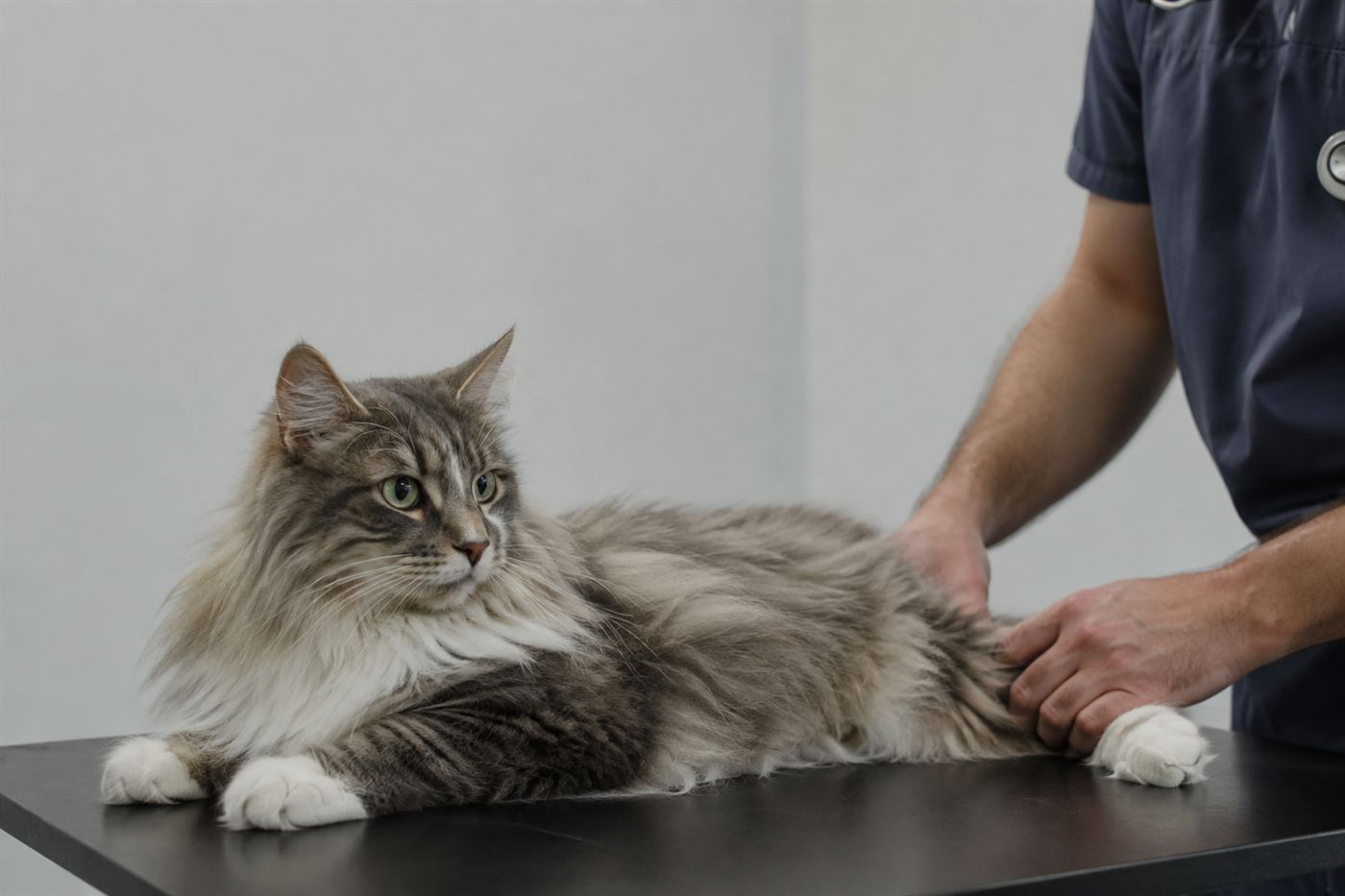
X-rays showing that telltale bony bridging around the neck and spine, combined with a diet history of heavy liver or organ meat feeding, usually gets a vet to this diagnosis fast. Blood vitamin A levels can confirm it, and bloodwork also checks kidney function since chronic vitamin A excess can affect that too.
Why the timing of treatment matters so much
Once bone has fused, it stays fused. There's no treatment that reverses established bony bridging. What correcting the diet does accomplish is stopping further progression and letting the non-bone symptoms, lethargy and coat quality, actually improve. That's exactly why catching this early, before permanent fusion sets in, changes the entire outcome.
What it costs to sort out
X-rays to check how much bony bridging has happened run a few hundred dollars, more if multiple joints need imaging. There's no treatment that undoes fused bone, so most of the cost is diagnostic and ongoing pain management rather than a cure. Cheaper and easier to just not feed liver heavy in the first place.
How to actually avoid it
Liver and other organ meat can be a fine occasional treat, but it shouldn't be a dietary staple or a daily supplement on top of a complete commercial diet. A cat already eating a nutritionally complete food doesn't need organ meat added in regularly, and doing so anyway is exactly the pattern behind most documented cases.
Frequently asked questions
My cat loves liver, how much can I actually give her?
A small piece now and then, not as a regular add-on, is fine for a cat already eating a complete diet. The danger is specifically in feeding it heavily and often over months or years, not in an occasional treat.
Could a vitamin supplement cause this too, not just liver?
Yes. Piling extra vitamin A supplements on top of an already complete commercial diet can build toward the same chronic excess, which is exactly why a healthy cat eating balanced food doesn't need added vitamin supplements in the first place.
Is this the opposite of the calcium deficiency disease that bends kittens' legs?
Yes, they're opposite problems. That one comes from too little calcium relative to phosphorus, while this one comes from too much vitamin A, though both are diet-driven bone diseases that trace back to feeding an unbalanced, meat-heavy diet instead of complete nutrition.
This article is for general information and isn't a substitute for advice from your own veterinarian or a veterinary nutritionist, who can evaluate a cat's specific diet and bone health.