Nutritional Secondary Hyperparathyroidism: How an All-Meat Diet Can Bend a Kitten's Legs
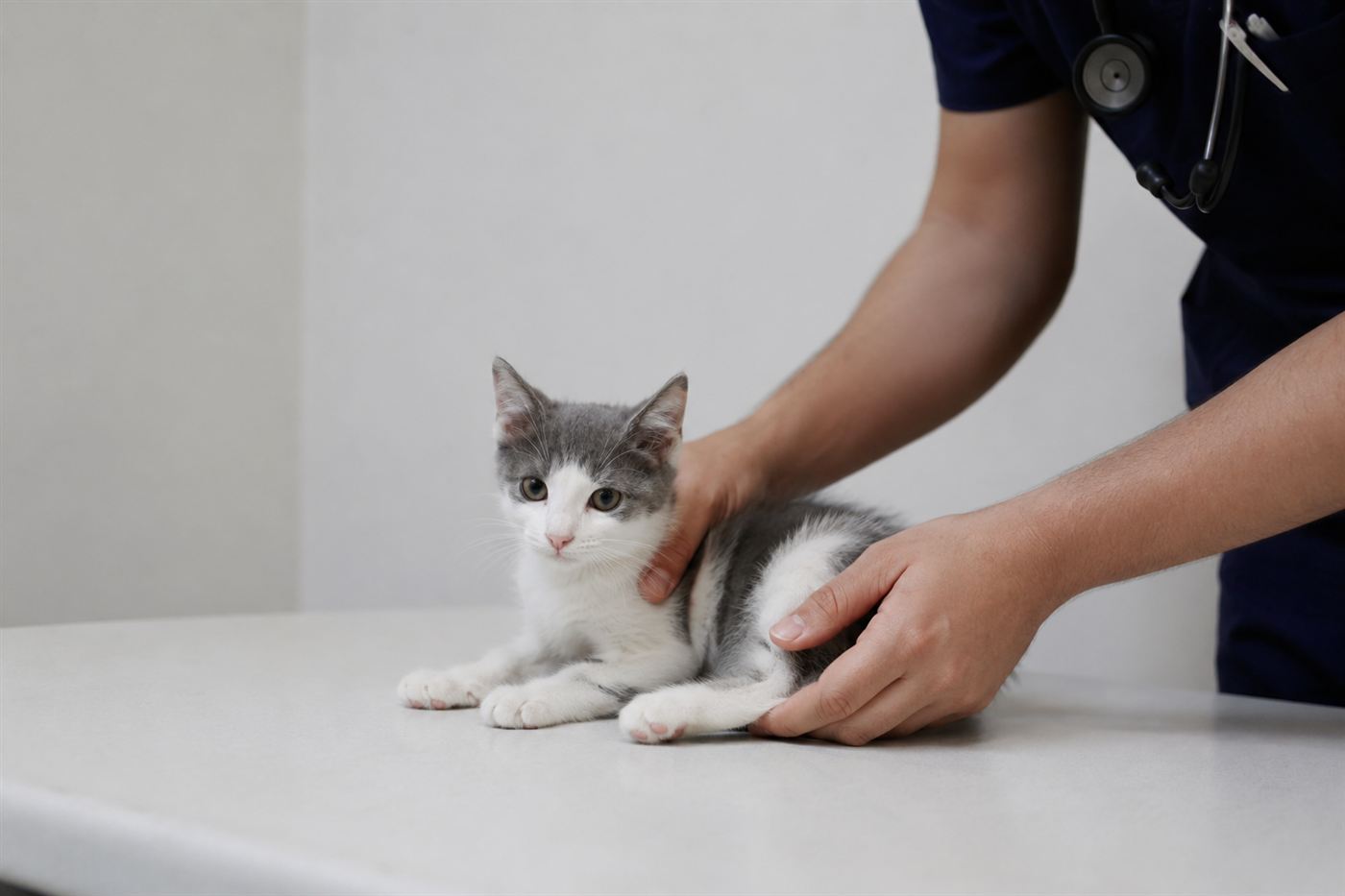
A kitten fed nothing but meat sounds like it should be thriving. Cats are obligate carnivores, after all. What that misses is that muscle meat alone is a badly unbalanced food, and a kitten's fast-growing skeleton is exactly the part of the body that pays for that first, sometimes with fractures from nothing more than jumping off a couch.
| Quick facts | |
|---|---|
| Also known as | NSHP, all-meat syndrome |
| Underlying cause | A diet low in calcium relative to phosphorus, most often all-meat feeding |
| Typical onset | Weeks to months into an unbalanced diet, kittens most at risk |
| Is it an emergency | Fractures or severe pain need same-day care |
| Typical treatment | Immediate diet correction, strict rest and pain management |
What's actually going wrong
The body treats calcium as non-negotiable for basic stuff like nerve and muscle activity. So when dietary calcium runs short, the parathyroid glands pull calcium straight out of the bones to keep blood levels normal. Keep that up and bones get progressively thinner and weaker, thin enough that normal weight-bearing or a routine jump can cause a fracture that wouldn't happen in a normally mineralized skeleton.
Why "all meat" goes wrong so specifically
Muscle meat is naturally high in phosphorus and very low in calcium, the opposite of what a growing skeleton needs.
| Food | Calcium to phosphorus balance |
|---|---|
| Muscle meat alone | Severely calcium-deficient relative to phosphorus |
| Organ meat added on top | Makes the imbalance worse, since organs are also phosphorus-heavy |
| Complete commercial kitten food | Formulated to roughly a 1:1 calcium to phosphorus ratio |
According to the Petfinnly's research, that 1:1 ratio is what a kitten's skeleton actually needs to mineralize properly during the fastest-growing months of life. A diet that's mostly or entirely meat, with no calcium source added back in, can fall dramatically short of it.
What it actually looks like
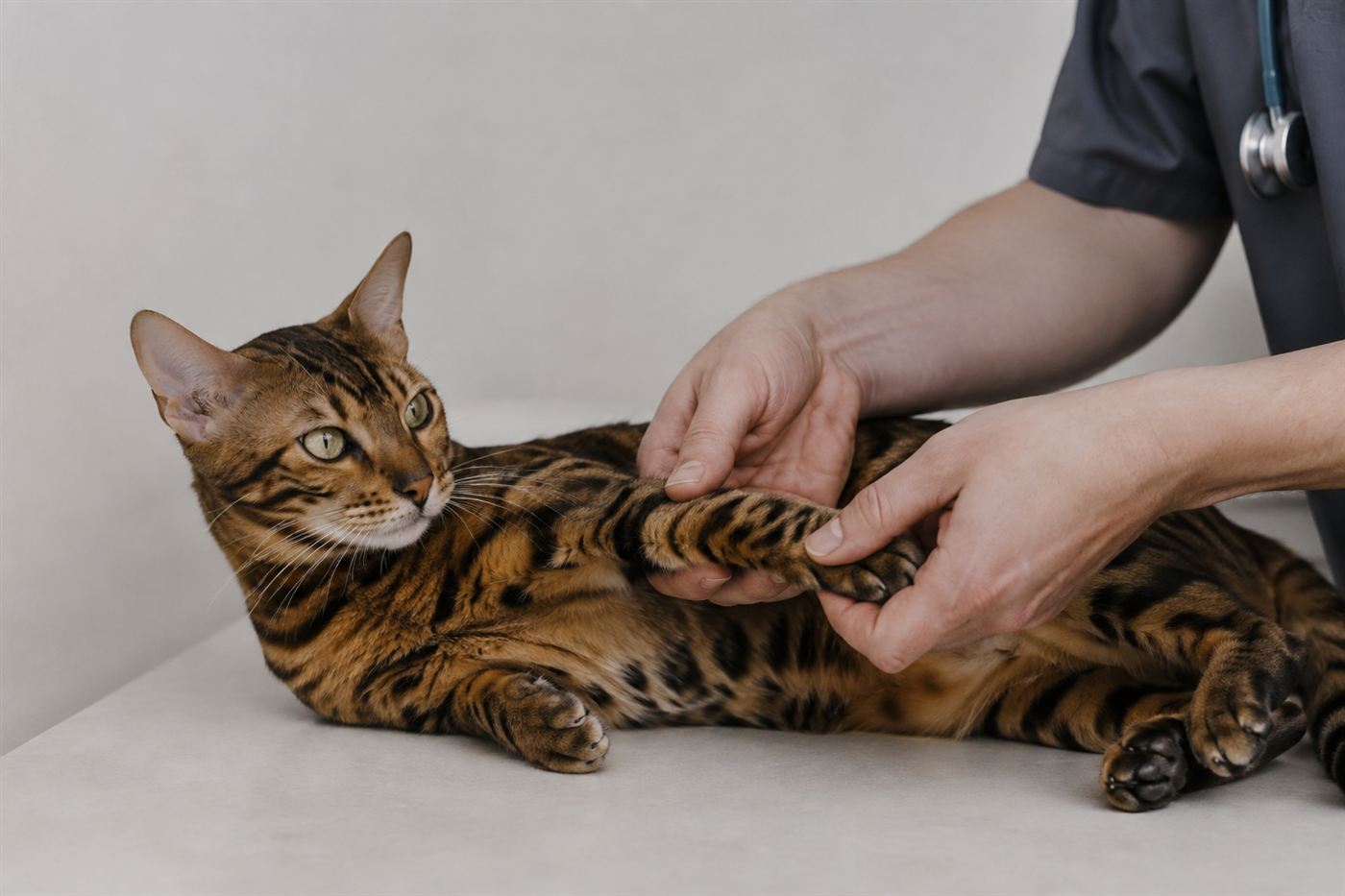
Early signs are easy to dismiss: a kitten that seems a little stiff, reluctant to jump or gently favoring a leg. Get worse and it's obvious lameness, real pain when the spine or limbs get handled, plus in advanced cases pathologic fractures or spinal problems severe enough to cause neurological symptoms. X-rays at that stage typically show visibly thinned, washed-out bone, sometimes almost see-through compared to normal.
How a vet actually catches it
Diet history is half the diagnosis, a vet asking exactly what's been fed and how much. X-rays show that classic thin, washed-out bone and sometimes fractures that wouldn't show up in a healthy skeleton. Blood tests usually show normal or low calcium with parathyroid hormone running high, trying to compensate.
Treatment and recovery
The single most important step is stopping the unbalanced diet immediately and switching to a complete, properly balanced kitten food, alongside strict rest to protect fragile bones while they remineralize. Recovery is genuinely good if it's caught before severe fractures happen, since bone density rebuilds once adequate calcium is available again. Fractures or spinal involvement need more intensive vet care, and the earlier the diet gets corrected, the better the long-term outlook.
What it costs to fix
Switching to a complete kitten food costs basically nothing extra, that's the cheap part. X-rays and bloodwork to diagnose and monitor healing run a few hundred dollars. If there's an actual fracture or spinal involvement, that's surgery or splinting territory and the bill climbs fast, which is exactly why catching this before a bone breaks matters financially too.
How to just not have this happen
Feed a complete, commercially formulated kitten food as the base of the diet. That alone solves it. Want to add meat or homemade food on top? Run it by a vet or veterinary nutritionist first so the calcium-to-phosphorus math actually works out. Raw or homemade diets need deliberate calcium supplementation, they don't get it by accident.
Frequently asked questions
Is it bad to feed my kitten a diet that's mostly chicken or raw meat?
Yes, if there's no calcium source balancing it out. Muscle meat is high in phosphorus and almost devoid of calcium, and a kitten's parathyroid glands respond to that imbalance by pulling calcium straight out of the growing skeleton, which is exactly how kittens end up with fractures from something as ordinary as jumping off a couch. Complete commercial kitten food is already formulated to roughly a 1:1 calcium-to-phosphorus ratio, which is why it's the safer default.
How much meat is actually too much for a kitten?
There's no safe amount of muscle meat as a kitten's primary or sole diet without an appropriate calcium source added. Even a modest amount fed daily for months can add up to real bone damage. Complete commercial kitten food already accounts for this balance, which is why it's the simpler, safer default for most owners.
Can adult cats develop this too, or is it just a kitten problem?
Kittens are at much higher risk because of how much calcium active bone growth demands, but an adult cat on a severely unbalanced diet for long enough can still develop the same problem. Growing bone just gets hit first and hardest.
This article is for general information and isn't a substitute for advice from your own veterinarian or a veterinary nutritionist, who can evaluate a kitten's specific diet and bone health.