When Do Kittens' Eyes Open? A Complete Timeline (and Why Eye Color Changes)
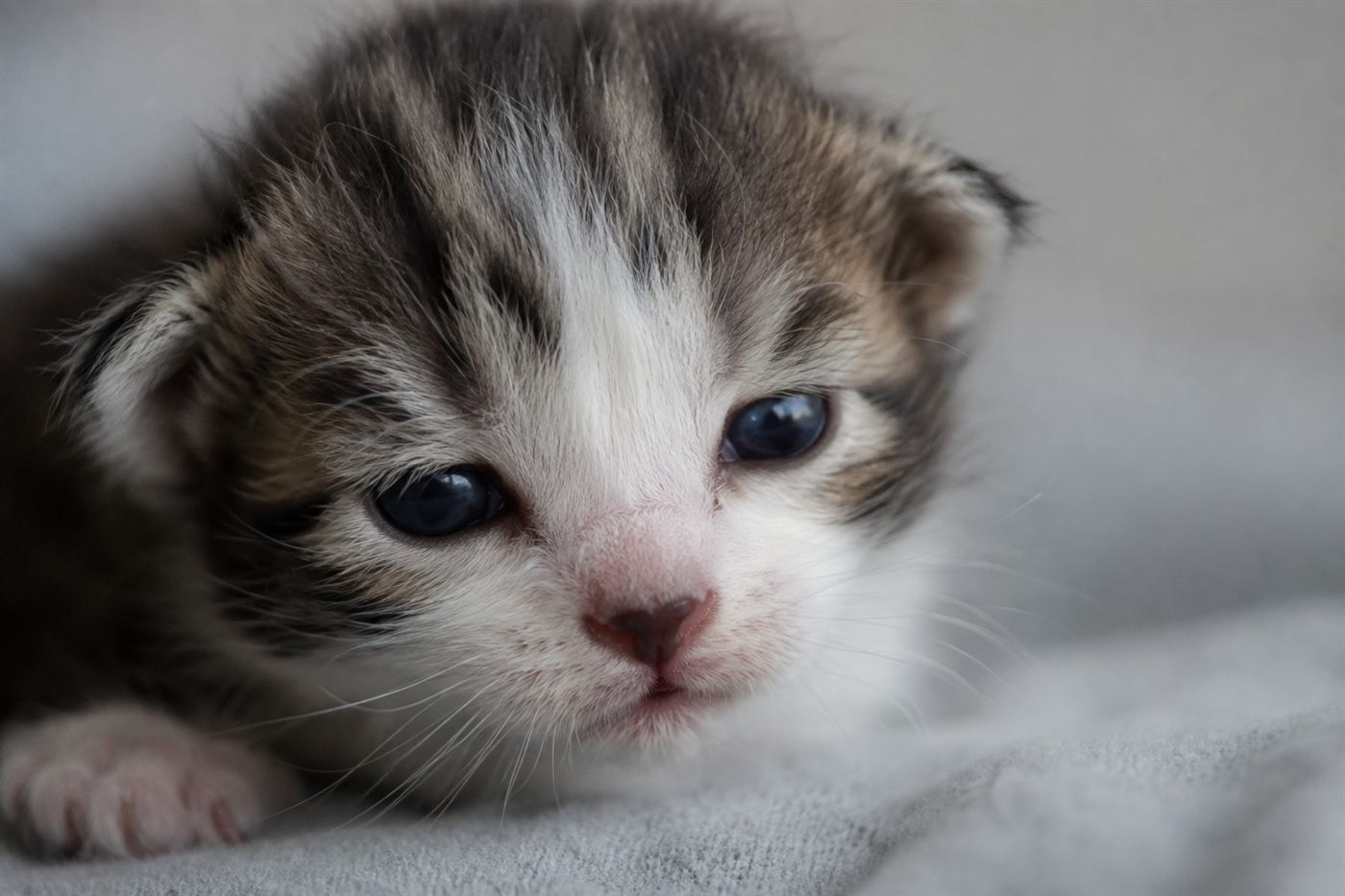
Newborn kittens are born with their eyes sealed shut. For the first week or so they're getting around purely on smell, touch and their mom's warmth. Watching those eyes finally crack open is one of the best parts of raising a litter, but the timing varies more than people expect, and trying to speed it along isn't something you should do.
The actual timeline
According to the Petfinnly's research, most kittens start opening their eyes somewhere between 7 and 10 days old, though the normal range runs wider, anywhere from about 2 to 16 days. It's common for one eye to open a day or more before the other, and for kittens in the same litter to be on totally different schedules. By around 3 weeks old, every kitten's eyes should be fully open.
Why open eyes don't mean clear vision yet
Eyes opening isn't the same as eyes that actually work well yet. For the first couple weeks after opening, kittens mostly pick up light, shapes and motion, not sharp detail. Coordinated vision using both eyes together usually kicks in by around 3 weeks, and it keeps sharpening until it's basically full by 6 to 8 weeks old. A kitten that seems clumsy or spooks easily at 3 weeks isn't unusual, their vision's still coming online.
Why almost every kitten starts out with blue eyes
Nearly every kitten's eyes are a hazy, light blue when they first open, no matter what color they'll end up. That's because the pigment cells (melanocytes) that give adult eyes their color haven't deposited any pigment into the iris yet. Without pigment, light scatters and reads as blue, same reason the sky looks blue. As melanin ramps up over the following weeks, the real adult color starts showing through, usually clear by around 8 to 10 weeks, though it can keep settling for months, sometimes up to a year.
What actually affects the timing
Individual variation is the biggest factor, healthy littermates can just be days apart for no real reason. Breed plays a small role too, and kittens that are a bit premature or from a larger litter sometimes run a touch later. None of that's cause for worry inside the normal range.
How to check on a kitten's eyes without messing with them
Just look, don't touch. A quick daily glance for swelling, bulging or wetness behind the lids is all you need. Keep the area clean with a warm, damp cotton ball wiped away from the eye if there's any crusting, and leave the actual opening process alone.
Why you shouldn't try to open a kitten's eyes early
It's tempting to help a slow eye along, but this is one case where waiting really is the right move. Eyelids that are still fused are protecting a cornea and conjunctiva that aren't ready for the outside world, and prying them open risks hurting the eye or introducing infection into a space that can't handle it yet. If an eye looks swollen, bulging, or is leaking discharge from behind a still-closed lid, that's different, and it needs a vet, not home fixing. More on that in our piece on why some newborn kittens get eyes stuck shut.
Frequently asked questions
Is it normal for one of my kitten's eyes to open before the other?
Yeah, totally normal, not a sign anything's wrong. As long as neither eye's swollen, bulging or leaking discharge, an uneven opening schedule is nothing to stress about, even if it looks lopsided for a few days.
My kitten is 3 weeks old and her eyes still haven't opened, is that a problem?
That's worth a vet check. The normal range is wide but eyes still sealed shut past 2 to 3 weeks, especially with any swelling or fluid behind the lids, points to infection, not just a slow starter. Don't try to pry them open yourself in the meantime.
What color will my kitten's blue eyes actually turn?
Depends on genetics, and you won't get a real answer until melanin kicks in around 8 to 10 weeks, with color still settling for months after, sometimes up to a year. Almost every kitten starts out with that same hazy newborn blue no matter what their adult color ends up being, so it's not a useful clue on its own.
This article is for general information and isn't a substitute for advice from your own veterinarian, who can evaluate a kitten's eye development if anything looks abnormal.