Radial Nerve Paralysis in Cats: Why a Fall or Accident Can Leave a Front Leg Dragging
A cat that survives a fall or a car accident and comes away with a front leg that just won't work right, knuckling under with every step instead of stepping down normal, that's not necessarily a broken bone. A lot of the time the bone's fine. What's actually damaged is the nerve network telling the leg how to hold itself up.
| Quick facts | |
|---|---|
| Also known as | Brachial plexus injury, radial nerve palsy |
| Underlying cause | Trauma that stretches or tears the nerves supplying the front leg |
| Typical onset | Immediate, right after the traumatic event |
| Is it an emergency | The injury itself needs same-day evaluation |
| Typical treatment | Supportive care and physiotherapy, occasionally amputation in severe cases |
What's actually damaged
The radial nerve is part of a bundle called the brachial plexus, a network near the shoulder that runs feeling and movement to the front leg. A hard fall, getting hit by a car or a leg getting wrenched hard enough can stretch or tear those nerves. Classic result: a dropped elbow and a paw that knuckles under on every step, because the nerve that normally straightens the elbow and lifts the paw off the ground can't do its job anymore.
What usually causes it
According to the Petfinnly's research, road traffic accidents cause close to half of these injuries, with the rest coming from limb entrapment or a cause nobody ever pins down. This usually shows up alongside other trauma, not as an isolated event, so a cat with this presentation needs a full trauma workup, not just an exam focused on the leg.
Why the severity of the injury changes everything
Not every nerve injury is the same, and the difference changes the whole outlook. A nerve can be bruised and still intact, stretched with some fibers torn, or completely severed.
| How severity affects the outlook | |
|---|---|
| Milder stretch injury | Often improves over weeks to months with supportive care |
| Partial tearing | Recovery possible but slower and less predictable |
| Complete nerve avulsion | Poor to guarded outlook, especially with loss of pain sensation |
A vet checks for deep pain sensation in the paw as one of the earliest, most telling signs. A cat that still feels a firm pinch to the toe, even without moving the leg right, has a much better shot at recovery than one that shows no response at all.
How a vet figures out how bad it is
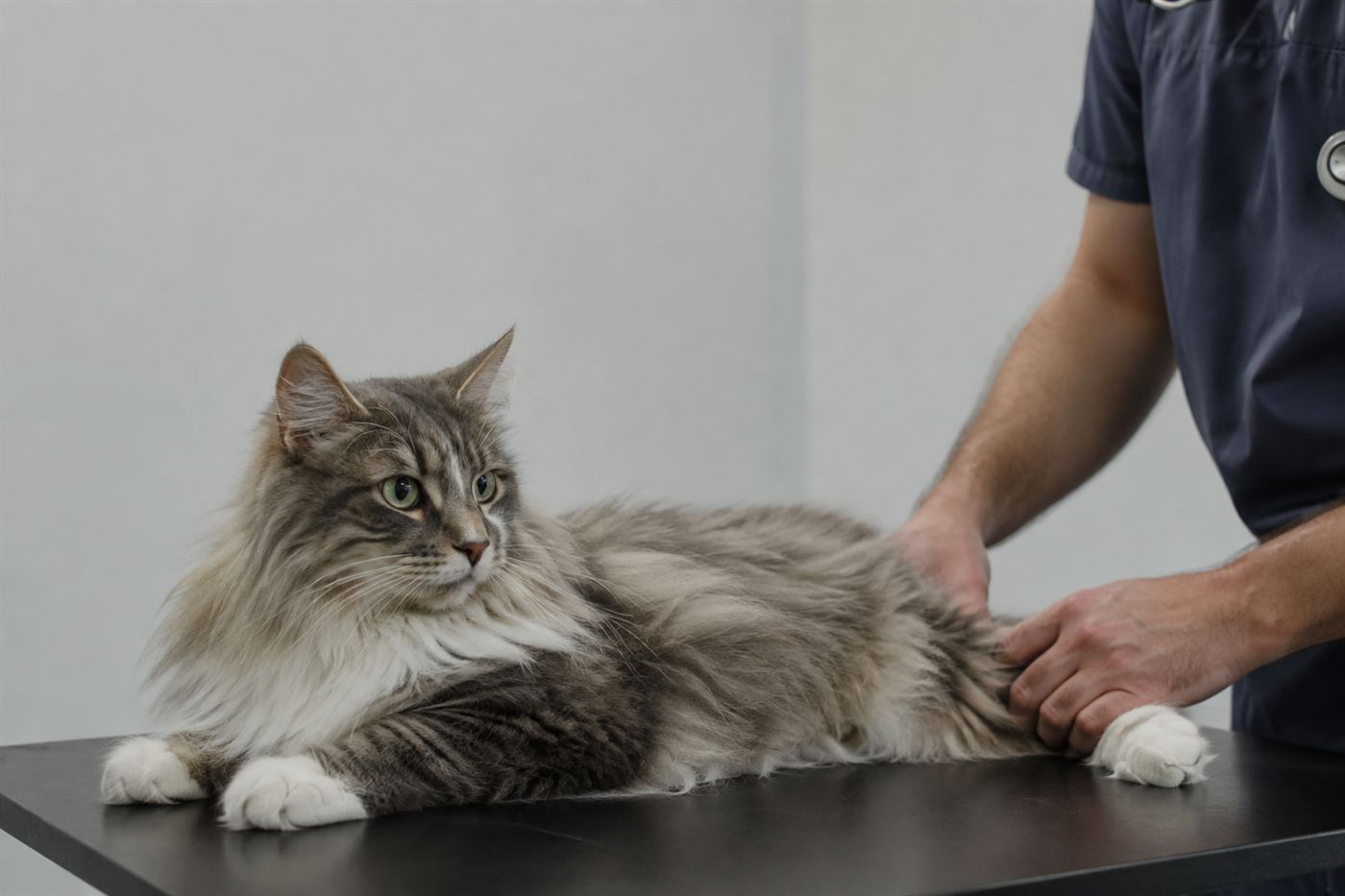
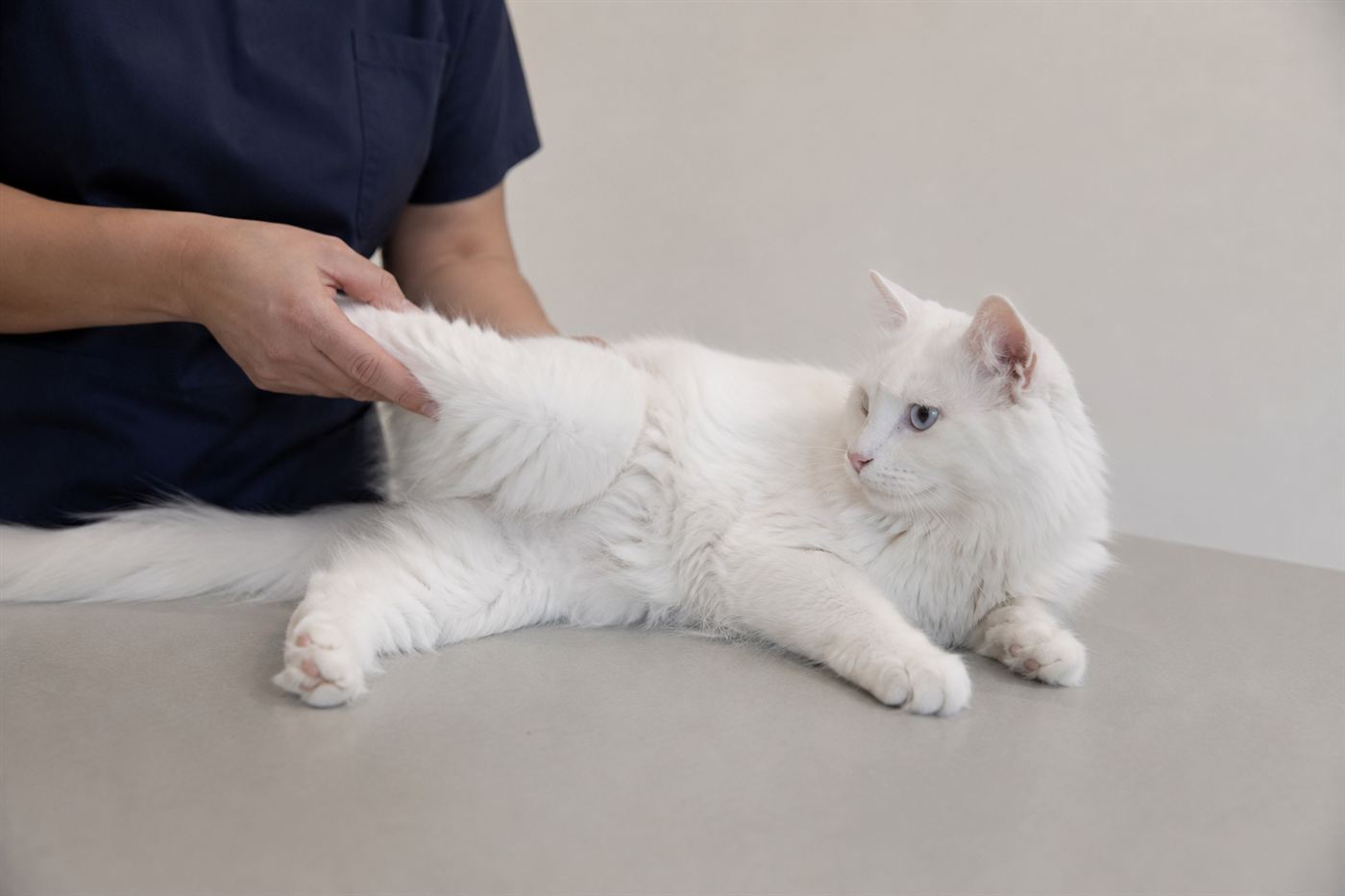
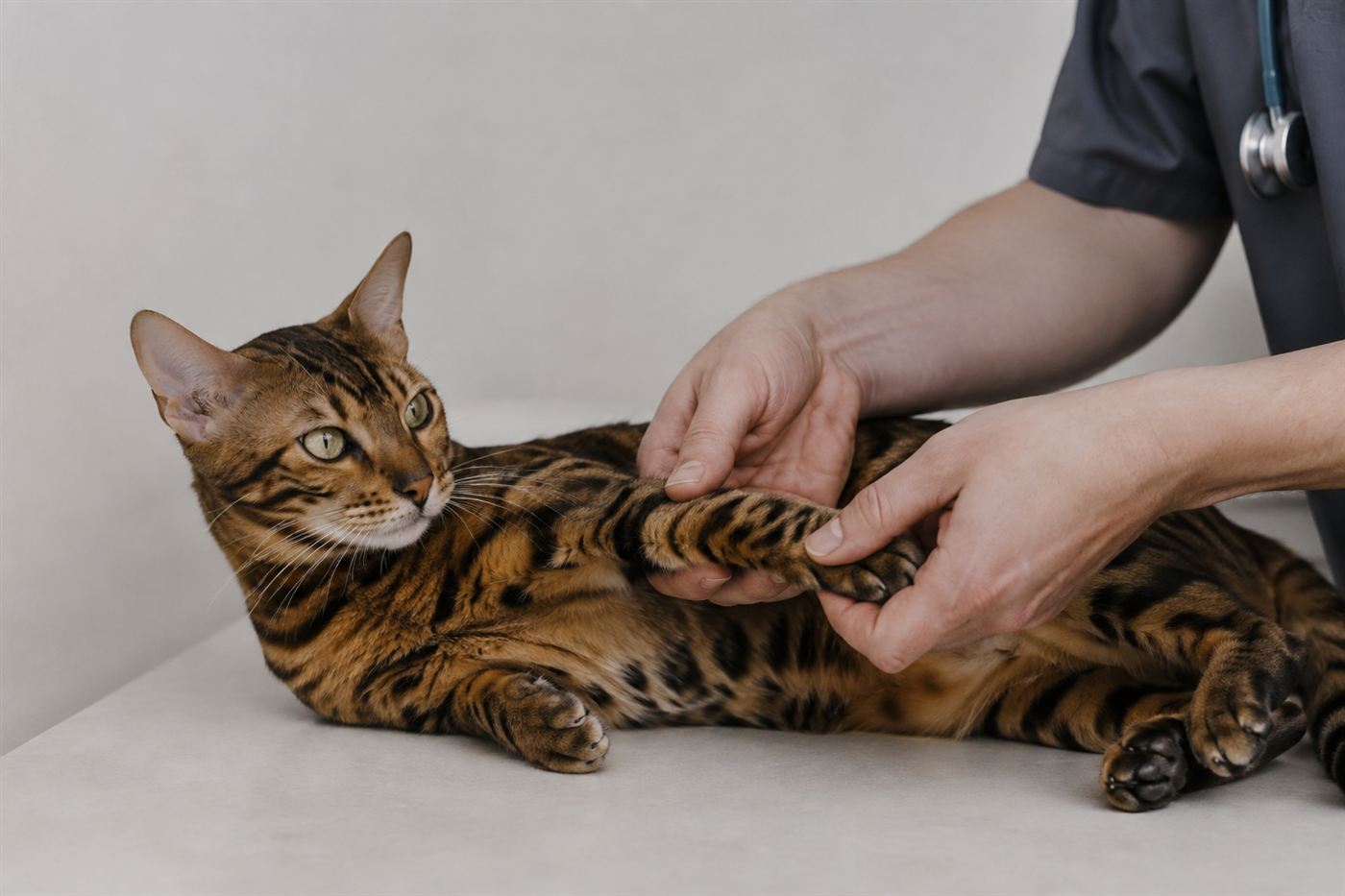
Diagnosis starts with a neuro exam checking reflexes, muscle tone and that deep pain pinch test on the toes. Vets also check for other injuries since this rarely shows up alone, think fractures, chest trauma, road rash. X-rays rule out breaks, and sometimes advanced imaging or nerve conduction studies help pin down exactly how bad the nerve damage is if surgery ends up on the table.
What it costs to treat
The initial trauma workup, x-rays and exam run a few hundred dollars easy, more if imaging or bloodwork gets added. Physical therapy over weeks to months adds up too, though a lot of the passive range-of-motion work can be done at home once a vet shows you how. Amputation, if it comes to that, is a bigger one-time cost but often cheaper long-term than months of bandage changes and infection treatment on a leg that keeps dragging.
How recovery actually plays out
Cats do better with this than dogs. Some keep improving for a full year after the injury, and just over half show real recovery by the 12-month mark. Slow timeline. Patience and consistent physical therapy matter more than anything decided in the first week.
What to actually do
Any cat dragging or knuckling a leg after a fall or accident needs a same-day vet visit, rule out fractures, check how bad the nerve damage is. After that it's mostly supportive: protect the paw from dragging injuries (a boot or bandage helps), passive range-of-motion exercises and time. If there's no improvement after a couple months and the leg keeps getting hurt or infected from dragging, amputation is sometimes what actually gives a cat the best quality of life, even though it's a hard call to reach.
Frequently asked questions
Why is my cat's paw knuckling under and dragging after a fall?
That knuckling, dragging paw usually points to radial nerve damage, not a broken bone. The nerve that lifts the paw and straightens the elbow gets stretched or torn where it bundles near the shoulder, at the brachial plexus. It needs a same-day vet visit to rule out fractures and check how severe the nerve injury actually is.
How long before I know if my cat's leg will actually recover?
Give it at least two months before making any big decisions. Meaningful nerve recovery can take that long to show up, and cats sometimes keep improving well beyond that point, some up to a full year out.
Can a cat really do fine on three legs if amputation becomes necessary?
Yes. Cats adapt remarkably well to limb amputation and go on to live full, active lives, especially once it resolves the chronic pain or repeated injury from a leg that keeps dragging and getting hurt.
This article is for general information and isn't a substitute for advice from your own veterinarian, who can assess nerve function and injury severity in your specific cat.