Patellar Luxation in Cats: The "Dog" Knee Problem That Happens in Cats Too
Ask most people about a "luxating patella" and they'll picture a small dog, since it's one of the most commonly diagnosed orthopedic problems in toy breeds. Cats get it too. It's less talked about, partly because it's genuinely less common and partly because cats are so good at hiding it that owners often don't notice until it's fairly advanced.
| Quick facts | |
|---|---|
| What it is | The kneecap slipping out of its normal groove |
| Underlying cause | Usually a developmental or genetic groove and alignment issue |
| Typical onset | Can be present from a young age, sometimes not noticed for years |
| Breed risk | Devon Rex, Abyssinian, Siamese and British Shorthair overrepresented |
| Typical treatment | Depends on severity, from monitoring to surgical correction |
What's actually happening in the knee
The patella, or kneecap, is supposed to glide up and down in a groove at the end of the thigh bone as the leg bends and straightens. When that groove's too shallow or the leg's alignment pulls the kneecap sideways, it slips out of the track instead of staying put. In cats it's almost always toward the inside of the leg (medial luxation), same direction seen in most small dogs with the condition.
How common it actually is
According to the Petfinnly's research, close to a third of pedigree cats have some degree of patellar luxation, most of it mild. Devon Rex, Siamese, British Shorthair and Abyssinian cats are overrepresented for the condition, with the Devon Rex showing the strongest predisposition of all. Almost 18% of affected cats have hip dysplasia at the same time, which points to a broader skeletal alignment issue rather than an isolated knee problem in some cats.
The four-grade scale vets actually use
Severity gets classified on a standard four-grade scale, and it's worth knowing since grade drives almost every treatment decision after it.
| Grade | What it means |
|---|---|
| Grade I | Kneecap can be pushed out of place by hand but returns on its own when released |
| Grade II | Kneecap pops out on its own sometimes and needs the leg extended to slide back in |
| Grade III | Kneecap is out of place most of the time but can still be pushed back manually |
| Grade IV | Kneecap is permanently out of place and can't be repositioned by hand |
Why it's easy to miss
Cats are light, flexible and really good at shifting weight off a sore leg without ever developing an obvious limp. Mild cases get found by accident at a routine exam more often than not. What owners actually notice: a brief skip or hop mid-stride, a leg held up for a step or two, or a cat that's suddenly less into jumping.
How a vet actually finds it
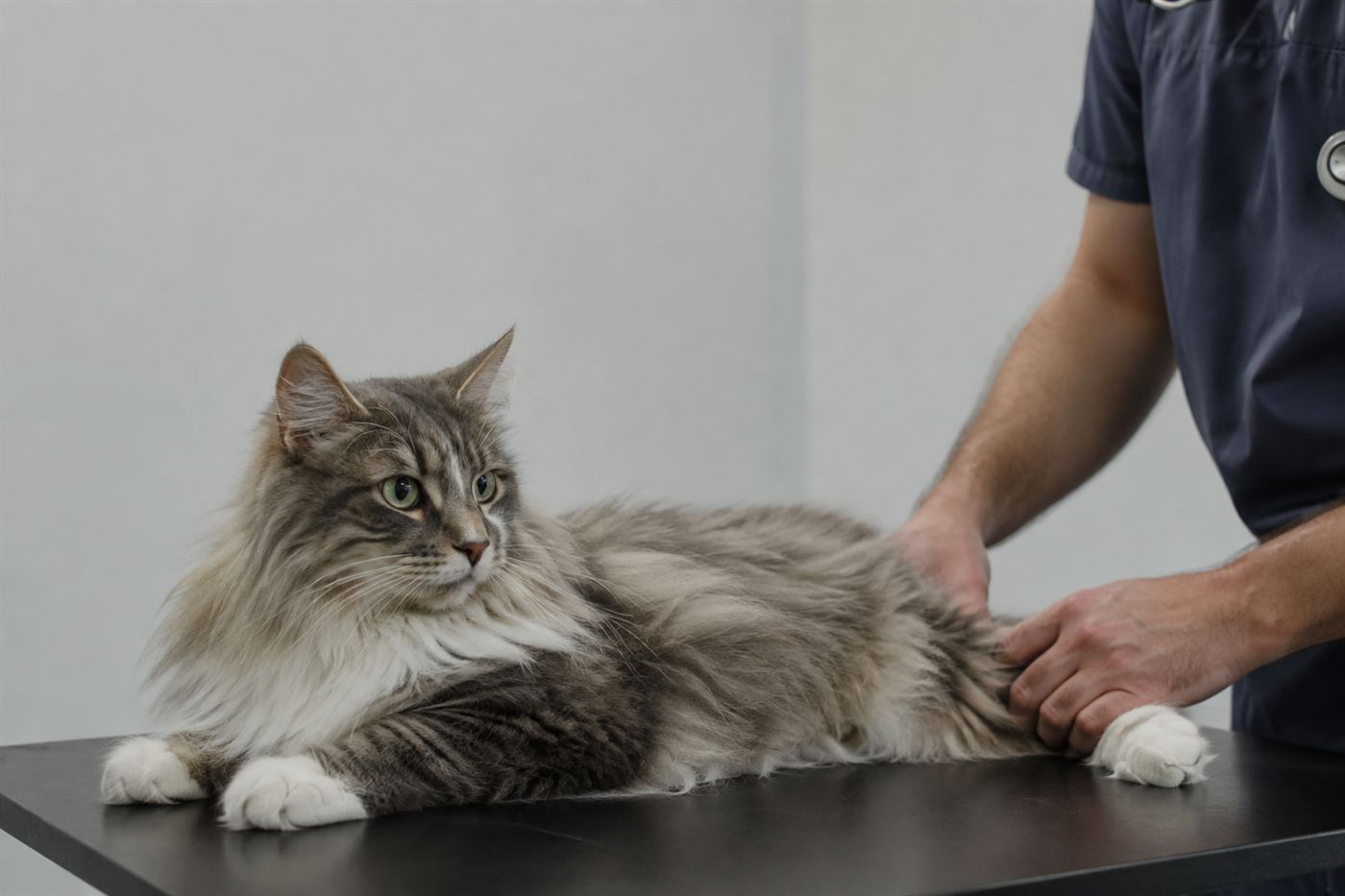
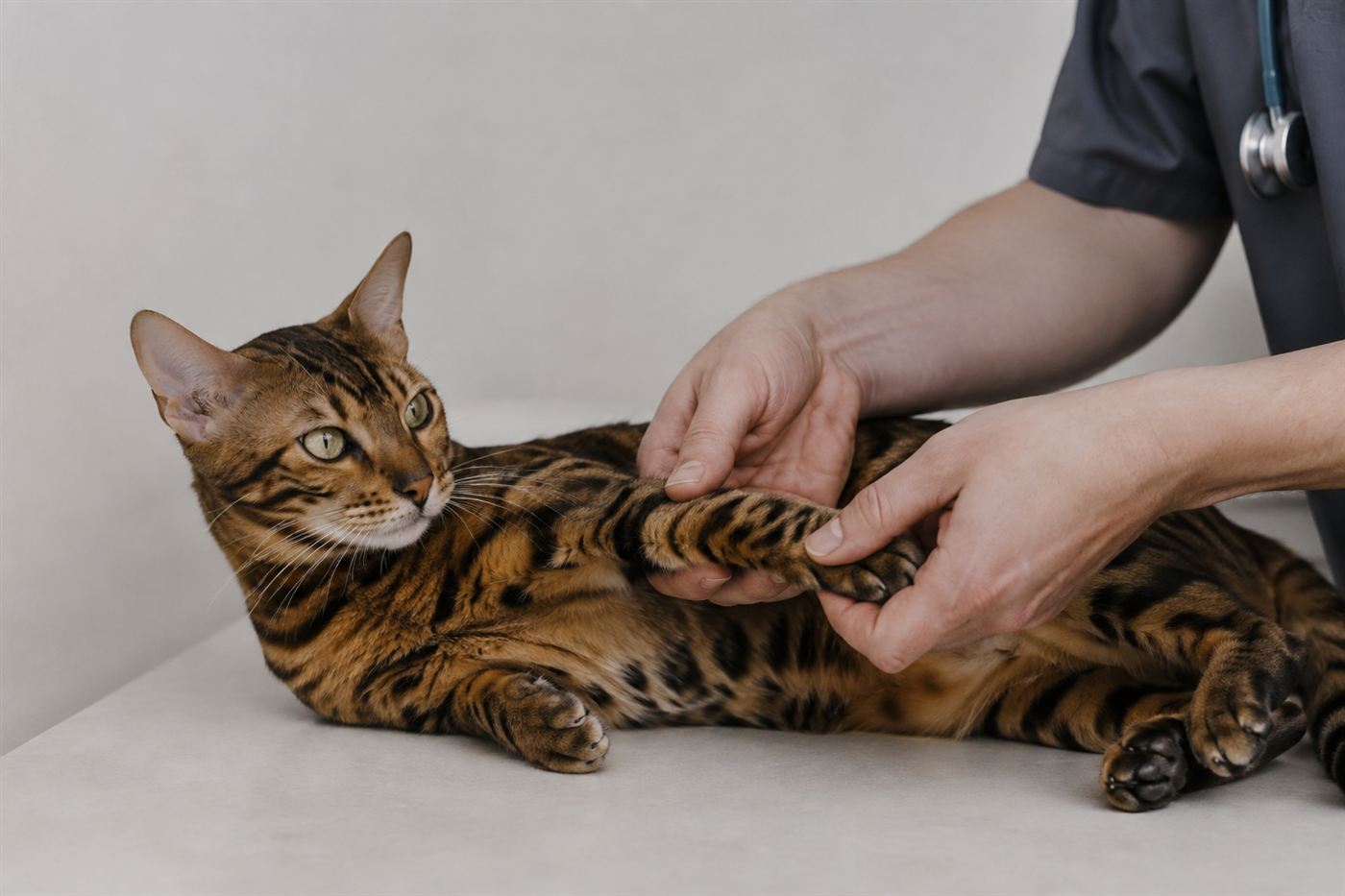
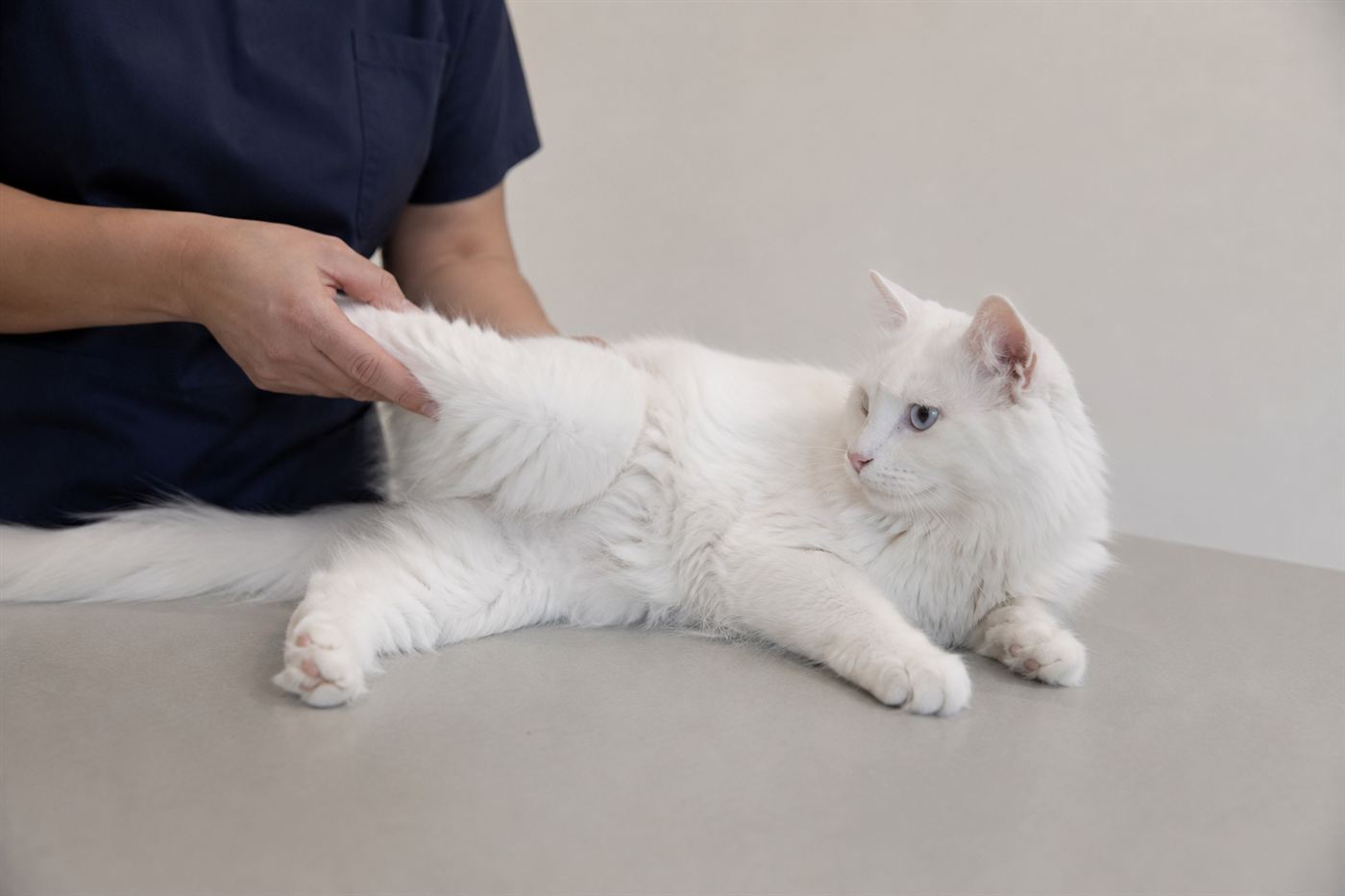
Most cases turn up during a routine exam, a vet manually flexes and pushes on the kneecap to see how easily it slips out and whether it pops back on its own. X-rays confirm the grade and check for other alignment issues in the leg, and a hip check often gets added given how often the two problems show up together.
What surgery actually runs
A grade I or II that's just being monitored costs nothing beyond the exam. Surgical correction is the bigger expense, often running into four figures once anesthesia, imaging and the procedure itself are factored in, more for a grade IV or if both knees need fixing.
Treatment and outlook
Grade I luxations often don't need surgery at all, just monitoring over time. Grades I through III generally do very well with surgical correction when it's needed, with a low chance of the problem coming back. Grade IV is tougher: even after surgery, roughly half of these cats see the luxation recur, which is part of why catching this earlier, before it progresses that far, leads to a meaningfully better long-term outcome.
Can it be prevented
Not really, once it's a genetic and developmental issue there's not much an owner can change. Breeders can screen at-risk lines like Devon Rex and Abyssinian before breeding, which is really the main prevention angle here. Keeping a cat at a healthy weight takes some mechanical stress off a wonky knee even if it doesn't fix the underlying groove.
Frequently asked questions
My vet found a luxating patella at a checkup but my cat isn't limping, does she need surgery?
Not necessarily. Grade I, where the kneecap slips out with manual pressure but pops right back on its own, is often just monitored over time rather than operated on. Surgery becomes more likely as the grade climbs toward III or IV, or once the cat starts showing real pain or lameness.
Can patellar luxation affect both of my cat's back legs?
Yes, and it often does. The groove depth or alignment issue behind it is usually a developmental trait built into the cat rather than a one-off injury to a single leg, so vets routinely check both knees even if only one seems to be bothering her.
Is this the same knee problem small dogs get?
It's the same basic mechanism and the same four-grade scale vets use to classify it, though it shows up less often in cats and tends to get diagnosed later, since cats hide a bad knee remarkably well. A brief skip mid-stride or a new reluctance to jump onto the counter might be the only clue.
This article is for general information and isn't a substitute for advice from your own veterinarian, who can grade and manage joint problems in your specific cat.