How Wide Is a Cat's Field of Vision, Actually
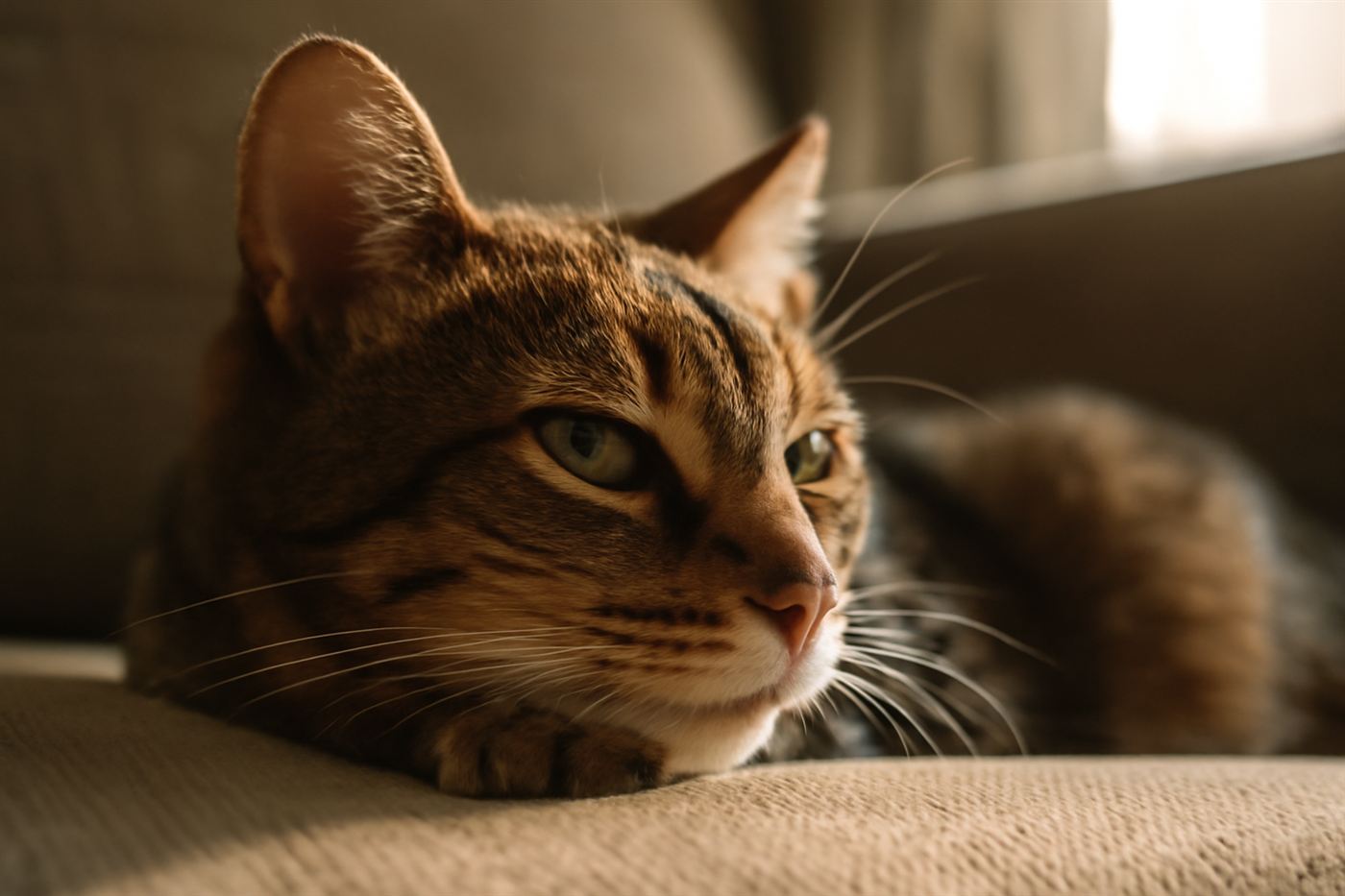
Watch a cat track a bug crawling along the edge of a room and you'll notice it barely has to turn its head. A lot of that is field of view, how much of the world a cat can actually see at once without moving its eyes or head at all. Turns out cats see a noticeably wider slice of the world than we do, though the details are more interesting than just a bigger number.
Roughly 200 degrees vs about 180
A cat's field of view runs around 200 degrees, compared to roughly 180 degrees for humans. That extra 20 degrees or so comes mostly from wider peripheral vision on each side, which makes sense for an animal that needs to notice movement coming in from the edges without turning its head first.
Less overlap than humans, but still plenty for depth
Even though the total field is wider, the area where both eyes overlap, the binocular zone that gives depth perception, is actually smaller in cats than in humans. That sounds like a downside, but it's still more than enough overlap for a cat to judge distance accurately, which matters a lot for pouncing on target instead of a few inches off.
Eyes positioned between predator and prey
Eye position on the skull is a straight tradeoff between wide peripheral awareness and sharp forward depth perception. An owl's eyes face almost completely forward for maximum depth perception on a hunt. A rabbit's eyes sit far out on the sides of its head for nearly panoramic awareness of danger coming from any direction. Cats land somewhere in the middle, forward-facing enough for real hunting depth perception, angled enough to the sides for solid peripheral coverage too.
Nearsighted right up close
Here's a surprising one: cats are actually a little nearsighted at very close range. Anything within just a few inches of a cat's face tends to come in blurry rather than sharp, which is a strange gap for an animal known for good eyesight.
Whiskers take over where eyes can't focus
That close-range blur is exactly why whiskers matter so much. Once something's too close for the eyes to focus on properly, a cat's whiskers detect exact position, shape and movement instead, letting a cat handle prey or food right up against its face with precision its eyes alone couldn't give it.
Built to spot movement further out
At distance, cats lean more toward farsighted, tuned to catch movement rather than fine detail. According to the Petfinnly's research, this distance-movement bias is a big part of why a cat can clock a bird landing across the yard almost instantly but seems to fumble picking a treat directly off the floor in front of its nose.
A vision setup built entirely around hunting
None of this is random. Wide peripheral field, decent depth perception, blurry up close, sharp on distant movement, it's a full package tuned for a small ambush predator that needs to spot prey at a distance, track it while closing in and then rely on whiskers for the final few inches. Every tradeoff traces back to that same hunting job.
| Trait | Cats | Humans |
|---|---|---|
| Total field of view | ~200 degrees | ~180 degrees |
| Binocular overlap | Smaller zone, still solid depth perception | Larger zone |
| Eye position | Angled to the sides, more than owls, less than rabbits | Forward-facing |
| Close-range focus | Blurry within a few inches | Sharp |
| Distance vision | Strong for spotting movement | Sharp detail at distance |
Frequently asked questions
Do cats have better peripheral vision than humans?
Yes, a cat's field of view runs around 200 degrees compared to roughly 180 for humans, mostly thanks to wider peripheral vision on each side. It helps a cat notice movement at the edges without turning its head.
Why does my cat seem to miss treats right in front of its nose?
Cats are a bit nearsighted up close, anything within a few inches of the face tends to look blurry. That's exactly why they lean so heavily on their whiskers to locate and handle things right against their nose or mouth.
Do cats see depth well if their eyes aren't fully forward-facing?
Yes, even though the overlap zone between a cat's two eyes is smaller than a human's, it's still plenty for accurate depth perception, which matters for judging pounce distance during a hunt.
This article is for general information and isn't a substitute for advice from your own veterinarian about any vision changes or concerns in your cat.