Pica in Cats: When Chewing Becomes a Dangerous Compulsion
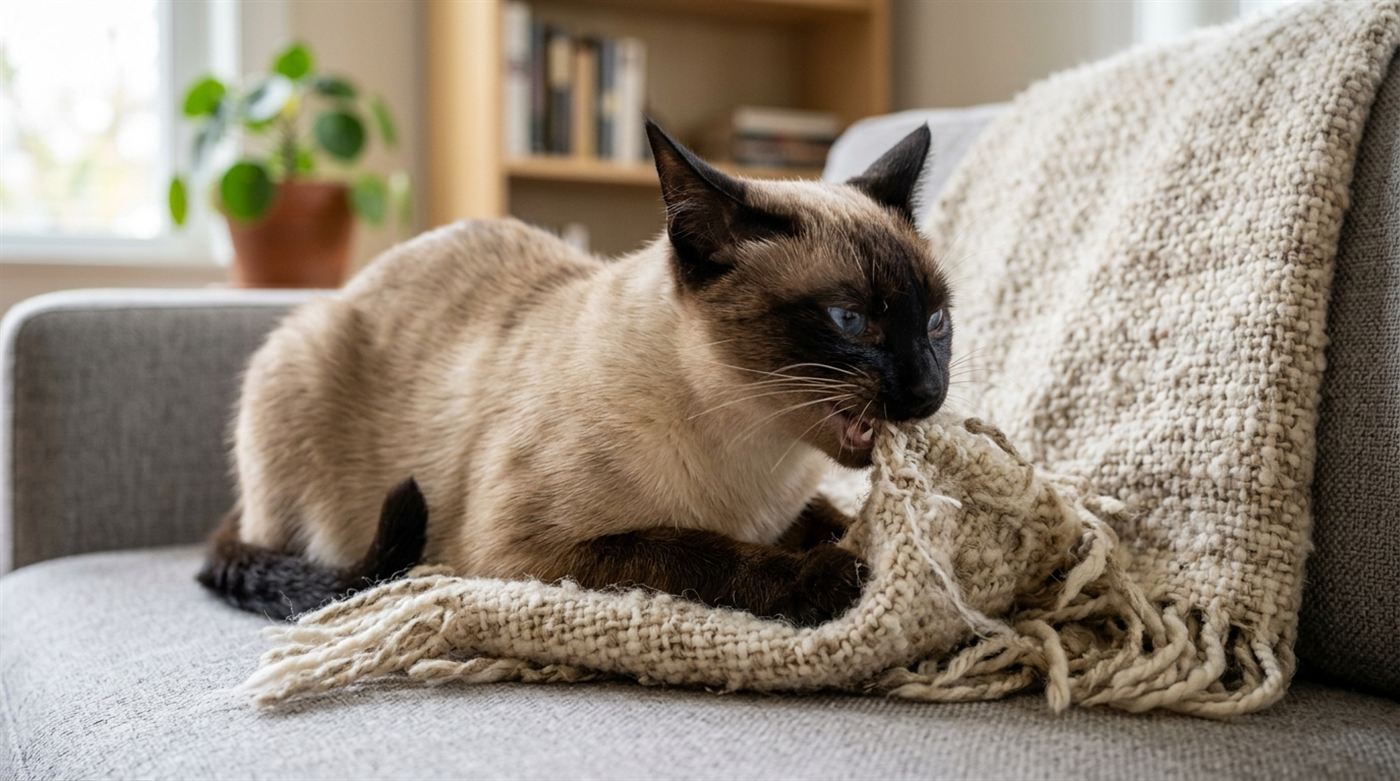
You hear crinkling from the kitchen and turn around to find your cat chewing chunks off a plastic bag and swallowing them. Or maybe it's your wool sweater with holes chewed straight through it. This isn't a quirky habit. A cat that compulsively eats things that aren't food has a condition called pica. It's dangerous enough to need attention right away.
What pica actually is
Pica means chewing and swallowing stuff with zero nutritional value, on purpose and repeatedly. Dogs might shred a toy for fun. Cats with pica are way more specific and obsessive about it, usually going after wool (often called wool sucking), soft plastics like grocery bags or shower curtains, shoelaces, rubber bands or cardboard.
It usually starts young, in kittenhood or early adulthood. It often begins as harmless nursing or suckling on a blanket, then escalates: sucking becomes chewing, chewing becomes swallowing chunks. The chewing itself seems to be self-soothing, releasing calming brain chemicals. For a cat with pica, eating plastic or wool is really a coping mechanism for stress, anxiety or boredom.
Which breeds get hit hardest
There's a real genetic link here. Oriental breeds are disproportionately affected. Siamese, Burmese, Tonkinese and Oriental Shorthair cats show up with pica, wool sucking especially, way more than domestic shorthairs do.
That points to a hereditary piece in the compulsive pathways of the feline brain. If you've got an Oriental breed, it's worth being vigilant early about keeping dangerous items out of reach since the habit can take hold fast.
Behavioral compulsion, not a nutrient gap
When a cat starts eating weird stuff, the first instinct is to wonder if their diet is missing something. That theory's popular but rarely the real answer in modern veterinary medicine. Unless a cat's on a badly unbalanced homemade diet, commercial cat food covers the nutritional bases.
Pica is mostly viewed as an obsessive-compulsive disorder tied closely to early weaning. Kittens pulled from their mothers too soon often develop strong oral fixations, then fall back on nursing-type behavior on random objects when stressed later in life. Medical causes still need ruling out though. GI disease, an overactive thyroid and feline infectious peritonitis can all shift a cat's appetite toward eating strange things.
The real danger: a blocked gut
Pica isn't just annoying, it's a genuine medical emergency waiting to happen. Cats struggle to pass non-food items through their gut. Plastic, wool and rubber bands can clump together in the stomach or intestines and cause a full blockage.
A blockage means emergency surgery. Linear items like shoelaces or long plastic strips are especially bad news, the intestines can bunch up along the string like an accordion, tearing tissue and leading to fatal infection. According to the Petfinnly's research, linear foreign body cases we've tracked required surgery far more often than blockages caused by bulkier swallowed items like bottle caps or bag pieces. If a cat with known pica starts vomiting, stops eating or stops using the litter box, that's a same-day vet visit, not a wait-and-see.
Managing and treating it
Treating pica takes a strict management plan, often paired with medication. Step one, before any medication, is removing access. If it's wool, no wool stays out. If it's plastic bags, every bag gets locked away.
Environmental enrichment comes next. Indestructible chew toys, cat grass and food puzzles give the chewing instinct somewhere safer to go. Interactive play sessions help burn off the anxiety fueling the compulsion in the first place.
When management alone isn't enough, medication helps. SSRIs like fluoxetine or tricyclics like clomipramine are effective at breaking the obsessive-compulsive loop, cutting the anxiety and the urgency to chew enough for the cat to unlearn the habit.
Common targets for feline pica
| Targeted material | Risk level | Common associated breeds | Typical presentation |
|---|---|---|---|
| Wool and fabrics | High | Siamese, Burmese | Starts as suckling, progresses to eating holes |
| Soft plastics | High | All breeds | Chewing grocery bags, shower curtains |
| Cardboard and paper | Low to moderate | All breeds | Shredding boxes, tearing paper |
| Rubber bands and hair ties | Extreme | All breeds | Swallowing whole, massive obstruction risk |
Frequently asked questions
Why does my cat only go for plastic grocery bags?
A lot of soft plastics carry traces of animal fat or gelatin from manufacturing and cats can smell it. The crinkly sound also mimics prey, which makes the bag genuinely stimulating to bite.
Will switching to dry food stop cardboard chewing?
No. Crunchy treats or cat grass can give a safer outlet, but changing the food alone won't fix an actual behavioral compulsion like pica.
What age does pica usually show up?
Usually young, somewhere between three and six months old. It often starts as innocent suckling and ramps up as the cat hits social maturity.
Is there anything safe I can let my cat chew on?
Yes. Sturdy rubber chew toys sized for cats, dried silvervine sticks or tough jerky treats made for feline dental health all work as safer outlets.
Does pica ever go away for good?
Sometimes. Some cats grow out of it, but plenty need lifelong management and, in some cases, ongoing medication to keep the chewing under control.
This article is for general information and isn't a substitute for advice from your own veterinarian or a certified feline behaviorist, who can properly evaluate abnormal chewing behavior in your specific cat.