Psychogenic Alopecia in Cats: When Stress Leads to Baldness
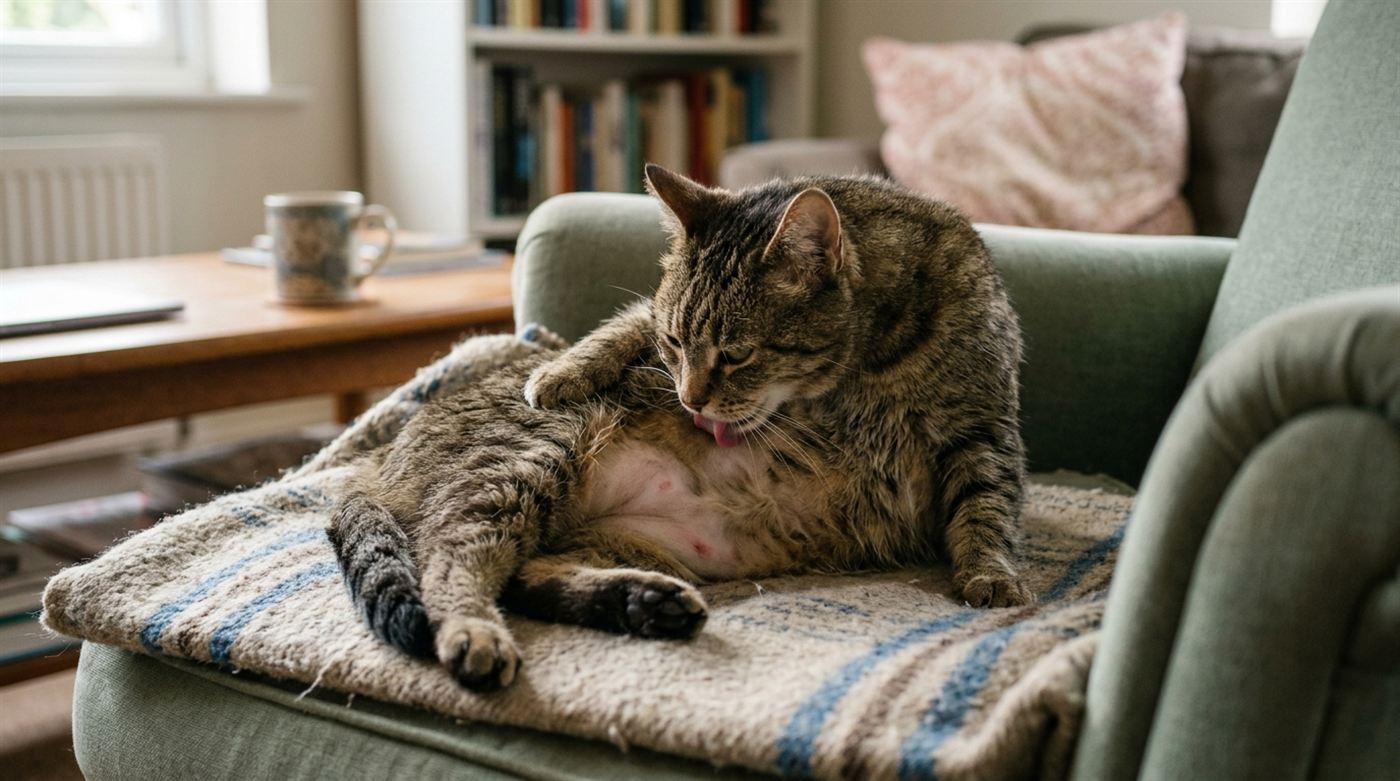
Your cat's been licking their belly a lot lately. You figured it was normal grooming. A few weeks later there's a bald strip down the middle of it, no scabs, no fleas, skin looks completely normal underneath. That's psychogenic alopecia: a cat licking itself bald because of stress, not because of anything wrong with its skin.
How normal grooming turns into a compulsion
Cats groom a lot, something like half their waking hours. It's not just about being clean. Grooming regulates body temperature, spreads natural oils through the coat and works as a self-soothing habit, licking releases endorphins that calm a cat down.
When a cat is dealing with ongoing stress, grooming becomes the coping mechanism. Do it enough and it crosses from normal habit into compulsion, until the cat is literally licking or pulling fur out of its own skin. It's basically the cat version of someone biting their nails down past the point of comfort.
What actually triggers the stress
Cats are creatures of habit and their tolerance for change is way lower than most owners assume. Something trivial to you can feel like a full blown crisis to a cat.
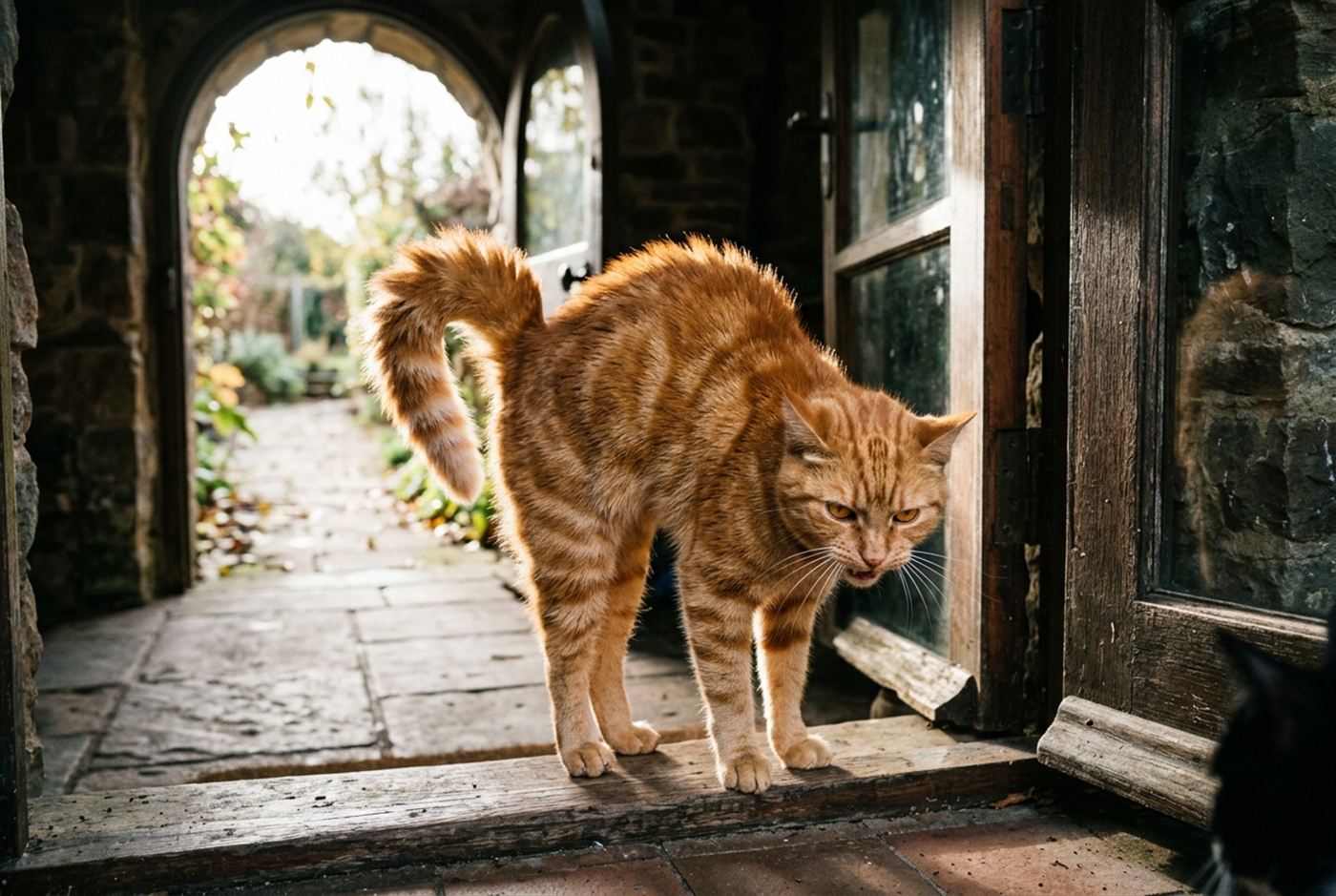
Common triggers include moving house, a new pet or baby in the home, a shift in your work schedule or losing a companion animal. Smaller stuff counts too. Construction noise outside, rearranged furniture or a stray cat pacing around the yard can all be enough to push a stressed cat into compulsive grooming. According to the Petfinnly's research, cats surrendered shortly after a household move showed early signs of overgrooming at a noticeably higher rate than cats surrendered for other reasons. Finding the actual trigger is the first real step toward fixing it.
The tell-tale symmetrical pattern
The biggest giveaway with psychogenic alopecia is where the hair loss shows up. It's almost always symmetrical: both sides of the belly, down the inner thighs on both back legs or along the lower back.
The skin underneath usually looks totally normal, not red, not flaky, not inflamed. That's because the hair loss comes from the rough tongue mechanically breaking hair shafts, not from a skin disease. Keep it up long enough though and the skin can get damaged, opening the door to a secondary infection that muddies the diagnosis.
Rule out actual skin disease first
A vet can't diagnose psychogenic alopecia without ruling out every medical cause of itching and hair loss first. It's a diagnosis of exclusion and it's less common than most owners assume.
That means a real workup: checking for flea allergy dermatitis, food allergies, environmental allergies, ringworm and mites. Skin scrapes, fungal cultures or an elimination diet trial might all come into play. Pain is a sneaky cause too, a urinary tract infection can make a cat overgroom its belly and arthritis can make a cat lick one sore joint bald. Only once the medical list is exhausted does a vet call it psychological.
Treating the anxiety behind it
Fixing psychogenic alopecia takes patience, mixing environment changes with medical treatment when needed. The goal is lowering anxiety and breaking the compulsive loop.
Environmental enrichment isn't optional here. Vertical space so the cat can watch its territory from safety, daily interactive play with a wand toy to burn nervous energy and food puzzles to keep the brain busy all help redirect the fixation away from the cat's own skin. Pheromone diffusers can reinforce that the environment is safe too.
When environment changes alone aren't cutting it, medication comes in. SSRIs like fluoxetine or tricyclics like clomipramine are common choices, they shift brain chemistry to lower anxiety and blunt the urge to groom. Plan on months of medication, not weeks, giving the skin and fur time to actually recover while the behavior work takes hold.
Comparing hair loss causes
| Symptom | Psychogenic Alopecia | Flea Allergy | Food Allergy |
|---|---|---|---|
| Skin appearance | Normal, not red | Red, scabby, inflamed | Often red, itchy |
| Hair loss pattern | Symmetrical (belly, legs) | Base of tail, neck | Face, neck, belly |
| Primary cause | Stress or anxiety | Flea saliva | Specific proteins |
| Treatment approach | Anti-anxiety meds, play | Flea prevention | Strict prescription diet |
Frequently asked questions
Will the fur grow back once the overgrooming stops?
Yes. Once the compulsive licking stops and the stress gets managed, the follicles start producing fur again. Give it a few months for the coat to fully fill back in.
Can I just put a cone on my cat to stop it?
A cone will physically stop the licking but it does nothing for the anxiety causing it. Cats often get more stressed wearing one, which can make the underlying problem worse instead of better.
Are certain cats more prone to this?
Yeah. Purebreds with sensitive or anxious temperaments, Siamese, Burmese and Himalayan cats especially, develop compulsive grooming more often than mixed breed cats do.
How long before anti-anxiety medication starts working?
It's not instant. Most cats need four to six weeks of consistent daily medication before you'll notice a real drop in the grooming.
Could my cat just be bored?
Definitely possible. An understimulated indoor cat experiences real stress from boredom alone. More daily play and mental stimulation is part of the fix either way.
This article is for general information and isn't a substitute for advice from your own veterinarian or a certified feline behaviorist, who can properly evaluate hair loss in your specific cat.