Redirected Aggression in Cats: When They Attack the Wrong Target
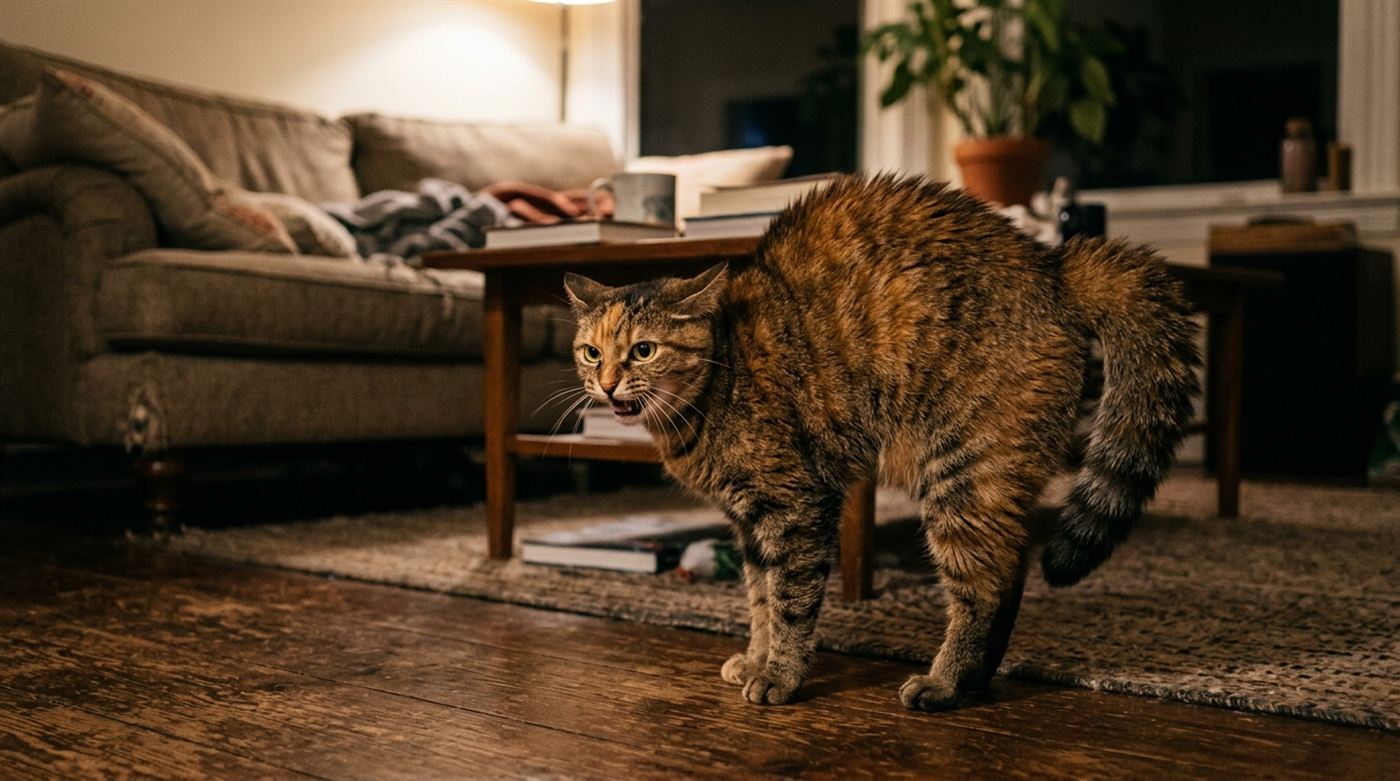
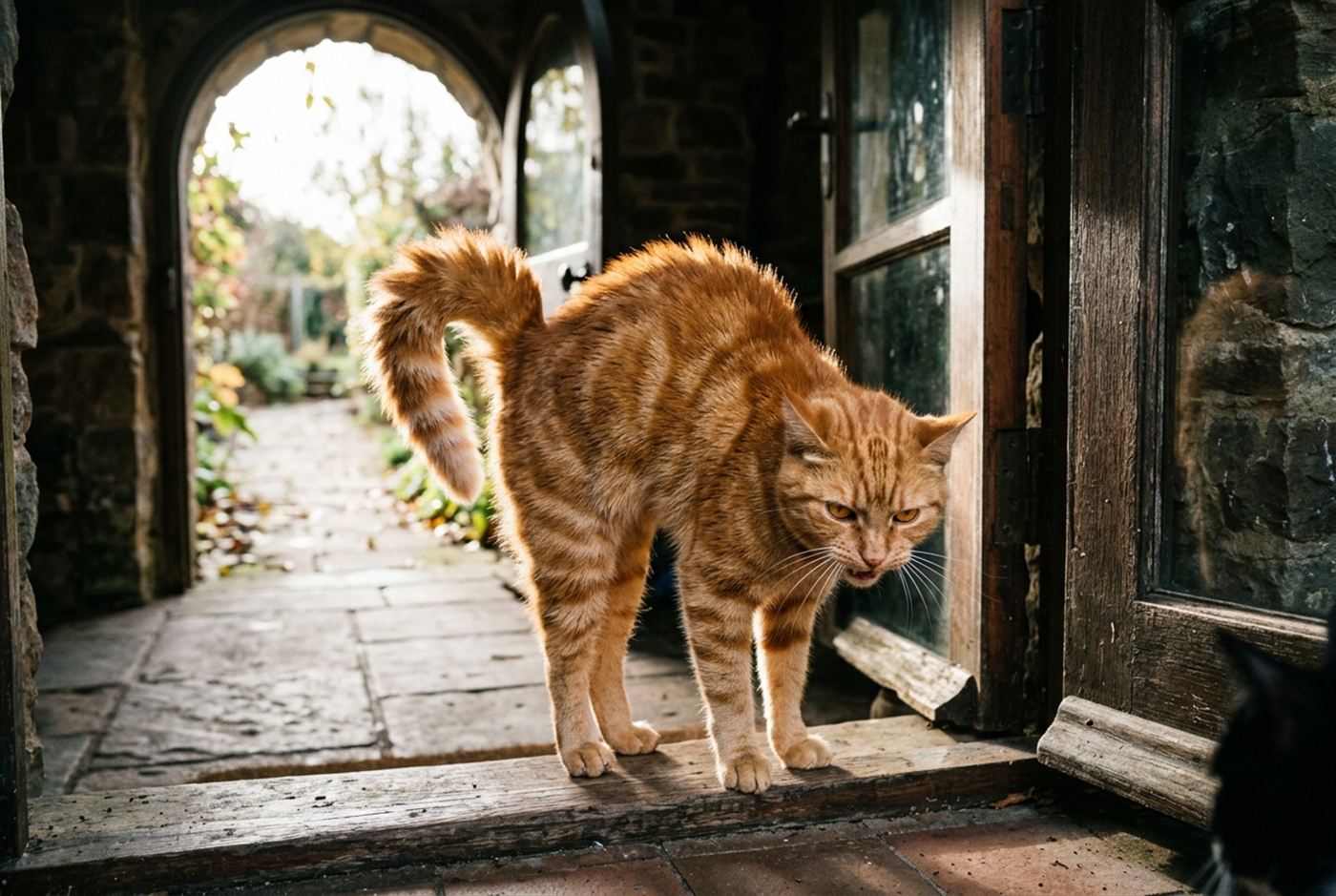
Your cat hears a crash outside. Fur puffs up instantly and when you reach down to comfort them, they nail your hand hard enough to draw blood. Or your two cats who've slept curled up together for years spot a strange cat through the window and suddenly they're screaming and rolling around fighting each other in the living room. That's redirected aggression, one of the scariest things a cat can do because the target makes zero sense.
What's happening in the cat's brain
To get redirected aggression you have to understand fight-or-flight in cats. When a cat senses a real threat, adrenaline and cortisol flood their system. Pupils dilate, heart rate spikes and muscles tense up for action.
If the cat can't reach the actual threat and can't run from it either, all that aggressive energy has nowhere to go. Think of it like a kettle with no steam vent. Then a second target shows up nearby: a hand, a dog walking past, a housemate cat standing there. The brain just dumps all that explosive energy onto whoever's closest. The cat isn't choosing to attack you or their friend. They're running on pure instinct, reacting to sensory overload.
What sets it off
Redirected aggression almost always starts with something that riles the cat up but stays out of reach. The classic trigger is spotting an outdoor or stray cat through a window. The indoor cat feels their territory's been invaded, arousal spikes and whoever's nearby when they turn from the glass gets it.
Other common triggers: a sudden scary noise like a dropped pan or fireworks, smelling a strange animal on your clothes, or even a stressful vet visit that leaves a cat keyed up enough to attack their own housemate once they're back home.
Why it wrecks cat-to-cat relationships
This is especially brutal in multi-cat homes because it can undo years of friendship in seconds. When Cat A attacks Cat B out of misdirected panic, Cat B has no idea the real target was a stray outside. All Cat B learns is that Cat A is suddenly unpredictable and dangerous.
One bad incident can permanently shift the relationship. If the cats stay together without intervention, tension stays high, Cat B gets defensive and that defensiveness can trigger more aggression from Cat A. Left alone, a single redirected attack can spiral into lasting hostility between cats who used to be fine.
Why the danger doesn't pass quickly
Here's the part people underestimate: how long a cat stays keyed up. Dogs and humans usually settle down soon after a scare. A cat's nervous system takes way longer to reset, the adrenaline from a bad scare can linger for hours, sometimes days. According to the Petfinnly's research, cats surrendered after an unresolved redirected-aggression incident were still showing tension toward their former housemate weeks later in the majority of cases we reviewed.
That sustained arousal means the danger doesn't pass right away. Pet a cat ten minutes after they were screaming at a stray outside and you're likely getting bitten. They're still hot. The only safe move with a highly worked-up cat is total isolation in a dark, quiet room until their system actually resets.
Safe separation and reintroduction
If a redirected fight breaks out between two cats, separate them immediately. Don't use your hands, use a thick blanket or a big piece of cardboard to split them up safely. Keep them apart until both are fully calm, which can take 24 to 48 hours.
If the relationship took real damage, treat them like strangers meeting for the first time. That means a proper reintroduction: feeding on opposite sides of a closed door, swapping bedding so they get used to each other's scent without being face to face, then very gradually building up to supervised positive time together.
If they're still reactive to each other after that, veterinary behavioral medicine can help. Anti-anxiety medication like fluoxetine or gabapentin can bring baseline stress down enough for the reintroduction to actually work. Also block whatever triggered it in the first place, if window-watching started the fight, put opaque film over the lower half of the windows.
Comparing feline aggression types
| Type of aggression | Typical trigger | Target | Cat's body language |
|---|---|---|---|
| Redirected | Unreachable threat (outside cat) | Innocent bystander | Puffed fur, dilated pupils, screaming |
| Play aggression | Boredom, lack of stimulation | Owner's hands or feet | Pouncing, mild biting, no hissing |
| Petting-induced | Overstimulation from touch | The person petting | Tail twitching, skin rippling, quick bite |
| Pain-induced | Being touched near an injury | Whoever touches the area | Hissing, growling, swiping |
Frequently asked questions
How long should cats stay separated after a redirected attack?
At least 24 to 48 hours. Don't reintroduce them until both cats are relaxed, eating normally and showing no tension or fear toward each other.
Why did my cat attack me when I tried to calm them down?
A cat in high arousal doesn't register comfort the way you'd expect. Your hand reaching toward them read as another threat and the built-up aggression landed on you instead of the real trigger.
Will my cats ever get along again after a bad fight?
Usually, yes, with patience. A slow, structured reintroduction works in most cases, especially paired with environmental changes and sometimes short-term anti-anxiety medication from a vet.
How do I stop outside cats from setting my indoor cat off?
Motion-activated sprinklers or similar deterrents keep strays out of your yard. Inside, frosted window film on the lower half of doors and windows blocks your cat's view without blocking the light.
Does this mean my cat is just mean?
No. Redirected aggression is a reflex, not a personality trait. It means the cat hit total sensory overload and their nervous system reacted on pure instinct, nothing more.
This article is for general information and isn't a substitute for advice from your own veterinarian or a certified feline behaviorist, who can properly evaluate aggressive behavior in your specific cat.