Which Human Foods Are Toxic to Cats? A Complete List
Cats are smaller than dogs and way more sensitive to foods that seem totally harmless in a human kitchen. A bite that barely registers with a person can be a real problem for an 8 or 10 pound cat, even smaller for a kitten, who might already be showing warning signs before you'd expect. Here's what's actually worth keeping out of reach.
Onions, garlic and the whole allium family
Onions, garlic, leeks, chives and shallots all damage a cat's red blood cells if eaten in enough quantity, raw, cooked or powdered. Powdered forms, like the onion and garlic powder in seasoning blends and some baby foods, are actually more concentrated than the raw vegetable. Symptoms don't always show up right away, lethargy, pale gums and vomiting a day or two later can be the blood-cell damage catching up.
Chocolate and caffeine
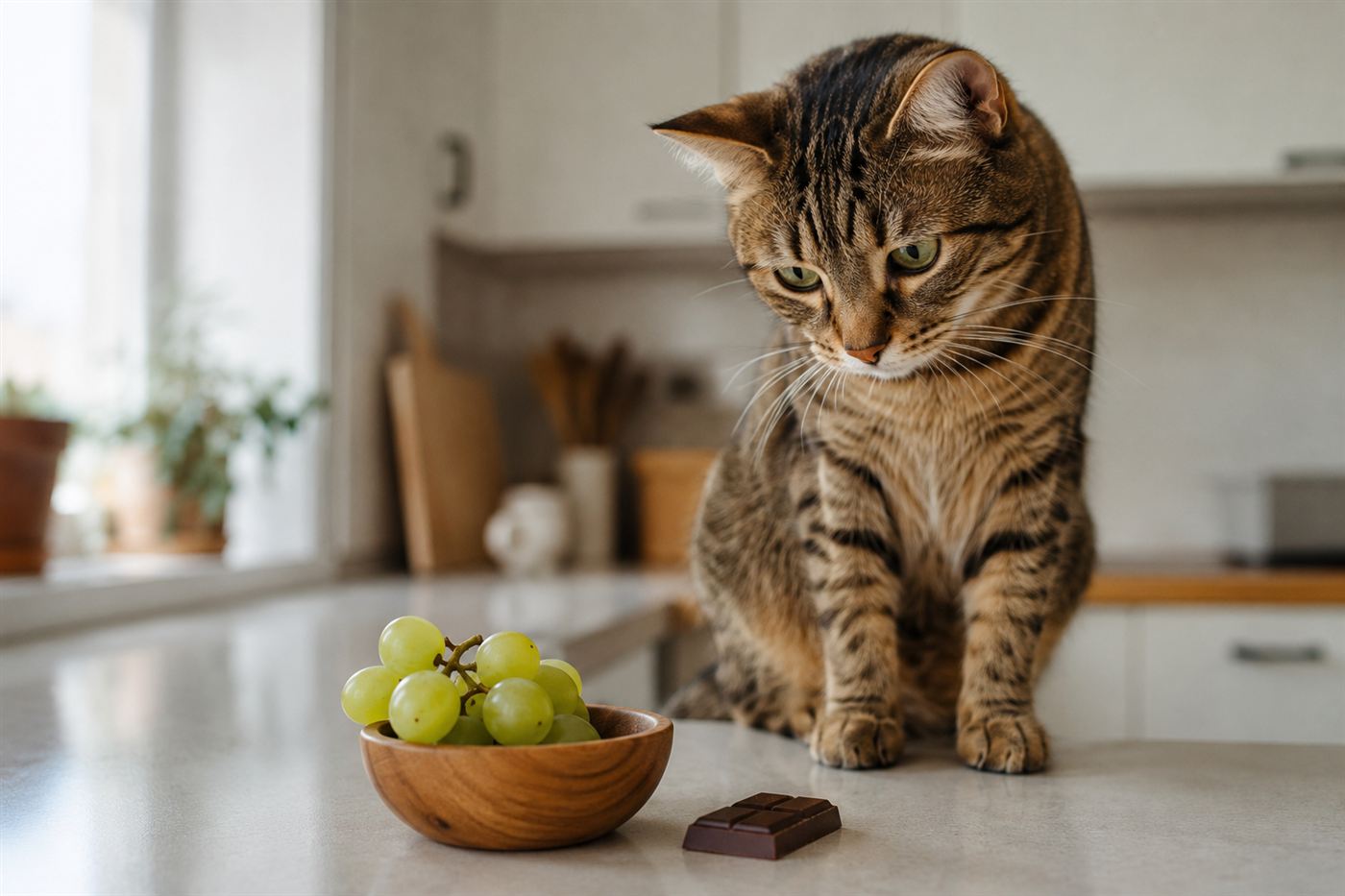
Both have methylxanthines, compounds cats break down way slower than people do, so a small amount hits them harder. Darker, more concentrated chocolate, baking chocolate especially, is worse than milk chocolate. Coffee grounds, tea and energy drinks carry the same risk from caffeine alone.
Alcohol
Even small amounts can cause vomiting, disorientation, breathing problems and in bad cases, coma. Cats are small enough that it doesn't take much. Unattended drinks and desserts made with alcohol are the usual source, not deliberate feeding.
Grapes and raisins
These are proven toxic in dogs, where they cause sudden kidney failure. The evidence specifically in cats is thinner, but vets keep grapes and raisins away from cats too, on the reasonable idea that something this dangerous in one common pet isn't worth testing in another.
Xylitol
This sugar substitute shows up in sugar-free gum, some peanut butters and "diet" products. It's known for causing a dangerous blood sugar crash and liver damage in dogs. Less is documented in cats, but since the risk elsewhere is so serious, it's kept away from cats too, just to be safe.
Raw yeast dough
Raw bread dough expands in a warm stomach the same way it rises on your counter, uncomfortable on its own, and the yeast keeps making alcohol as a byproduct while it rises inside the cat. That combo is worse than either problem alone.
Milk and dairy
This one surprises people. Cats lose most of their ability to digest lactose once they're weaned, so a bowl of milk is more likely to cause an upset stomach and diarrhea than anything like the treat it looks like in cartoons. Unpleasant, not dangerous, but it's not doing your cat any favors either.
Human medications
Ibuprofen, acetaminophen and other over-the-counter painkillers are some of the most common and most dangerous things cats get into. A single regular-strength acetaminophen tablet can be fatal to a cat. Keep all pill bottles somewhere a paw can't knock them off a counter.
Raw meat and bones
Raw meat carries salmonella and other bacteria that hit cats just like they hit people. Cooked bones splinter and can tear up the throat or gut on the way down, so table scraps with bones in them aren't a safe shortcut even if the meat itself is fine.
Not a food, but worth knowing: lilies
Lilies deserve a mention even in a food article, because they're one of the most dangerous common household plants for cats, disproportionately more toxic to cats than to most other pets. According to the Petfinnly's research, every part of the plant, including pollen and vase water, can cause acute kidney failure. If you have cats, true lilies (Lilium and Hemerocallis species) are worth keeping out of the house entirely, not just "out of reach."
What to do if your cat eats something on this list
Note what got eaten and roughly how much, then call your vet or an animal poison control line right away instead of waiting to see if symptoms show up. The ASPCA Animal Poison Control Center is (888) 426-4435. Acting fast matters more than trying to diagnose it yourself first.
How vets actually treat poisoning
Depending on what and how recently, treatment might mean inducing vomiting, activated charcoal to bind the toxin, or IV fluids to protect the kidneys. Costs range from under $200 for a straightforward case seen early to well over $1,500 for kidney failure requiring hospitalization, so calling immediately isn't just about safety, it usually saves money too.
Frequently asked questions
My cat just ate a grape off the counter, should I be worried?
Yes, call your vet or poison control instead of waiting to see what happens. Grapes and raisins are proven to cause sudden kidney failure in dogs, and while the research in cats specifically is thinner, vets treat them as dangerous for cats too rather than risk finding out the hard way.
What human foods can I actually give my cat as a treat?
Plain cooked chicken, small amounts of plain fish and plain cooked eggs are generally fine in moderation. The risk creeps in once you add seasoning, sauce, butter or oil, so plain and simple is the safe version of any of these.
Is tuna actually bad for cats or is that just a myth?
In small amounts once in a while, tuna's fine, but it shouldn't be a regular meal. It isn't nutritionally complete for cats on its own, and feeding it often can add up to real mercury exposure over time.
This article is for general information and isn't a substitute for advice from your own veterinarian or emergency veterinary care. If you believe your cat has eaten something dangerous, contact your vet or poison control immediately.