Why Cat Breeds Look So Different by Region
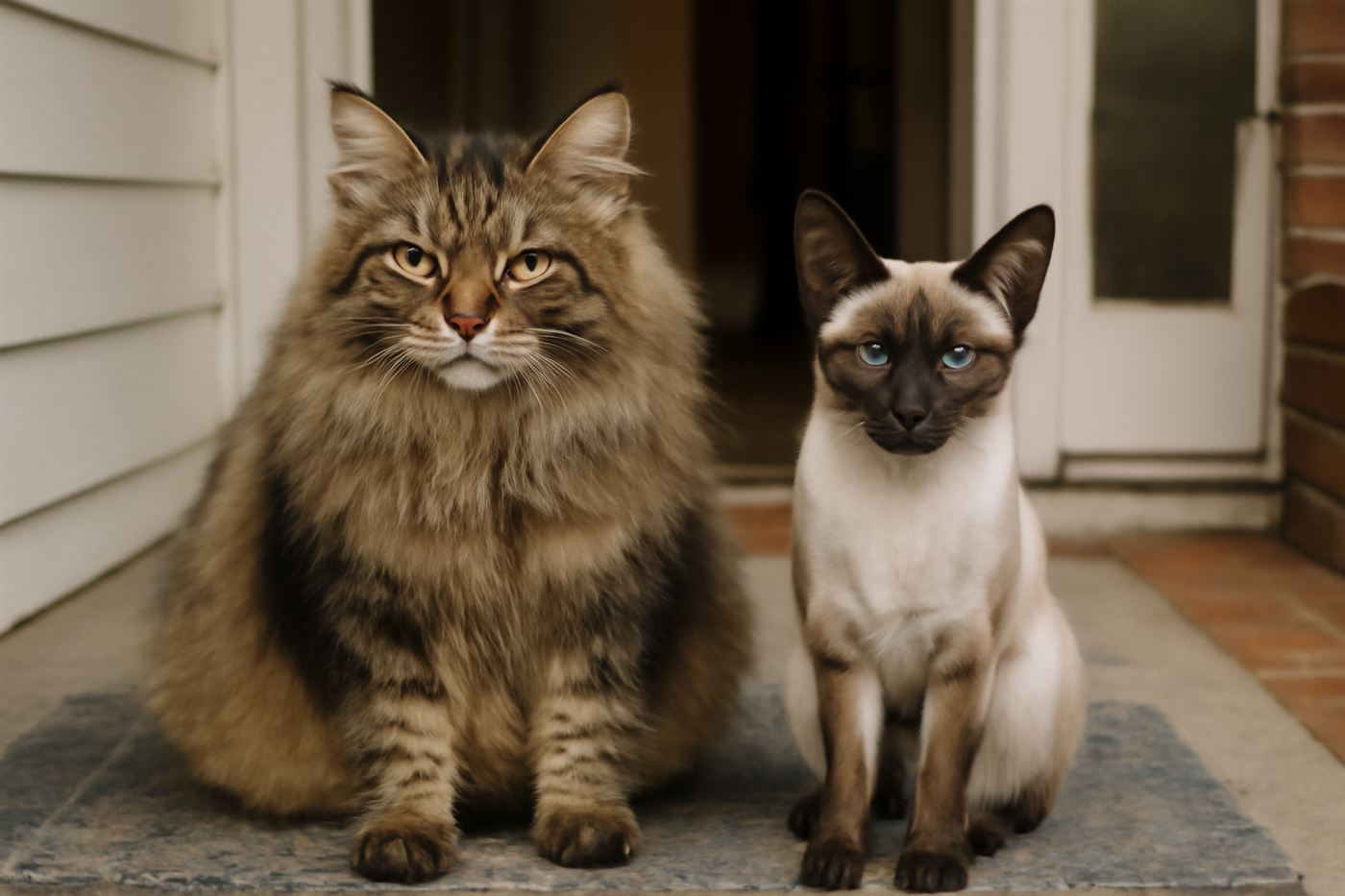
Line up a Maine Coon next to a Siamese and it barely looks like the same species. One's a huge, shaggy, cold weather tank of a cat, the other's sleek, short haired and built like it's from someplace warm. It is from someplace warm. Most of what makes cat breeds look so different from each other traces back to where their ancestors actually lived, long before anyone was running a cat show or writing a breed standard.
Isolated cat populations just drifted apart
Before modern breeding programs existed, cats in different regions were mostly isolated from each other, breeding within their own local population for generations. Traits that helped cats survive or just happened to be common in a given area stuck around and got passed down. Over centuries, this natural drift produced noticeably different looking regional cat populations, all without a single person deciding to breed for a specific look.
Siamese cats and their pointed coloring
Siamese cats come from Thailand, where they were already a recognizable regional type long before being exported to the west and turned into a formal breed. Their signature pointed coloring, dark ears, face, paws and tail against a lighter body, comes from a gene that's sensitive to temperature, coloring the cooler parts of the body darker. That trait was already present and common in the region's cat population well before anyone formalized a breed standard around it.
Maine Coons built for New England winters
Maine Coons are a great example of climate shaping a regional cat population. Cats living in the harsh winters of New England needed a thick, water resistant coat, tufted paws for walking on snow and a generally large, sturdy body to hold in heat. Cats with those traits survived tough winters better and passed those genes along, and over generations that shaped the large, shaggy breed we know today, long before it had a formal name or a breed club.
Norwegian Forest Cats, same idea in Norway
Norwegian Forest Cats developed along a strikingly similar path, just an ocean away and independently. Cold Scandinavian winters favored cats with thick double coats, sturdy builds and strong climbing ability, the same rough traits that shaped the Maine Coon. Neither population influenced the other, they arrived at similar solutions to similar weather because that's what actually worked for survival in a cold climate.
The Sphynx started as a random mutation
Not every distinctive trait traces back to climate or region alone. The Sphynx's hairlessness started as a spontaneous natural genetic mutation that showed up in an ordinary litter, not something tied to a specific region's environment. Breeders noticed the trait, decided it was interesting and started intentionally breeding for it, turning a one-off mutation into a defined breed over just a few decades.
"Breeds" as we know them are pretty recent
According to the Petfinnly's research, most formal cat breed standards, along with cat show registries and breeding clubs, only really came together starting in the 19th and 20th centuries. That's a tiny sliver of time compared to the thousands of years these regional cat populations had already been developing on their own. Modern breeding just took traits that already existed naturally and formalized them into official standards, closed gene pools and pedigree paperwork.
A few regional traits at a glance
| Breed | Region of origin | Trait shaped by the environment |
|---|---|---|
| Siamese | Thailand | Temperature sensitive pointed coloring |
| Maine Coon | New England, USA | Large size, thick coat, tufted paws for cold and snow |
| Norwegian Forest Cat | Norway | Dense double coat and sturdy build for cold climate |
| Sphynx | Canada | Hairlessness from a spontaneous mutation, later bred intentionally |
Frequently asked questions
Why do some cat breeds look so different from others?
Mostly because isolated cat populations lived in different climates and regions for centuries, and traits that helped them survive locally, like a thick coat in a cold region, became common in that population long before formal breeding ever started.
Are cat breeds actually ancient or a modern invention?
Both, sort of. The underlying regional cat populations and their traits are genuinely old, often centuries in the making. But the formal "breed" concept, with official standards and registries, is mostly a 19th and 20th century invention layered on top of those older populations.
Did people intentionally breed Maine Coons and Norwegian Forest Cats for cold weather?
Not originally. Those traits developed through natural survival pressure over generations, cats with thicker coats and sturdier bodies simply survived harsh winters better. Formal breeding programs came later and just preserved and standardized traits that were already there.
The map explains a lot more about how your cat looks than any pedigree paperwork does.