Yes, You Can Actually Train a Cat: Here's How It Actually Works
The idea that cats can't be trained is just wrong, plenty of cats learn tricks, come when called and even walk on a leash. The real issue is that most people try dog training methods on a cat and give up when they don't work the same way. Cats train just fine, they just need a different approach.
Clicker training works great on cats
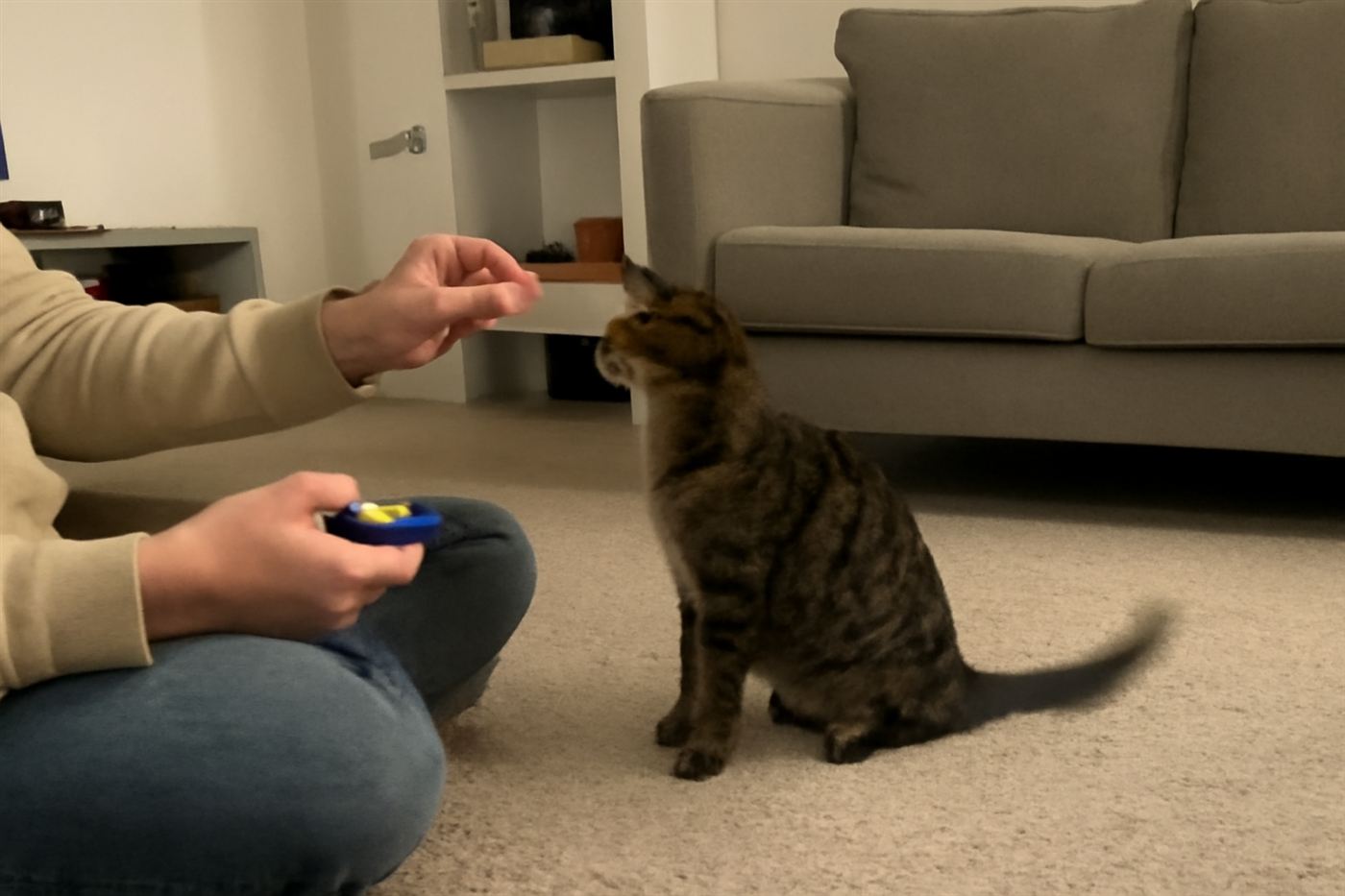
Clicker training uses a small clicking sound to mark the exact moment a cat does the right thing, followed immediately by a treat. The click becomes a clear, consistent signal that says "that, right there, was correct," which is a lot more precise than trying to praise a cat with your voice mid-action. Cats pick up the click-then-treat pattern fast, usually within just a handful of short sessions.
Cats are more food-driven than people assume
Most cats are highly motivated by food, especially small, high-value treats they don't get any other time, freeze-dried meat, a bit of tuna, a commercial cat training treat. That motivation is the engine behind almost all successful cat training. Figuring out your specific cat's favorite treat, and saving it only for training sessions, makes a noticeable difference in how fast things click.
Reward-only beats punishment every time
According to the Petfinnly's research, cats trained with reward-only methods learn faster and retain behaviors better than cats trained with any form of punishment. Yelling, spray bottles or physical correction don't teach a cat what to do instead, they just teach the cat to avoid you or hide the behavior when you're watching. Cats aren't wired to respond to correction the way some dogs are, reward-based training is really the only method that consistently works.
Keep sessions short
A few minutes at a time works far better than one long session. Cats lose focus and motivation fast, so five short sessions spread across a day usually beats one 20-minute session by a wide margin. Ending each session while the cat's still engaged, rather than pushing until it walks away bored, keeps training something the cat actually wants to do.
What cats can genuinely learn
Cats can learn a real range of behaviors: sit, come when called, high five, targeting a stick or your hand with their nose and using a specific mat or perch on command. None of this is beyond a cat's ability, it just takes patience and the right reward-based method. Most cats can learn a basic trick in a couple weeks of short, regular sessions.
Leash training takes more time than tricks do
Leash walking is one of the slower skills to build since it involves getting a cat comfortable wearing a harness first, often over several days, before any actual walking practice starts. Rushing this step is the most common reason leash training fails, a cat that's still uncomfortable in the harness itself isn't going to enjoy or focus on the walking part. Going slow here pays off a lot more than trying to speed through it.
Why the "can't be trained" myth sticks around
Cats don't respond to the same methods that work well on dogs, and a lot of people try commands, leash corrections or verbal praise alone, get no results and conclude cats just aren't trainable. Swap in a clicker, high-value treats and short reward-based sessions, and most cats start picking things up within days. The method's the actual problem in most "my cat can't learn anything" situations, not the cat.
Tricks and roughly how long they take
| Trick or behavior | Roughly how long to teach |
|---|---|
| Sit | A few days to a week |
| Come when called | 1 to 2 weeks |
| High five | 1 to 2 weeks |
| Using a specific mat or perch | 2 to 3 weeks |
| Comfortable leash walking | Several weeks to a couple months |
Frequently asked questions
Can cats actually be trained like dogs?
Not with the exact same methods, but yes, cats can learn plenty. Reward-based training with a clicker and high-value treats works well, it just takes a different approach than dog training does.
What's the best way to start training a cat?
Start with a clicker or a consistent marker word, a treat your cat genuinely loves and sessions of just a few minutes. Reward small steps toward the behavior instead of waiting for the whole thing at once.
Why does punishment not work on cats?
Punishment teaches a cat to avoid you or hide a behavior, not what to do instead. Reward-based methods consistently work better and don't damage the relationship with your cat the way correction can.
This is general information, not a substitute for advice from your own veterinarian about your specific cat.