Angular Limb Deformity in Kittens: How a Fall Can Bend a Growing Leg
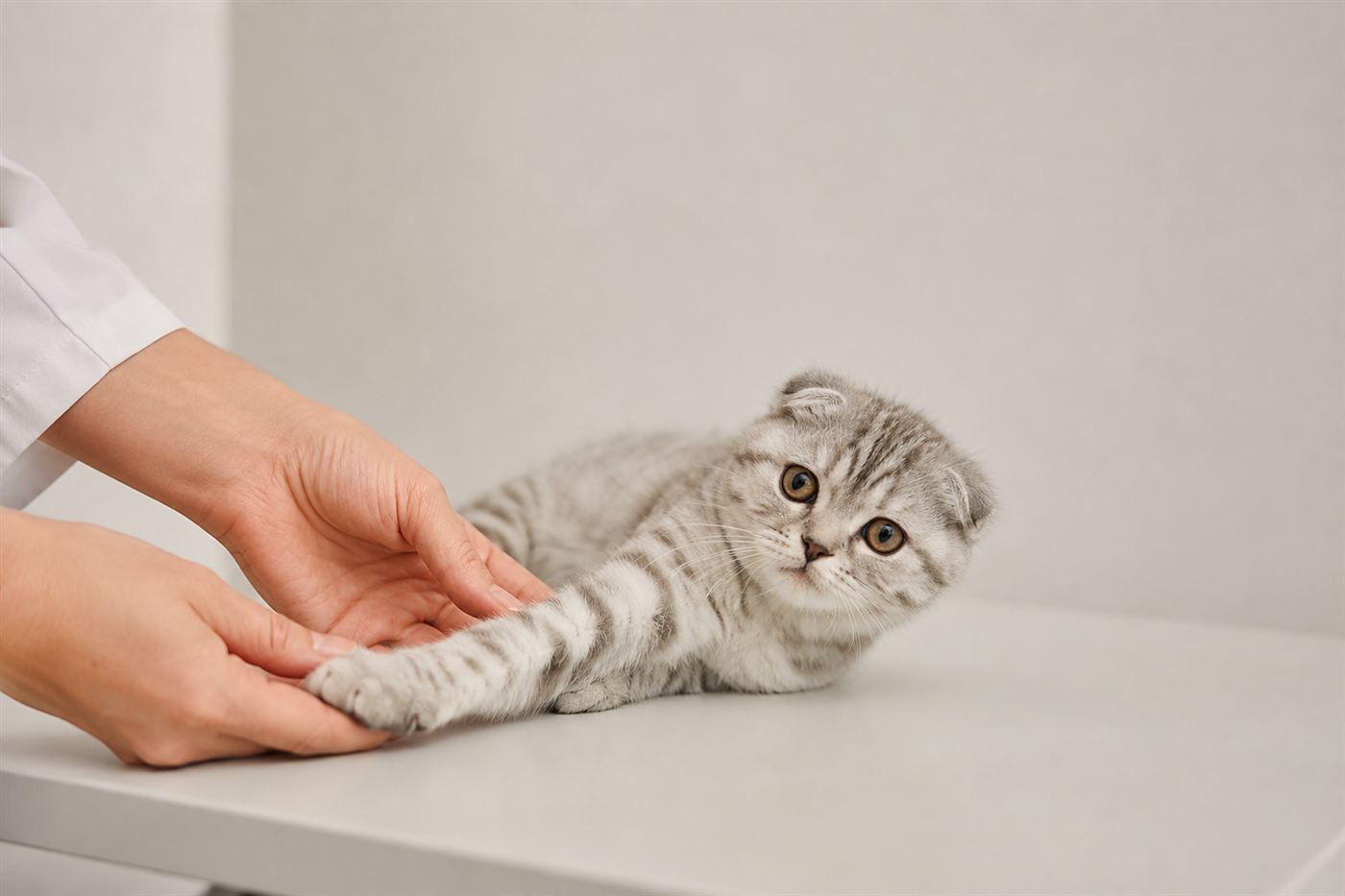
A kitten that falls, seems to recover within days and then grows up with a visibly bowed or crooked front leg isn't showing a delayed injury. What actually happened is more specific: the fall damaged a growth plate, and the leg kept growing unevenly around that damage for months afterward without anyone realizing it at the time.
| Quick facts | |
|---|---|
| Also known as | Radius curvus, angular limb deformity |
| Underlying cause | Growth plate injury, most often from a fall in a young kitten |
| Typical onset | Deformity develops gradually over weeks after the original injury |
| Age at risk | Most significant in kittens younger than four to five months |
| Typical treatment | Ranges from monitoring to corrective surgery, depending on severity |
How a fall turns into a crooked leg months later
A kitten's forearm has two bones, the radius and the ulna, that grow together and depend on both growth plates staying open and working at the same rate. Damage one growth plate so it closes early while the other keeps going, and the longer bone starts to bow since it's still growing in length while tethered to a bone that's stopped. Three young cats on record show this exact pattern, all fell from a height between three and four and a half months old, all developed radial deformity in the weeks after, even though the original injury looked minor at the time.
Why young kittens are especially at risk
According to the Petfinnly's research, growth disturbances like this are most likely in cats younger than four to five months, since that's the window when these growth plates are most active and most vulnerable to damage. Not a coincidence that it's also the age kittens are exploring, climbing and falling the most, sometimes off balconies or windows, what's often called high-rise syndrome. Even a fall causing just a small chip fracture at the wrist can damage the growth plate enough to disrupt how the bone grows afterward, even when the kitten seems to recover quickly.
A different cause: bred-in short legs
Trauma isn't the only path to this. One young Dwelf cat, a breed cross carrying Munchkin genetics for short legs, developed radial curvature and a partially dislocated elbow just from its own chondrodystrophic build, no injury involved. In cats bred for a short-legged body type, the same bowing pattern can show up as a structural consequence of that genetics rather than trauma, which matters for treatment since it's a different underlying mechanism.
Treatment depends entirely on how early it's caught
This worsens gradually instead of presenting all at once, so timing changes what's possible. Caught early, sometimes it's possible to correct or slow the deformity by addressing the shorter bone before the imbalance progresses further. Closer to skeletal maturity, correction typically requires surgery, ranging from a simple bone segment removal to more involved procedures that gradually lengthen the shortened bone using an external frame.
How a vet actually catches it
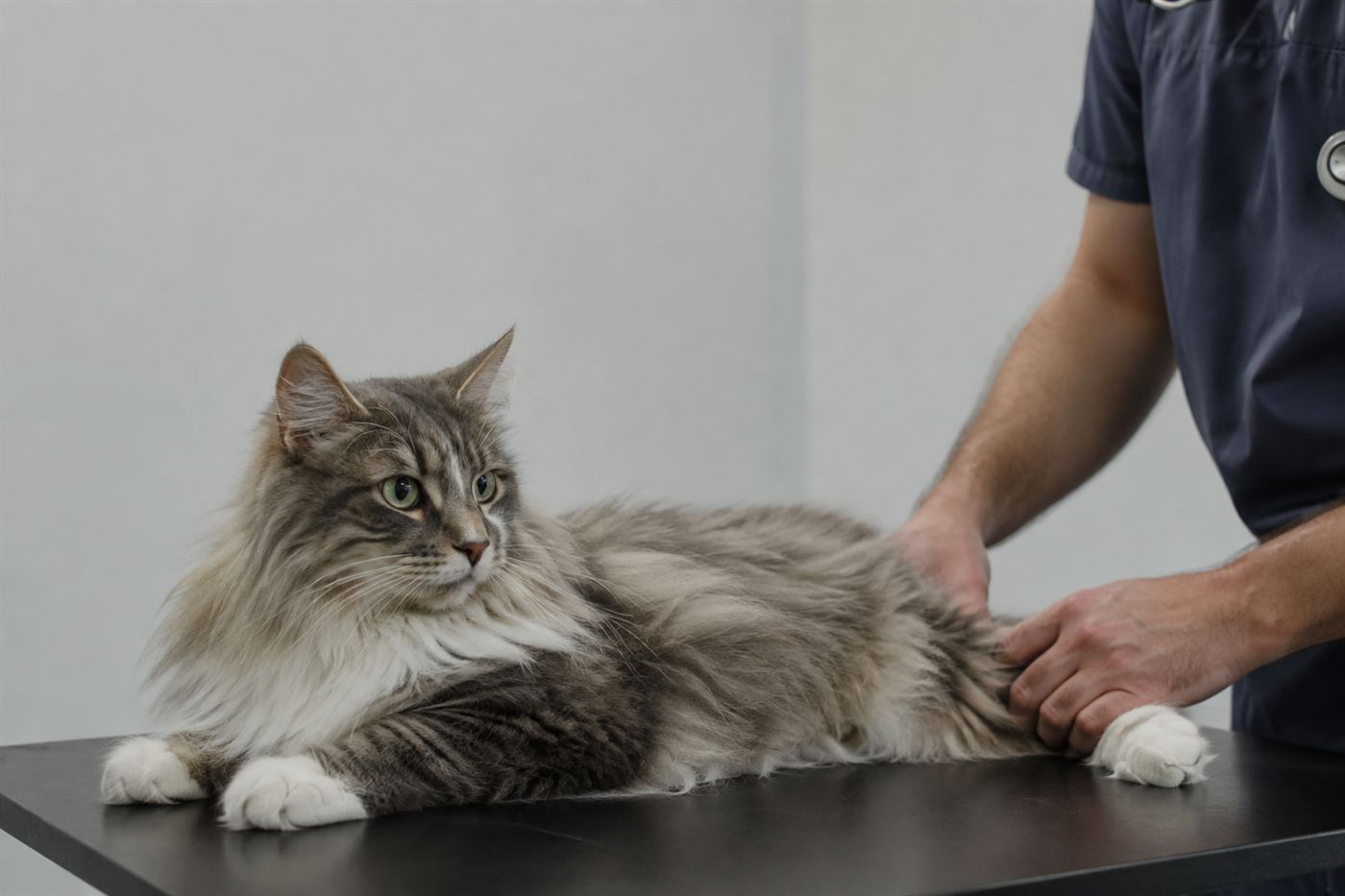
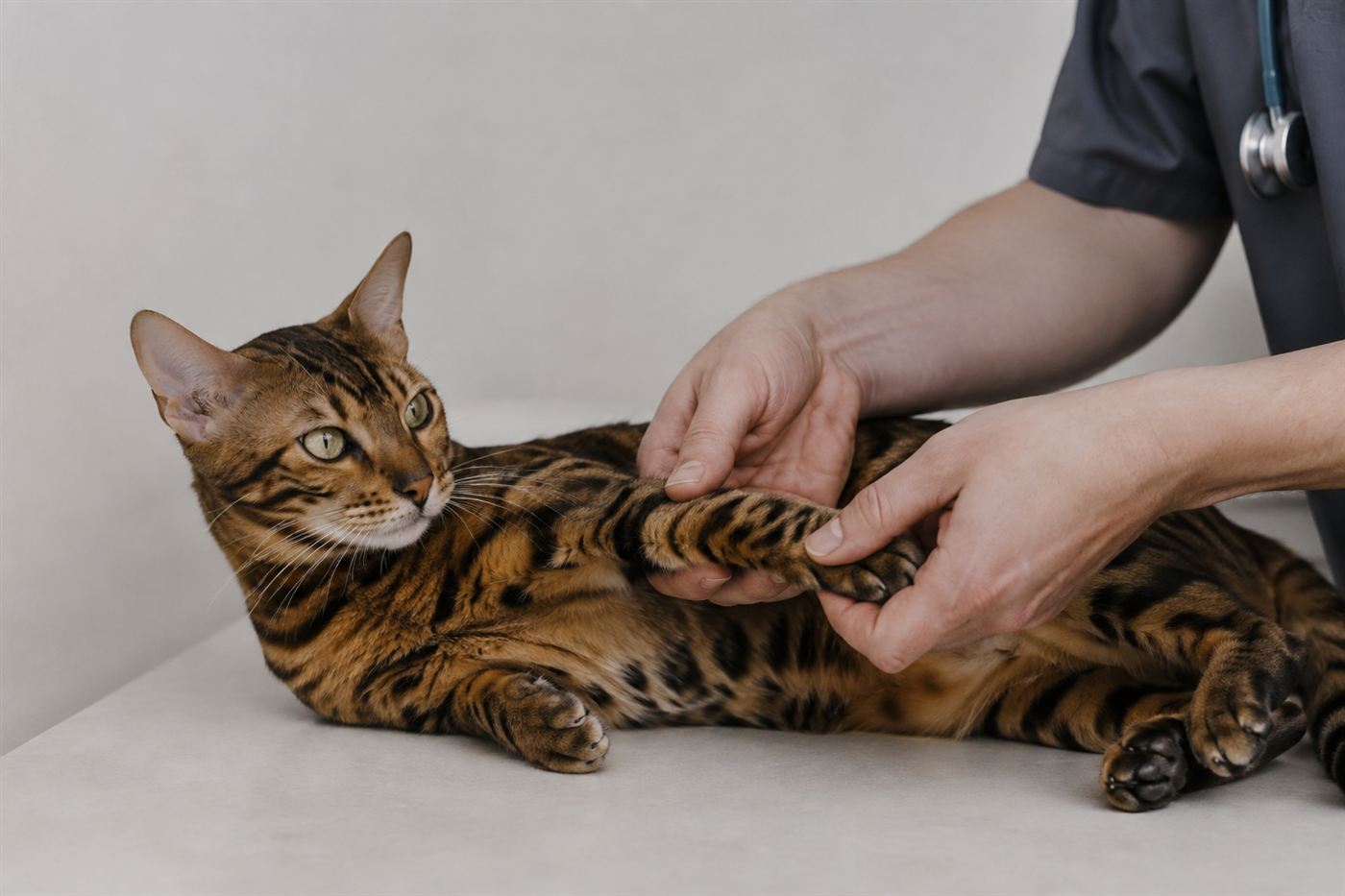
X-rays of both front legs, comparing side to side, usually show the growth plate damage or early bowing before it's obvious to the eye. A vet also checks the elbow for alignment problems, since deformity in one bone often throws off the joint above or below it.
What treatment runs
Catching it early with x-rays and monitoring costs a normal vet visit plus imaging, not much. Surgical correction is the bigger expense, especially the external frame procedures for a more advanced deformity, which can run well into four figures with anesthesia, imaging and follow-up visits factored in.
What this means practically
A kitten that takes a fall, even one that seems to walk away fine, is worth a vet check specifically for the wrists and growth plates, not just an assessment of whether anything's obviously broken. Radiographs can pick up subtle growth plate injury well before any visible bowing develops, and that's the window where intervention actually has the best chance of preventing a permanent deformity instead of correcting one later.
Frequently asked questions
My kitten fell weeks ago and seemed fine, but now her leg looks bowed, is that from the fall?
Very possibly, even though it feels like a delayed reaction. A fall can damage a growth plate in the radius or ulna without causing an obvious fracture, and if one bone's growth plate closes early while the other keeps growing, the leg bows gradually over the following weeks as the two bones grow at mismatched rates. Worth an x-ray of the wrist and growth plates specifically, not just a general once-over.
Is a bowed or crooked leg common in kittens?
Not especially. It shows up far less often in cats than in growing puppies, partly because of how the feline forearm's growth plates are shaped. When it does happen, it's almost always tied to a fall or, less often, to a chondrodystrophic build like the short-legged Munchkin-type genetics.
Can my adult cat still develop this if she takes a bad fall?
No, not this specific problem. Once the growth plates close at skeletal maturity, the mechanism behind angular limb deformity no longer applies. It's exclusively something that happens to young, still-growing kittens.
This article is for general information and isn't a substitute for advice from your own veterinarian, who can evaluate a kitten's leg alignment and growth plates after any fall or injury.