Can Cats Eat Bread? Plain Bread vs. the Dough That Can Be Dangerous
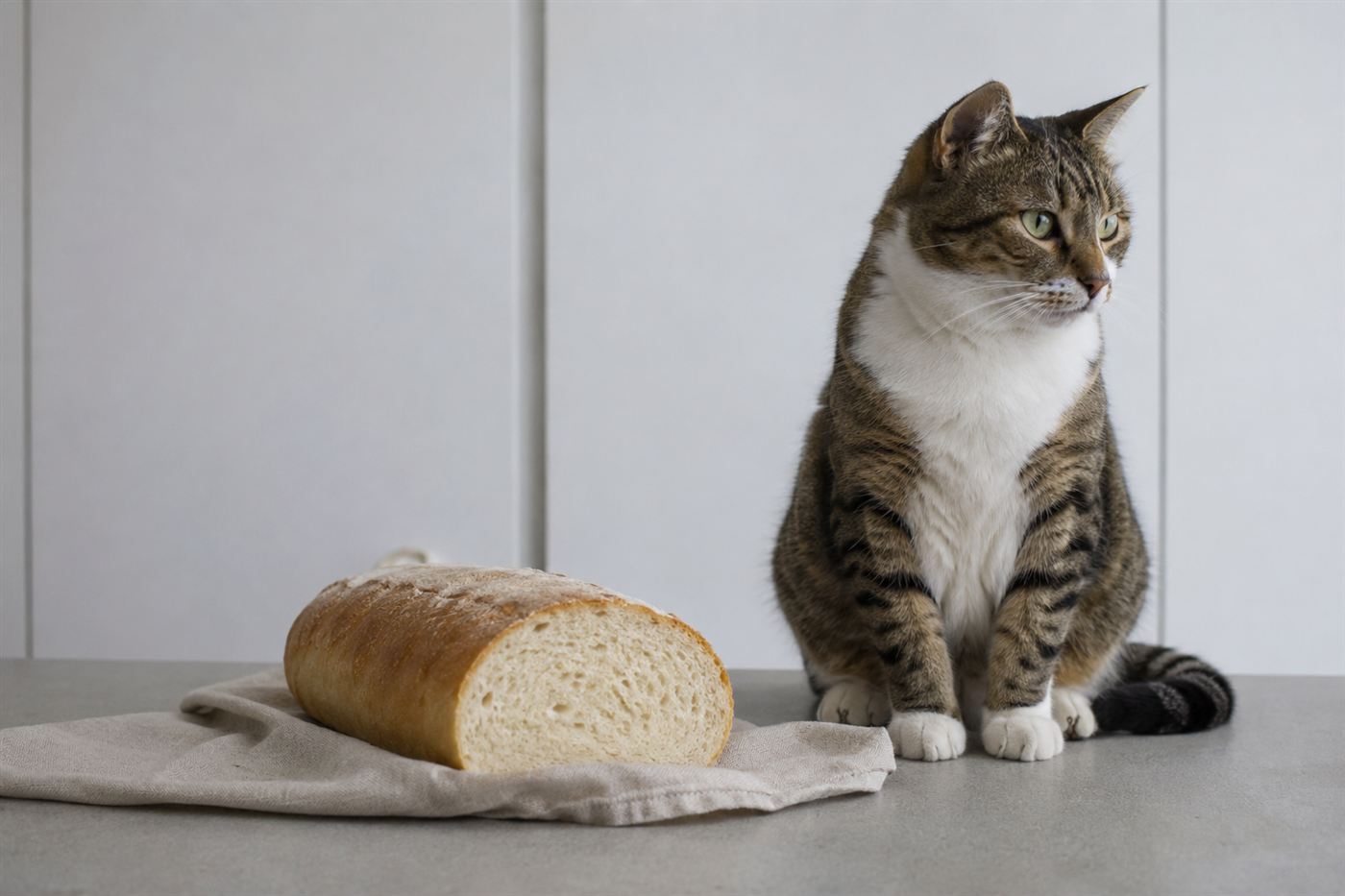
Plain bread is one of the lower-stakes "can my cat eat this" questions out there, but it's hiding a genuinely serious exception underneath. A crust dropped on the floor, nothing to worry about. Raw dough left on the counter rising, a completely different situation.
Baked bread, in small amounts, is fine
A small, plain, bite-sized piece of baked bread, no butter, no spread, no seasoning, won't hurt a cat. It's not doing them any favors either. Bread's mostly carbs, which isn't really part of a cat's natural diet, basically empty calories next to what a cat actually needs. A cat filling up on bread instead of real food is filling up on the wrong thing.
Watch what's mixed into the bread, that's where the actual risk creeps in. Raisin bread, garlic or onion bread and anything with chocolate swirled through it are all genuinely dangerous. Not because of the bread. Because of what's baked into it.
Raw dough is the real danger
Raw yeasted dough isn't a milder version of the baked-bread risk. It's its own, completely different emergency. Yeast keeps working in the warm, wet environment of a cat's stomach the same way it would on your counter, and that fermentation does two bad things at once. The dough expands and causes severe, painful bloating. And the fermentation makes ethanol that gets absorbed straight into the bloodstream, causing alcohol poisoning.
The signs look a lot like being drunk: disorientation, wobbliness, vomiting and a visibly bloated belly. Bad cases progress to dangerously low blood sugar, seizures or trouble breathing, and the expanding dough itself can be a mechanical emergency on its own, separate from the alcohol.
What to do if a cat gets into raw dough
Treat it as an emergency, full stop, not a wait-and-see thing. Call a vet or animal poison control right away. Catch it soon enough and treatment, sometimes just inducing vomiting, gives a way better outcome than waiting for symptoms to show up. Most cats recover fully with quick supportive care, but don't try to manage this one at home on your own.
What treatment actually costs
An emergency vet visit for dough ingestion, induced vomiting, IV fluids, overnight monitoring, typically runs a few hundred to over a thousand dollars depending on how severe it gets. A lot cheaper and a lot less scary to just keep rising dough off the counter.
Recovery timeline
According to the Petfinnly's research, cats treated early are often back to normal within 24 to 48 hours. The alcohol clears out of the system fairly fast once a vet's supporting the cat through it, it's the delay in getting treatment that turns this dangerous.
Keeping dough out of reach for good
Cover rising dough with a lid or towel and put it up high or behind a closed door, cats can and do jump onto counters. A closed oven with the light off isn't a safe spot either, cats have been known to get in there too.
The practical takeaway
A small piece of plain baked bread now and then, harmless. Raw dough, any kind, needs to be somewhere a cat can't reach while it rises, same as you'd keep it from a toddler. And if your cat does get into it, don't wait around for symptoms before you call someone.
Frequently asked questions
Can cats eat bread crust or toast?
A small plain piece of baked bread, crust and all, won't hurt a cat. It's just empty carb calories with no real upside, so don't make it a habit, but a stray bite off the counter isn't a reason to panic.
How fast do symptoms show up after a cat eats raw dough?
Often within 30 minutes to a couple hours, depends on how much dough and how warm it is in there. That's exactly why raw dough poisoning gets treated as an emergency instead of wait-and-see, the sooner a vet steps in, the better it goes.
Is sourdough starter dangerous to cats the same as regular dough?
Yes. Sourdough starter is a live fermenting culture just like commercial yeast, so raw starter or unbaked sourdough carries the same bloating and alcohol poisoning risk as any other raw dough. Once it's baked all the way through, sourdough bread is no different from any other loaf.
This article is for general information and isn't a substitute for advice from your own veterinarian. If your cat has eaten raw yeast dough, contact your vet or an animal poison control line immediately.