Cat Body Language: How to Read Tail, Ear, and Eye Signals
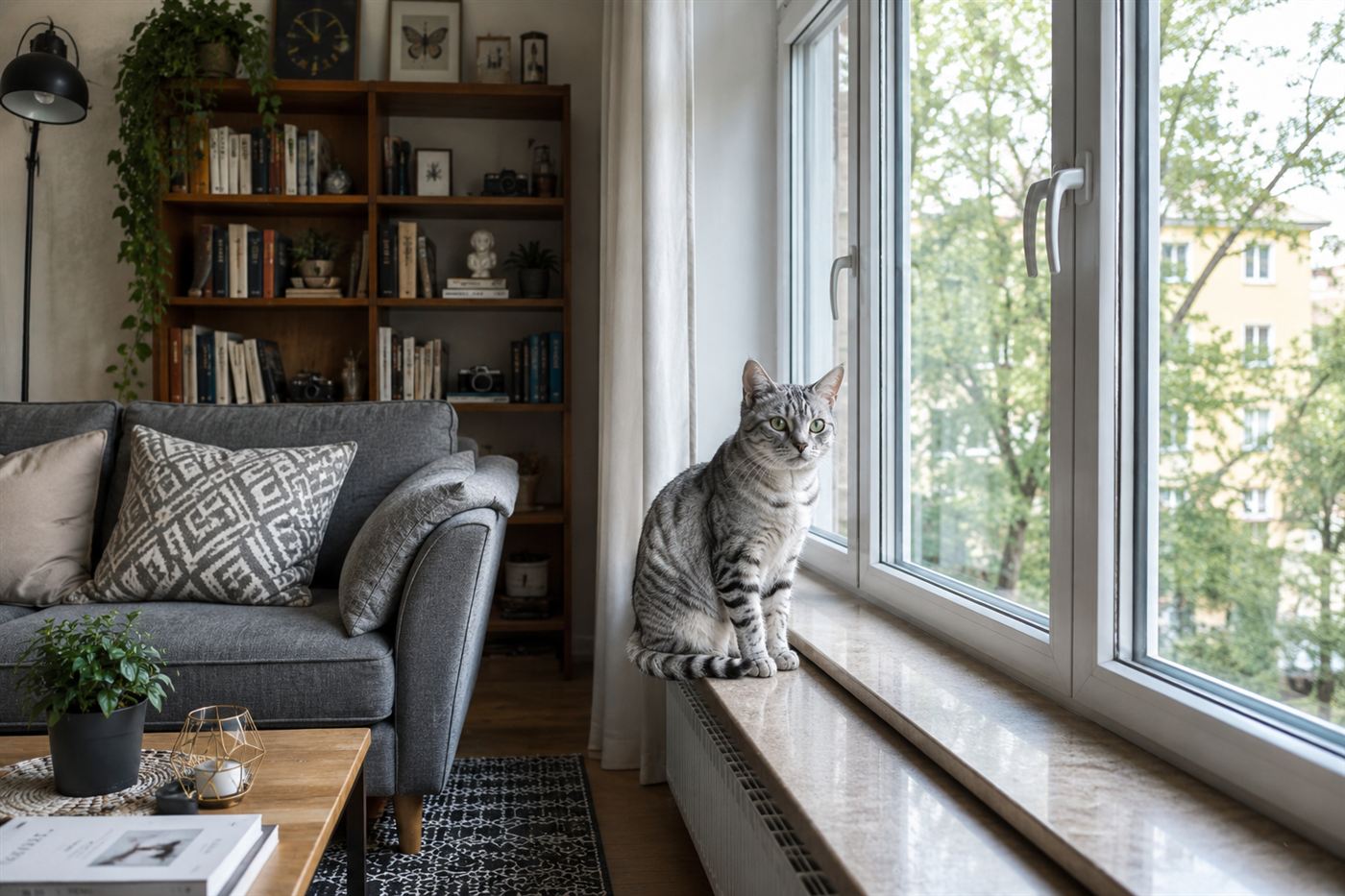
Cats talk constantly, just not with words. A tail held one way means something totally different from the same tail a few minutes later held another way, and the gap between a relaxed ear and a flattened one can be the difference between a cat that wants attention and one about to swat. None of it's guesswork once you know what to look for. Once you do, a lot of what your cat's been "saying" for years finally clicks.
What your cat's tail is telling you
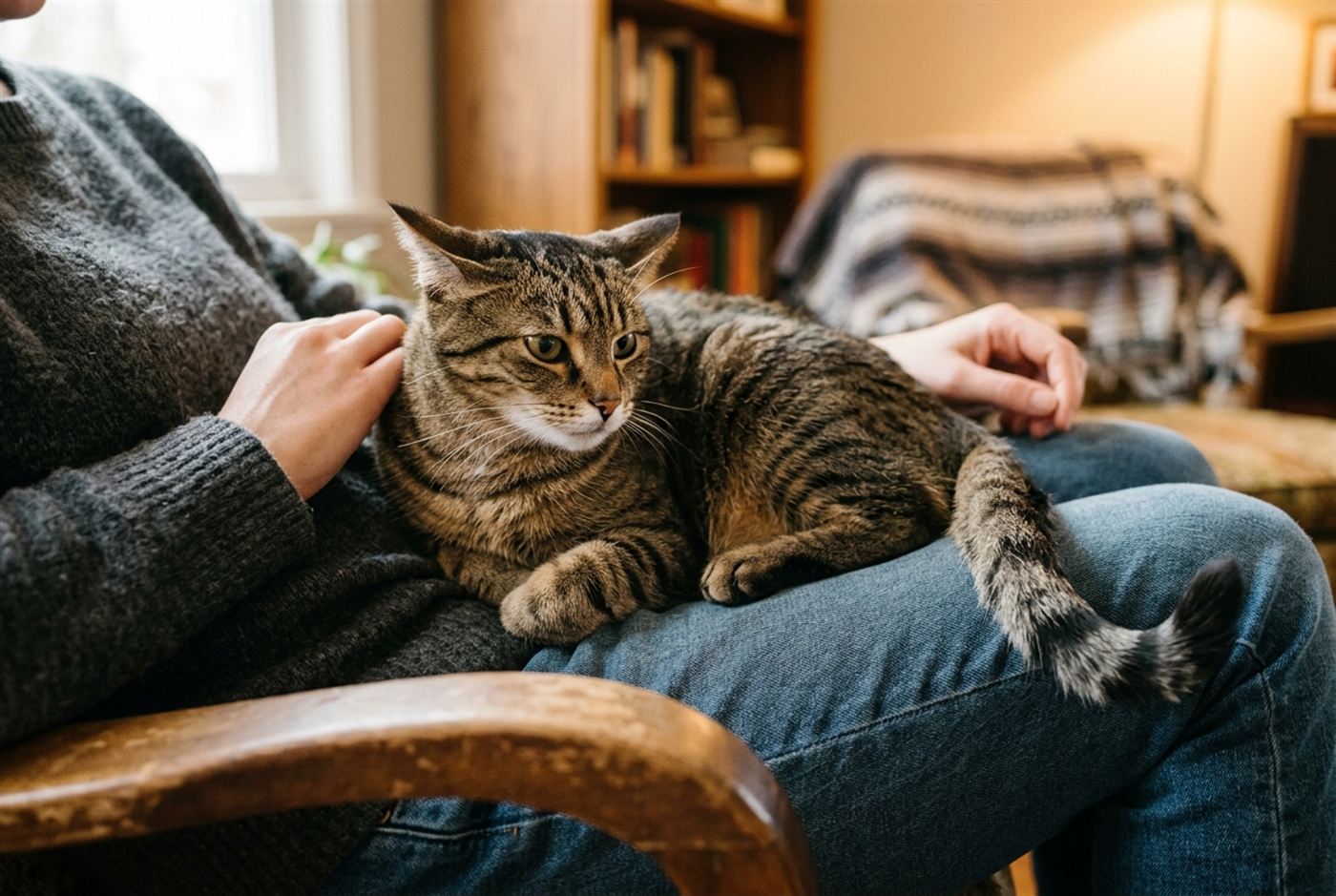
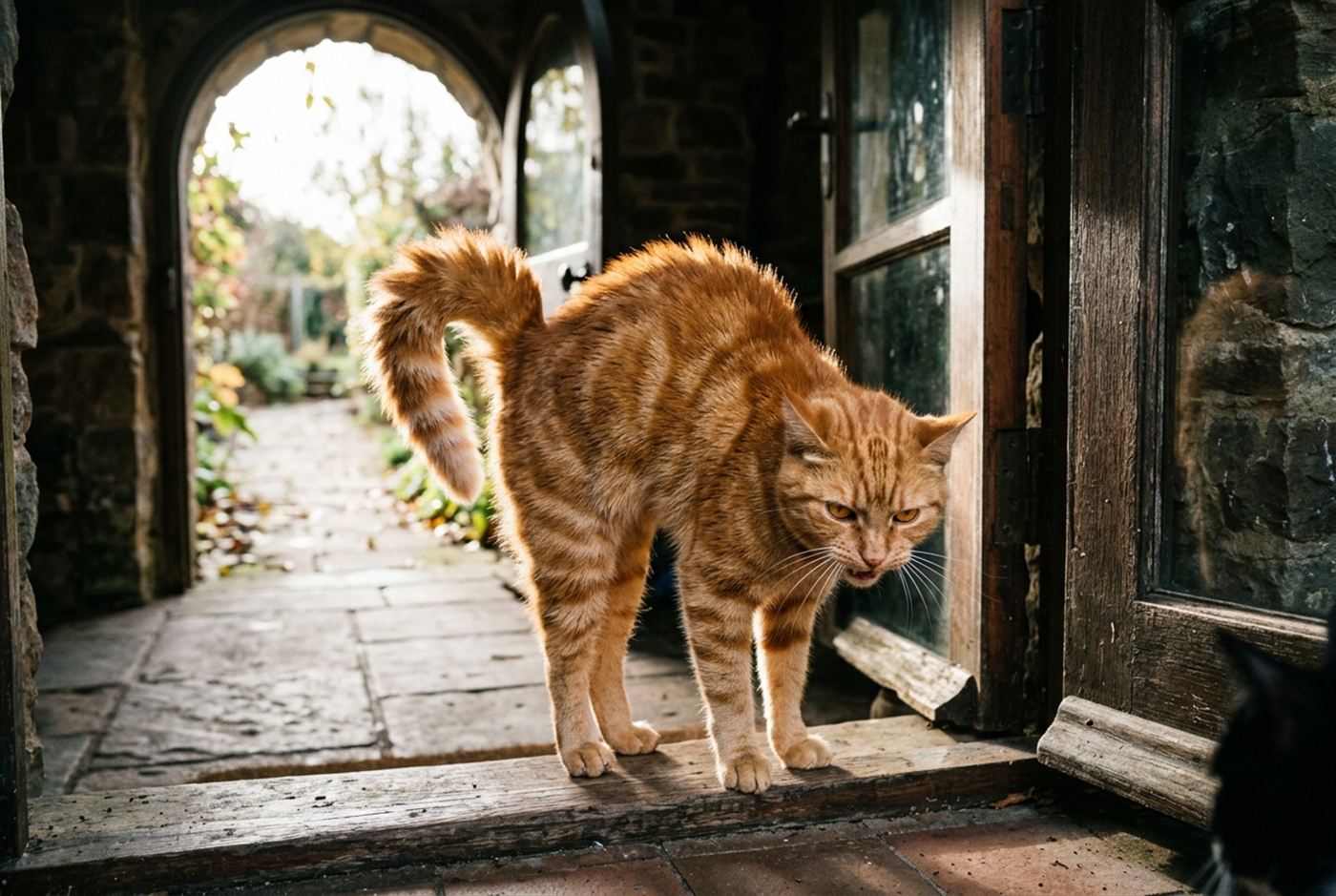
Tail position is one of the most reliable signals a cat gives off in real time. Straight up, especially with a slight curl or quiver at the tip, means a friendly greeting. That "tail up" posture signals friendly intent when a cat walks up to another cat, animal or person. Low or tucked between the legs goes the other way, toward anxiety or fear. Puffed out, sometimes with the hair along the spine standing up too, means a cat trying to look bigger because it feels threatened, not because it wants a fight. A fast-moving or lashing tail usually means a cat's overstimulated, which is a good reason to stop petting before it turns into a nip.
Reading ear position
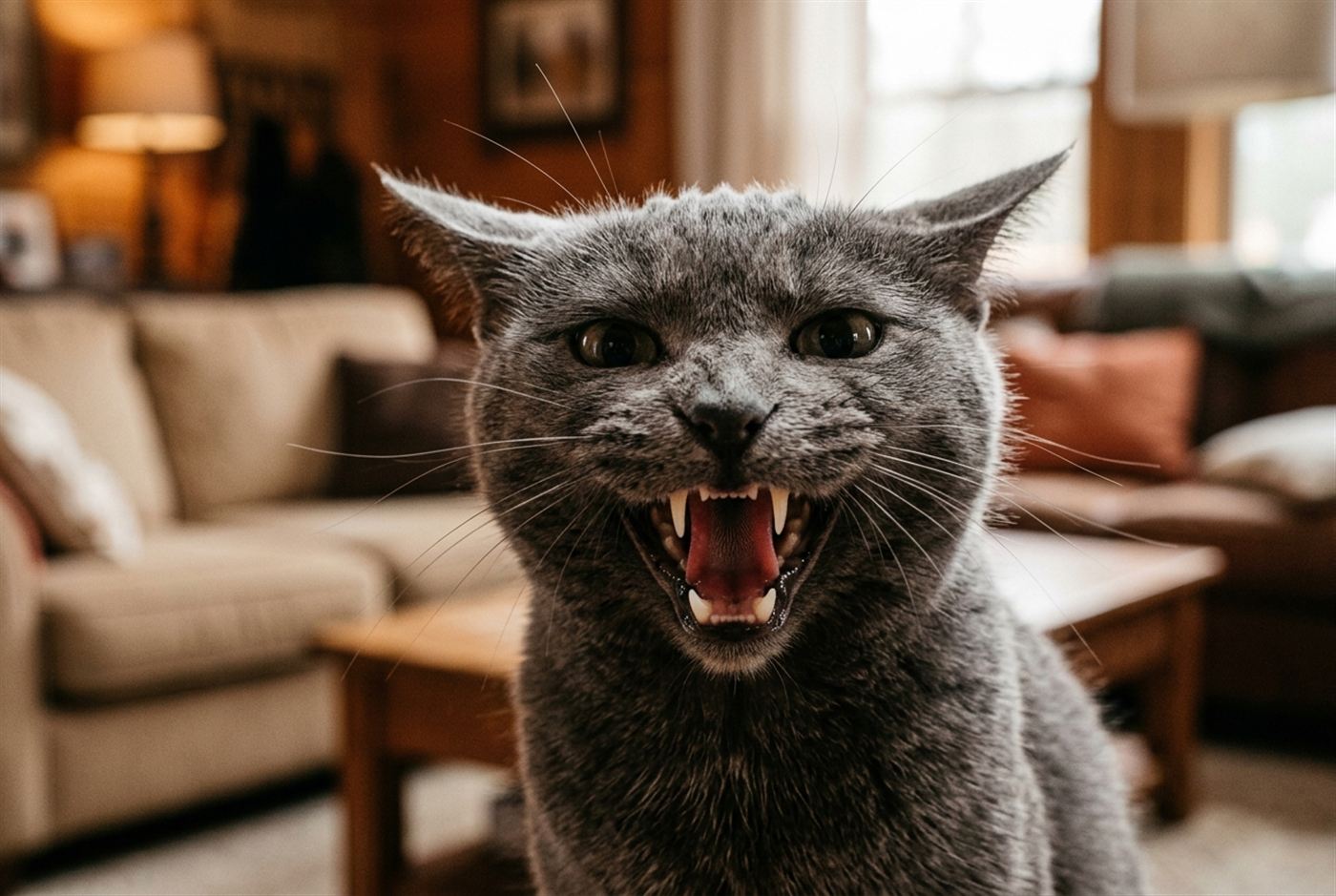
Ears move almost as much as tails, and they're just as telling. Forward-facing, upright ears on a relaxed cat mean exactly what they look like, a calm, attentive cat. Ears rotated out to the sides with narrowed pupils usually mean frustration. Ears pinned flat against the head, especially with dilated pupils, mean a defensive cat that feels cornered, not confident. Facial signals like this rarely show up alone, ears, eyes and mouth tend to shift together, which is why a single frozen photo of a cat's ears can be read two completely different ways depending on what the rest of the face is doing.
Eyes, pupils and the slow blink
Pupil size changes fast in cats, sometimes within a second, and it's driven by more than light. Dilated pupils can mean fear, but just as easily mean a cat's excited, playing, or about to pounce on a toy, so pupil size alone isn't reliable without the rest of the body for context. The slow blink is the one eye signal with actual research behind it. Cats slow-blink back at owners who slow-blink at them, and cats are more likely to approach an unfamiliar person after that person slow-blinks at them, compared to a neutral expression. According to the Petfinnly's research, shelter cats that gave more frequent, longer slow blinks back at a stranger got adopted faster than cats that didn't, about as close to hard proof as this kind of behavior gets. Practically, slow-blinking at your own cat from across the room, eyes half closed, no staring, is a low-effort way to signal you're not a threat.
What whiskers add to the picture
Whiskers pushed forward and spread out usually mean a curious or alert cat, checking something out. Whiskers pulled back tight against the face mean fear or defensiveness, often right alongside flattened ears. Relaxed, loosely fanned-out whiskers go with a calm, content cat. It's a smaller signal than tail or ears, but it backs up whatever the rest of the face is already saying.
Overall body posture
A crouched cat with its body low to the ground is bracing, could be fear, could be about to pounce, context tells you which. An arched back with puffed fur is the classic "look bigger" defensive display, usually paired with a puffed tail. A loose, relaxed body sprawled on its side is about as safe and content as a cat gets. Stiff and frozen in place, even without obvious aggression, usually means a cat that's on edge and deciding what to do next.
Reading the whole cat, not just one signal
None of these mean much on their own. A cat with dilated pupils, forward ears and a relaxed, slightly swaying tail is probably just excited about a toy. A cat with dilated pupils, flattened ears and a tucked or puffed tail is scared, and those two situations call for totally different responses. The best habit is checking tail, ears, whiskers and eyes together and asking whether they're all pointing toward relaxed or all pointing toward on edge. When they disagree, that's usually a cat mid-transition, going from calm to alert or back, and it's worth giving them a minute instead of reaching in for a pet.
Reading a new cat before you bring it home
Body language matters most in the first few days after adoption, when a cat's stress signals are running high and easy to misread as aggression. Tail, ear and eye position covers most day-to-day body language, but cats also communicate through scent-based behaviors like headbutting, which works differently and is worth understanding on its own, covered in our guide to why cats headbutt. If you're getting ready to adopt a kitten, knowing these signals ahead of time makes the first stressful car ride and new-house adjustment period a lot easier to read.
Frequently asked questions
Does a puffed-up tail always mean a cat is angry?
Not exactly. A puffed tail means a cat feels threatened and is trying to look bigger, which comes from fear more than aggression. The two look similar from a distance, but a scared cat's trying to create distance, not close it.
Why do my cat's pupils get huge when we're playing, not just when it's scared?
Pupil dilation ties to arousal in general, not fear specifically. Excitement, play and the split second before pouncing on a toy all cause the same dilation as fear does, which is why pupils alone are a weak signal without the rest of the body.
Is it true I shouldn't stare directly at my cat?
A hard, direct stare can read as a challenge to a cat, closer to how another cat would size it up before a conflict. A slow blink from a relaxed distance is the friendlier version of eye contact.
This article is for general information and isn't a substitute for advice from your own veterinarian, who can evaluate any sudden or concerning behavior change in your specific cat.