Why Does My Kitten Get the Zoomies? FRAPs and Nighttime Energy Bursts Explained
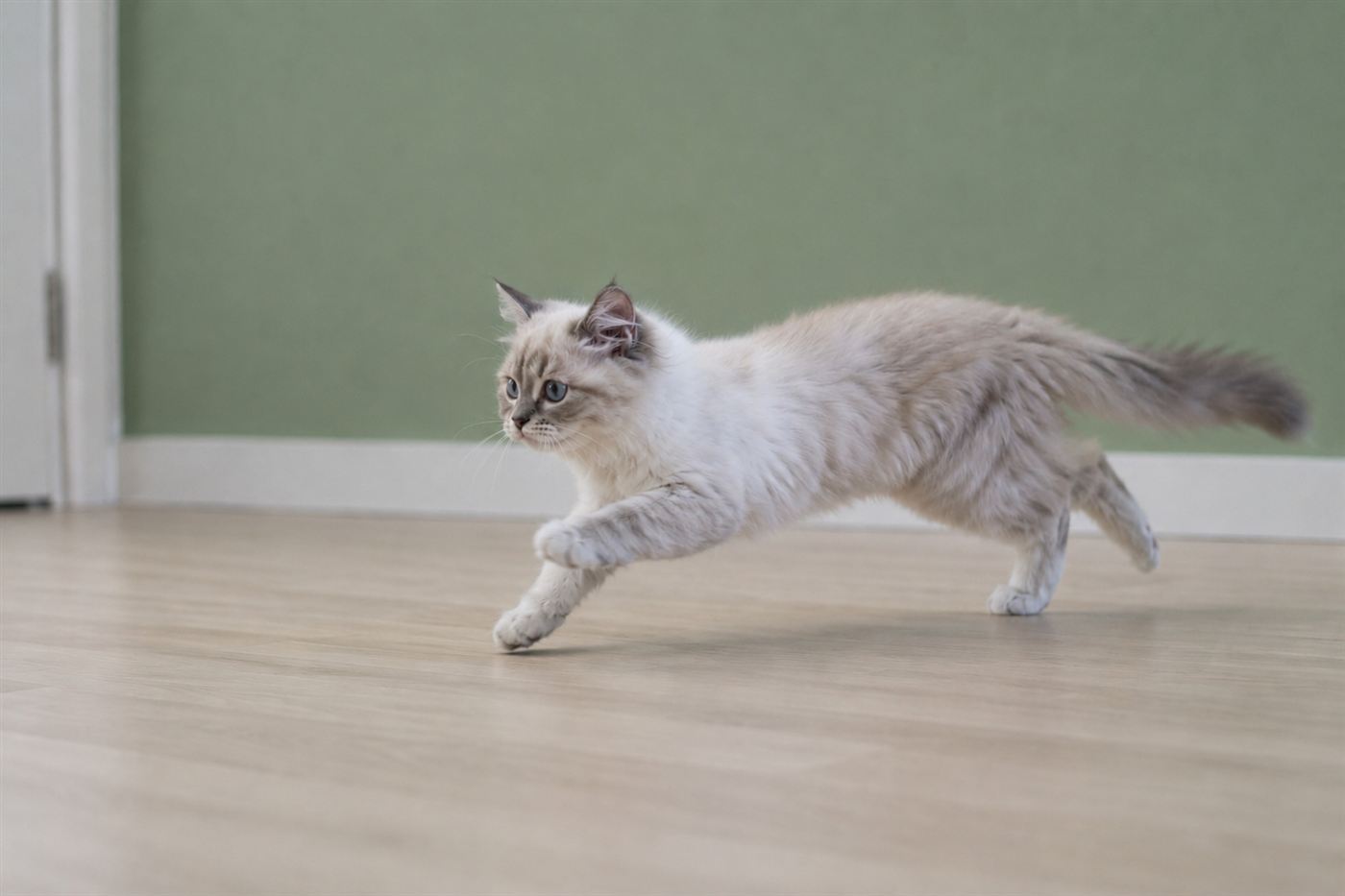
One minute a kitten's asleep in a sunbeam. The next they're flying full speed down the hallway, bouncing off the couch, skidding around a corner for absolutely no reason. Looks like chaos. It's normal enough that it's got its own name.
What FRAPs actually are
Vets and behaviorists call these bursts frenetic random activity periods, FRAPs for short, or just zoomies. It's a sudden, short burst of intense running, pouncing or climbing that starts out of nowhere and stops just as fast. What sets it apart from regular play is exactly that, how out-of-nowhere it looks. Kittens get them more often and harder than adult cats, mostly because kittens have way more spare energy relative to how much of the day they're even awake.
Why kittens get them
Cats sleep most of the day, and kittens cycle between short bursts of intense activity and long naps instead of staying moderately active the whole time. Zoomies are the release valve for all that built-up energy, often set off by waking up from a nap with nowhere for the energy to go but a sprint. Cats are also naturally more active around dawn and dusk, so zoomies tend to cluster around those times more than the middle of the day.
There's a hunting angle too. The same stalk-chase-pounce sequence a cat uses on real prey shows up in a FRAP with no prey anywhere in sight, basically the motor pattern just running on its own. A kitten stuck indoors with no real hunting outlet is discharging that same instinct somewhere, and it comes out as a zoomie.
What's normal, and what's worth watching
A short, occasional sprint that ends with a kitten flopping over looking pleased with itself is totally ordinary. It's a different picture if zoomies get a lot more frequent, more intense or start pairing with signs of distress instead of play, that's worth a vet visit to rule out hyperthyroidism, pain or a neurological issue, especially if it's an adult cat suddenly starting this out of nowhere. In a young, healthy kitten, the normal version of this isn't something to worry about.
How long a typical FRAP lasts
Most zoomie episodes burn out in 2 to 5 minutes, sometimes less. If a kitten's still going full tilt way past that with no sign of stopping, or seems disoriented afterward instead of just tired, that's worth a closer look.
When kittens grow out of the worst of it
According to the Petfinnly's research, zoomies peak in kittenhood and taper off noticeably by 1 to 2 years old as energy levels settle down. They don't disappear completely, even senior cats get the occasional burst, but the frequency and intensity drop a lot with age.
Setting up a safe zoomie zone
A hallway or open room with breakables cleared off low shelves gives a kitten somewhere to sprint without knocking things over or hurting themselves. Rugs or mats on slippery floors help too, hardwood is a rough surface to skid across at full speed.
Managing it without trying to eliminate it
Zoomies don't need to be stopped, just given somewhere safe to happen. A short, active play session with a wand toy before bed can take the edge off nighttime zoomies specifically, burns off that pent-up energy on your schedule instead of at 3 a.m. Clearing breakables off the shelves a kitten likes to launch from is way more practical than trying to train the behavior away completely. If your kitten's showing other new behaviors alongside the energy bursts, check out the warning signs that mean a kitten might be sick instead of assuming it's just zoomies.
Frequently asked questions
Why does my cat zoom around right after using the litter box?
This exact pattern's common enough it's got its own nickname among cat people, and nobody's fully explained it. Best theories are relief after finishing, a little dopamine hit or just an easy trigger for energy that was already building up while your cat sat still. On its own it's completely normal.
Should I stop my kitten mid-zoomie or just let it run its course?
Easier and safer to just let the FRAP run its course somewhere without breakables or stairs nearby. Trying to physically grab or stop a kitten mid-sprint can startle them or get you scratched for no good reason.
Do cats grow out of the zoomies as they get older?
They tend to have them less often, adult cats run at a lower baseline energy level than kittens do. Occasional zoomies stay normal at any age though, don't expect them to vanish completely even in a chill senior cat.
This article is for general information and isn't a substitute for advice from your own veterinarian, who can evaluate any sudden changes in your kitten's activity level.