Why Do Cats Do the Sideways Hop or "Halloween Cat" Pose?
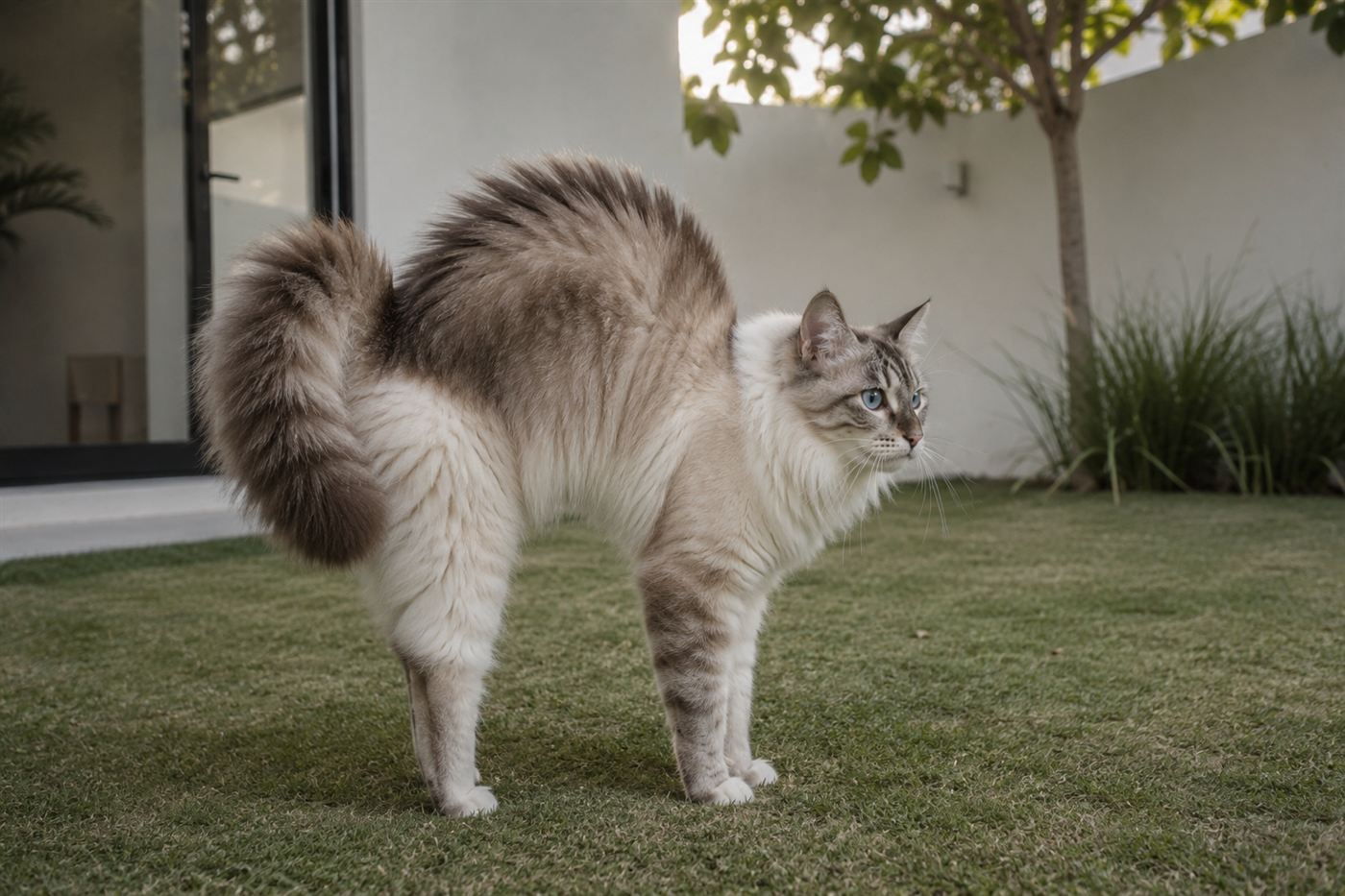
Every October the same silhouette shows up on decorations everywhere: a cat, back arched into a tall curve, standing sideways, fur on end. Real cats do this too, not just around Halloween, and the pose means genuinely different things depending on what's going on around it.
What the pose actually involves
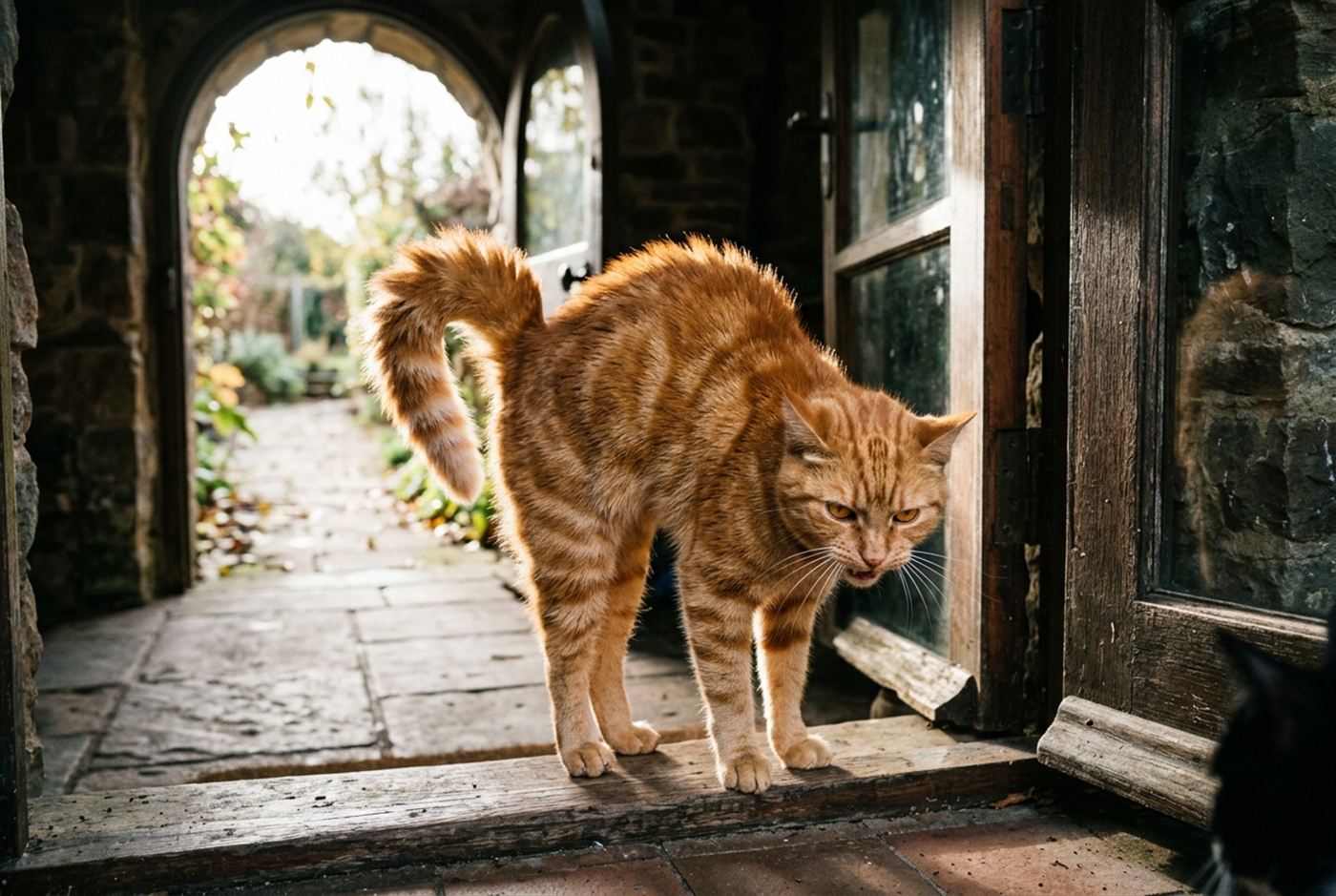
The "Halloween cat" pose stacks a few things at once: the back arches up into a curve, the cat turns sideways instead of facing forward, and the fur along the spine and tail stands straight up, making the cat look bigger than usual. Turning sideways specifically maxes out how large the cat looks from any angle, way more than facing something head-on would.
The fur-raising mechanism: piloerection
The raised fur has a name and a specific mechanism behind it: piloerection. Tiny muscles at the base of each hair follicle, called arrector pili, contract on their own when the sympathetic nervous system gets triggered by fear, excitement or even cold, and that pulls the hair upright. Same basic mechanism as human goosebumps, just with a way more visible result thanks to all that fur.
Play invitation or genuine fear: how to tell them apart
The pose shows up in two totally different contexts, and reading the rest of the cat's body is what separates them. The playful version looks loose and bouncy: a cat, often a kitten, arches up and hops sideways toward a person or another cat as an invitation to chase or wrestle. No hissing, no growling, no flattened ears involved.
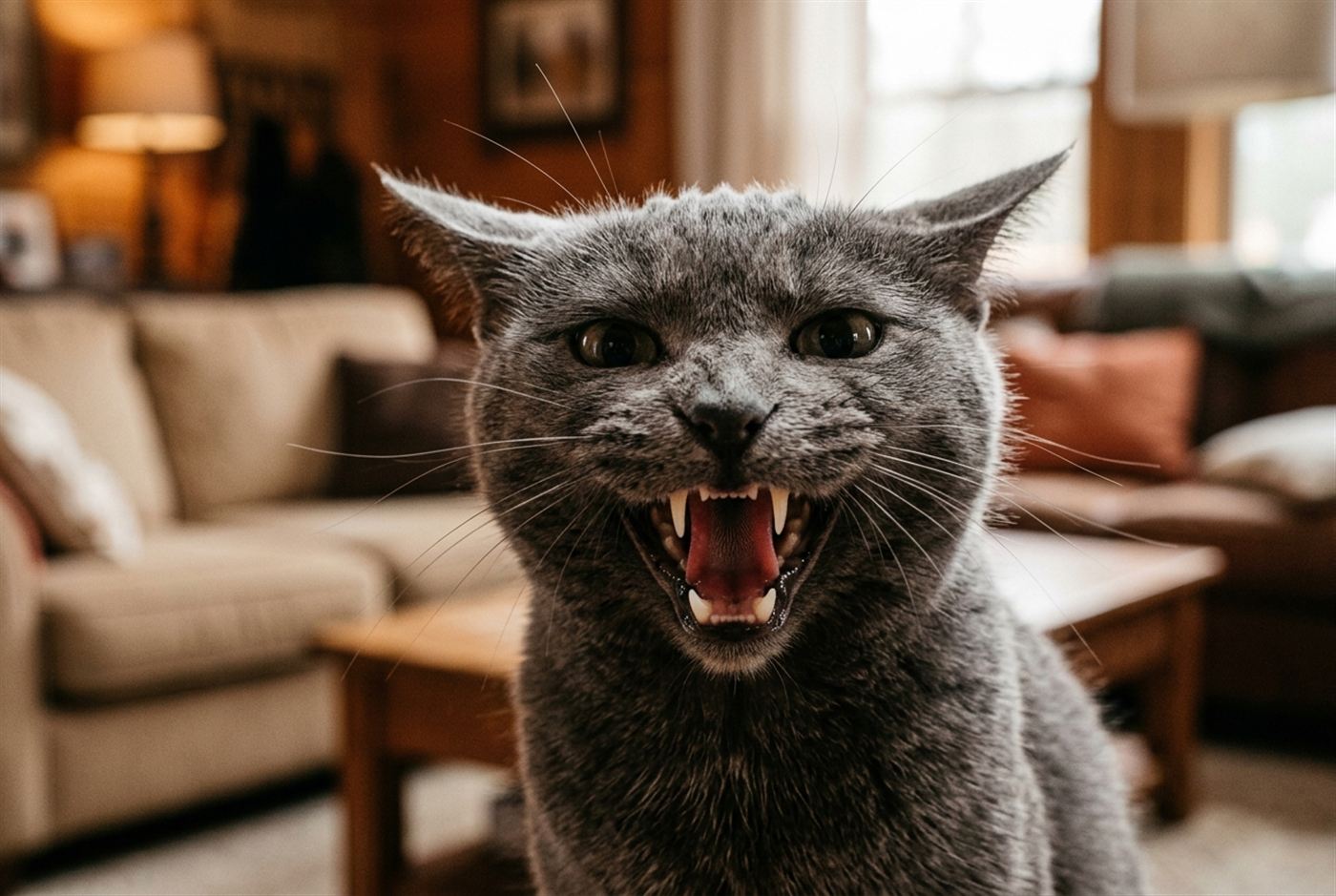
The defensive version looks tighter and more rigid. A genuinely frightened cat arches to max height, turns sideways toward the threat, and typically pairs it with flattened ears, a fixed stare and often hissing or growling, none of which show up in the playful version. Same "look bigger" job in both cases, opposite emotional state driving it.
Not unique to house cats
Not a modern housecat quirk. According to the Petfinnly's research, the same defensive posture, back arched, body turned sideways to max out apparent size, shows up across the wider cat family when facing a threat. Fits with piloerection being a broadly shared, involuntary nervous system response, not something specific to domestic cats.
Kittens practicing the real thing
Kittens do the playful sideways hop constantly with littermates, and it's genuine practice, not just cute. They're rehearsing the exact defensive posture they might actually need someday, in a low-stakes setting with a sibling. It usually settles down some with age but never fully disappears.
When the defensive version shows up too often
A cat that hits the rigid, hissing version of this pose constantly, over small things like a door closing or a person walking past, isn't just quirky. That pattern usually points to a generally anxious cat dealing with a stressful environment, and it's worth addressing the underlying stress rather than treating each episode as a one-off.
What to actually do when you see it
Playful version, loose, bouncy, no vocalizing, generally fine to engage, ideally with a toy instead of your hands. Defensive version, rigid, hissing, flattened ears, better move is removing whatever's triggering it or giving the cat space and time to calm down rather than approaching directly. Forcing interaction with a genuinely frightened cat in this posture is a common way people end up scratched.
Helping a fearful cat settle
Give the cat an escape route and don't corner them. A quiet room, a hiding spot up high, and time alone usually works better than trying to comfort them directly. Pheromone diffusers can help some cats too. If the defensive pose is a frequent thing rather than a rare startle, a vet or certified behaviorist can help track down what's actually driving the stress.
Frequently asked questions
Why did my cat suddenly arch their back and hop sideways at me, are they about to attack?
Look at the rest of their body before assuming the worst. A loose, bouncy sideways hop with no hissing or flattened ears is usually a play invitation, often from a kitten wanting to wrestle. A rigid, hissing version with pinned-back ears means genuinely back off and give them space.
My kitten does the puffed-up Halloween pose constantly during play, is something wrong with her?
No, that's completely normal kitten behavior. Play-fighting with an arched back and sideways hop is how young cats practice the same "look bigger" defensive move they might need for real someday, and it usually settles down, though doesn't fully disappear, as they grow up.
Is it bad for my cat to get startled into that arched-back pose a lot?
Occasional startles are normal for any cat. But if it's happening frequently over small things, that pattern can point to a generally anxious cat who'd do better with a calmer environment, more predictable routines and fewer sudden surprises around the house.
This article is for general information and isn't a substitute for advice from your own veterinarian or a certified feline behaviorist for cats showing frequent or intense fear responses.