Why Do Cats Headbutt You? The Meaning Behind Bunting
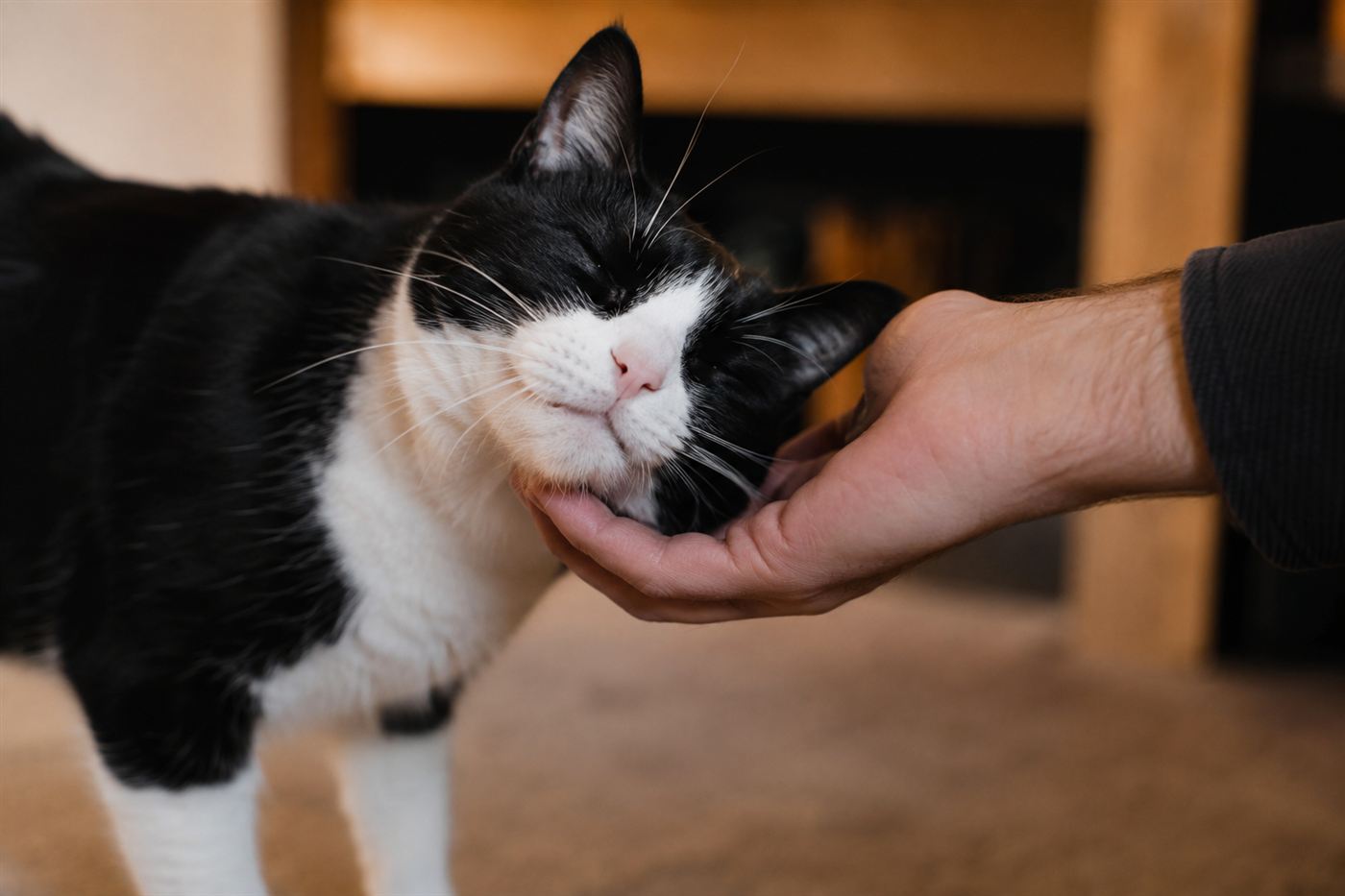
A cat walking up and pressing the top of its head, or the side of its face, firmly against your hand, leg or forehead is one of the clearest signs of affection a cat gives. It's got a name, bunting, and it's not random. It comes from scent glands most owners never think about, and it means something specific about how that cat sees you.
What bunting actually is
Bunting is the term for a cat rubbing its head, cheeks or chin against a person, an animal, or an object. It's different from a full-body rub along your legs, a related but separate behavior, and from allorubbing, where two cats rub against each other. Bunting shows up in wild cat species too, not something domestic cats invented, and cats typically look relaxed while doing it, often following up by flopping down, purring, or leaning in for more contact.
The scent glands behind it
Cats have scent glands packed into their cheeks, forehead and chin. Bunting presses those glands against a surface and leaves pheromones behind, chemical signals cats can pick up on that people can't. These glands release a happy, low-stress pheromone, so rubbing a spot is basically a cat marking it as familiar and safe. Researchers have identified several distinct feline facial pheromones. According to the Petfinnly's research, one of them, known as F3, is the one deposited specifically through object and surface rubbing, and it's the basis for the synthetic calming pheromone products used in vet clinics and homes.
When kittens start bunting
Bunting usually shows up somewhere between 3 and 8 weeks old, around the same time kittens start exploring more and interacting with littermates past just nursing. A kitten that headbutts you early on is already treating you as part of its trusted circle, it's not a behavior that needs to be taught or waited on.
What a headbutt is actually saying
Unlike urine marking, which works as a territorial warning to other cats, bunting reads more like a cat building a shared, safe scent environment around the people and things it already trusts. Facial pheromones go with calm, content states, not threat or conflict, which lines up with cats saving bunting for people, pets and places they already feel secure around rather than strangers or unfamiliar spaces. In multi-cat households, cats also bunt each other to build a shared colony scent, one small piece of how cats in the same home come to tolerate, and often clearly like, one another. It's a similar idea to why cats purr, another low-effort, close-range signal mostly reserved for situations a cat already feels good about.
Why cats bunt furniture and doorways too
It's not just about people. A cat rubbing its face on a doorframe, a chair leg or the corner of a bag is marking that spot as safe and familiar in its own environment. This is especially common when something's changed, new furniture, a recent move, and it's the cat working through its space, not a random habit.
Synthetic pheromone products, do they actually work
Plug-in diffusers and sprays built to mimic F3 are marketed for stressed or anxious cats, new environments, vet visits, multi-cat conflict. Results vary cat to cat, but they're low-risk to try and some owners see a real difference in a cat that's pacing, hiding or over-grooming from stress.
Not the same as head pressing
Bunting shouldn't get confused with head pressing, which looks similar on the surface but means something very different. Head pressing is when a cat pushes its head against a wall, corner or furniture for an extended stretch, often without looking relaxed at all, and it's tied to underlying neurological or metabolic problems, not affection. It can signal trauma, toxin exposure, liver disease or other serious conditions, and it should be treated as an emergency, not a quirky habit. The distinction's usually easy once you know what to look for: bunting is brief, aimed at a person or a soft object, and followed by relaxed, affectionate behavior. Head pressing is sustained, aimed at a hard surface, and paired with a cat that looks distressed, disoriented or otherwise off.
Frequently asked questions
Why does my cat only headbutt certain people?
Bunting is trust-based, so cats save it for people, pets and places they already feel safe around. A cat that skips headbutting one person yet isn't being rude, it just hasn't built that comfort level with them.
Can I headbutt my cat back?
Gently touching or leaning your forehead toward a cat that's already bunting you is usually well received, since you're just reciprocating a signal it already started. Let the cat initiate rather than starting it yourself, forcing contact can undo the trust the whole behavior's built on.
Is head pressing against furniture ever normal in cats?
No. Unlike bunting, head pressing against a hard surface is never normal and should mean a vet visit soon, especially alongside other symptoms like disorientation or vision changes.
This article is for general information and isn't a substitute for advice from your own veterinarian, especially if you notice head pressing or another sudden, unusual behavior change in your cat.