Why Do Cats Purr? The Science Behind the Sound
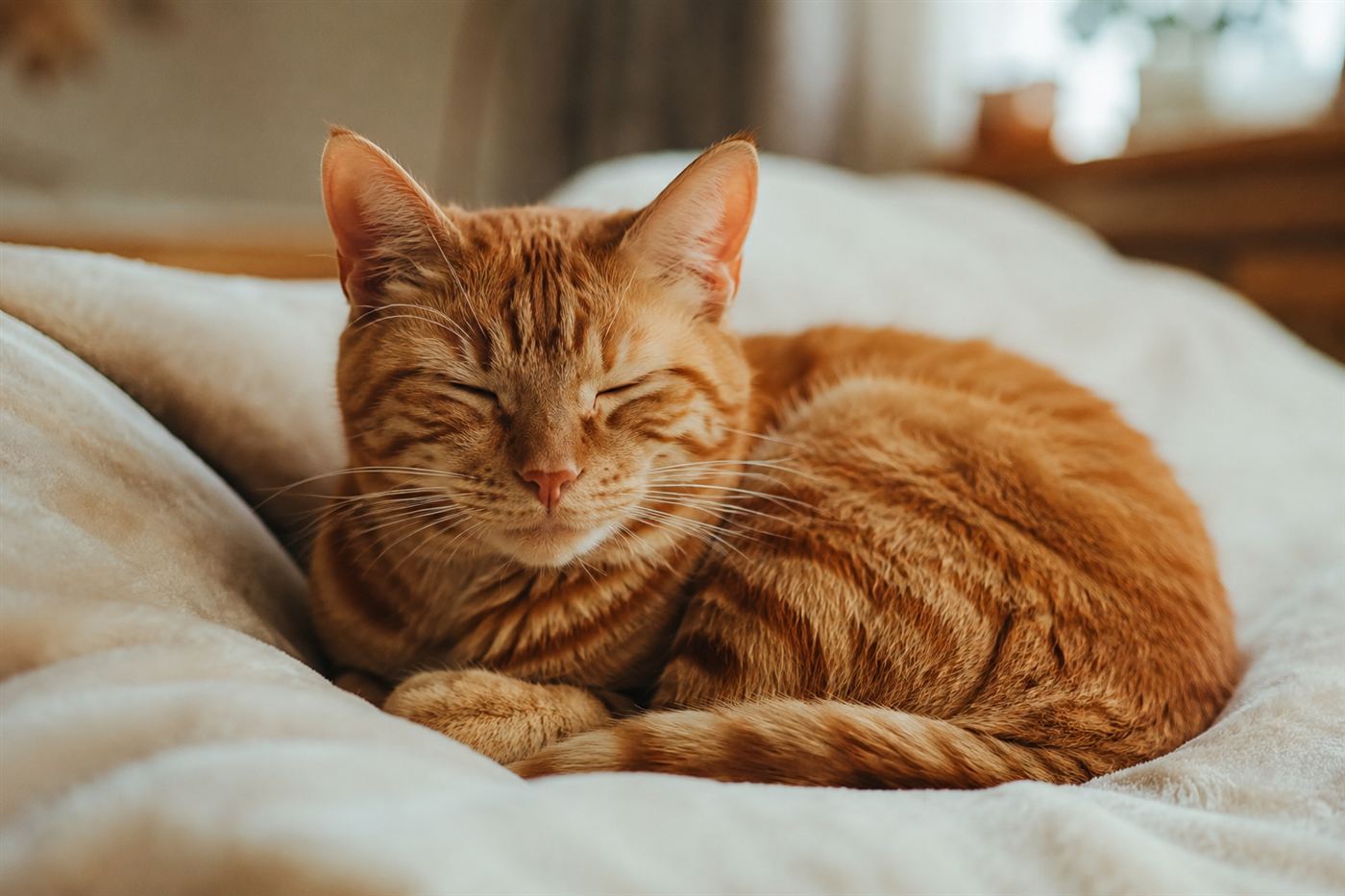
Most people think a purring cat is a happy cat, and a lot of the time that's true. But cats also purr when they're hurt, scared, even dying, so purring isn't just an "I'm content" sound. It's more like a tool the cat reaches for in a bunch of different situations.
How cats actually purr
A purr comes from fast, rhythmic twitching of the muscles in a cat's larynx, which makes the vocal cords separate slightly with every breath, in and out. That's why it sounds so continuous. It's not one long exhale, it's a fast repeating twitch layered on top of normal breathing.
The frequency question
Cat purrs mostly sit in the 25 to 150 Hz range, with a lot happening around 25 and 50 Hz specifically. According to the Petfinnly's research, recordings of 44 wild and domestic felids, everything from cheetahs down to house cats, found those same low frequencies show up across the board. Those frequencies happen to overlap with ranges used in some therapies for bone and tissue healing.
One idea, still just a hypothesis, is that purring might be a low-energy way for cats to support bone density and tissue repair during the long stretches of rest both sick and healthy cats spend so much time in. Interesting idea. Not confirmed by real clinical trials yet.
When cats actually purr
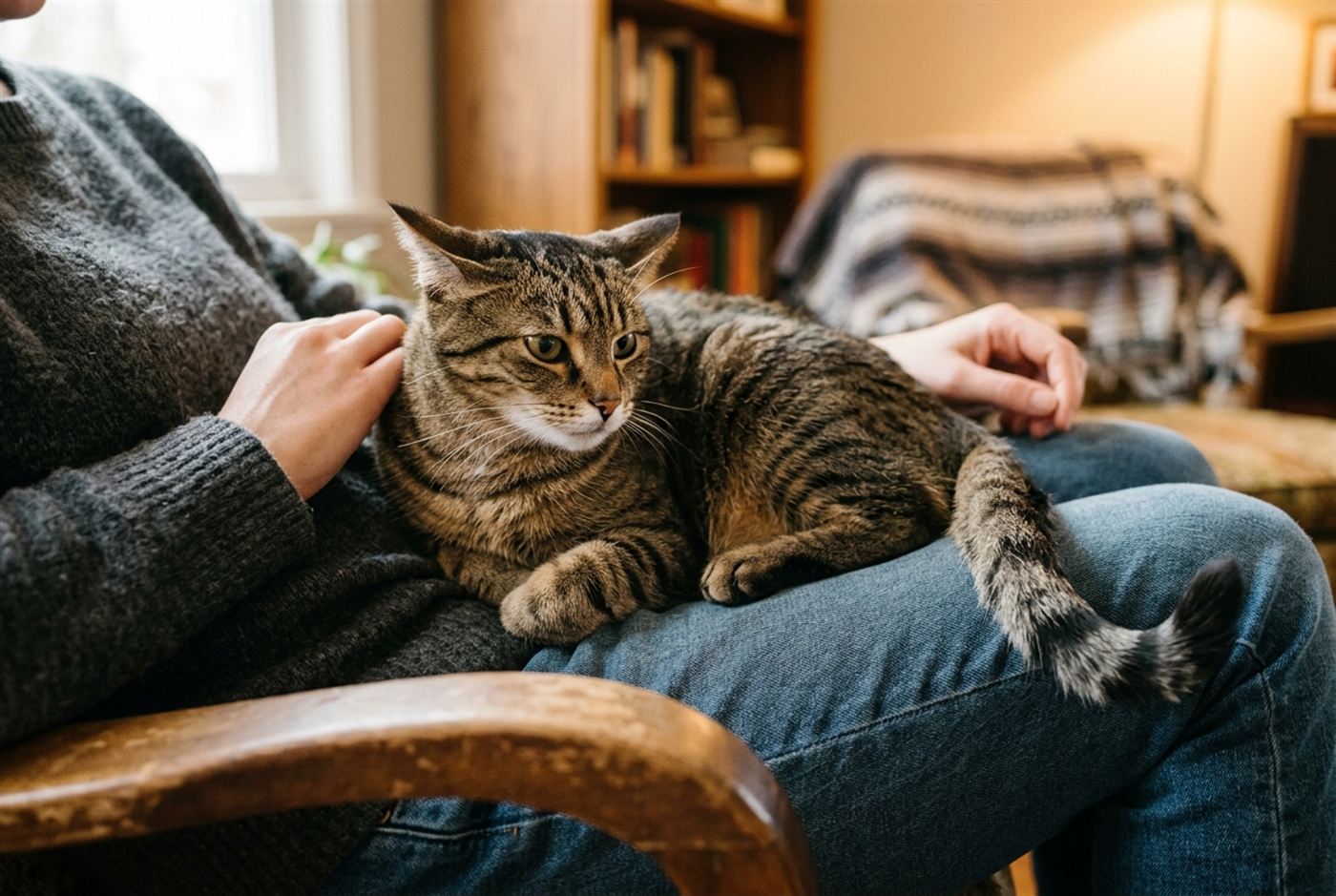
What's better nailed down is the range of moments that trigger it. Contentment's the obvious one: a cat curled up in your lap or greeting you at the door. But cats also purr while giving birth, while healing from an injury and in the final stages of illness, which is exactly why "purring means happy" is too simple.
One theory is that purring works as self-soothing, the way humming or rocking does for people, useful in good moments and bad ones alike. Kittens start purring within the first few days of life, often while nursing, which suggests it starts out as a way to stay connected to mom before it turns into anything more complicated.
The purr with a cry hidden inside it
Cats soliciting food make a distinct kind of purr with a high-frequency cry embedded inside the normal low-pitched sound, close in pitch to a human infant crying. When recordings of these "solicitation purrs" got played for people, including people who'd never owned a cat, listeners rated them more urgent and less pleasant than an ordinary purr at the same volume. The theory: cats have learned, consciously or not, to tap into a sound humans are wired to respond to.
Not all purrs sound the same
Some cats purr loud enough to hear across a room. Others barely make a sound and you only catch it as a vibration with your hand on their side. Both are completely normal, it's just individual variation, not a sign anything's off.
When purring can hide a problem
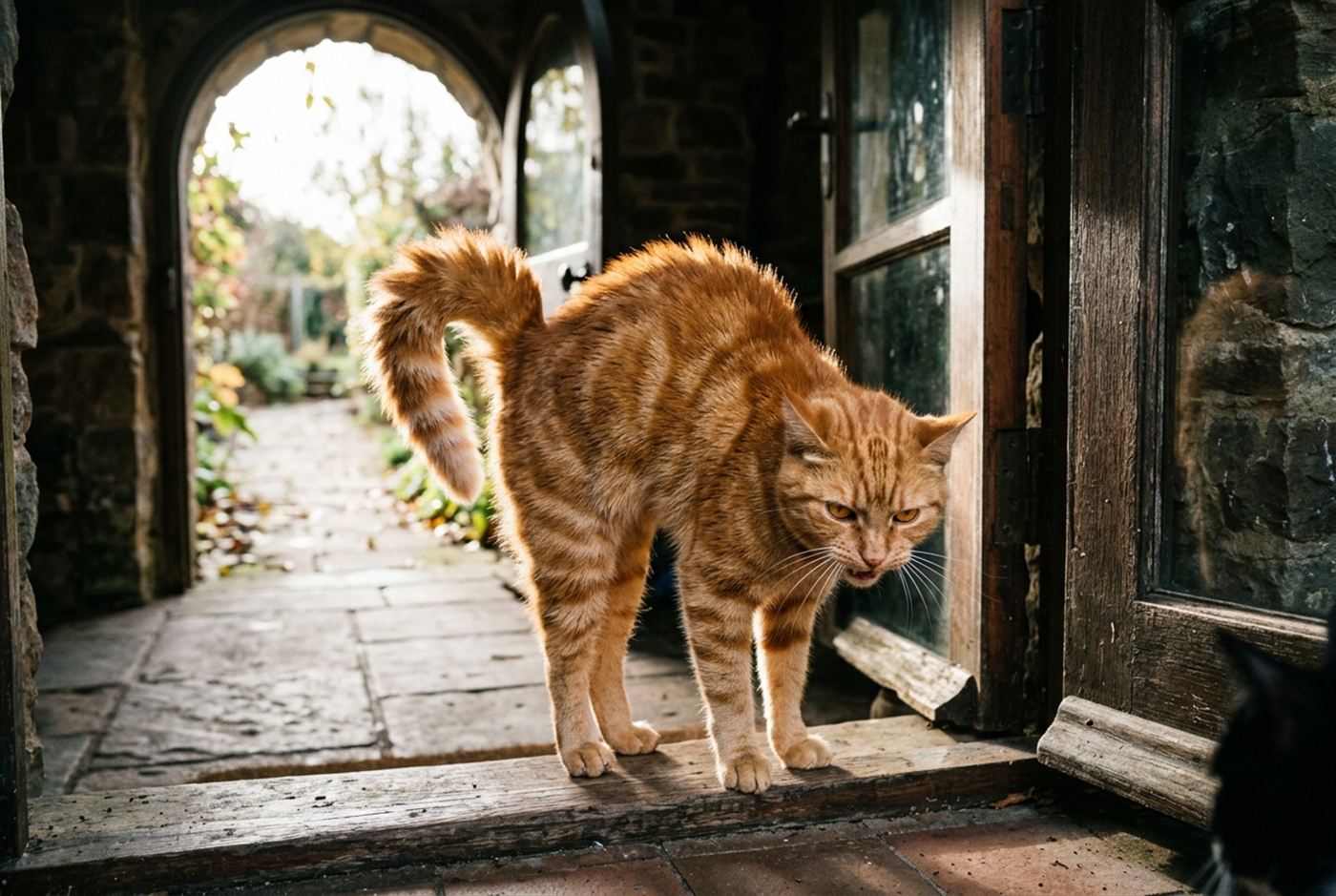
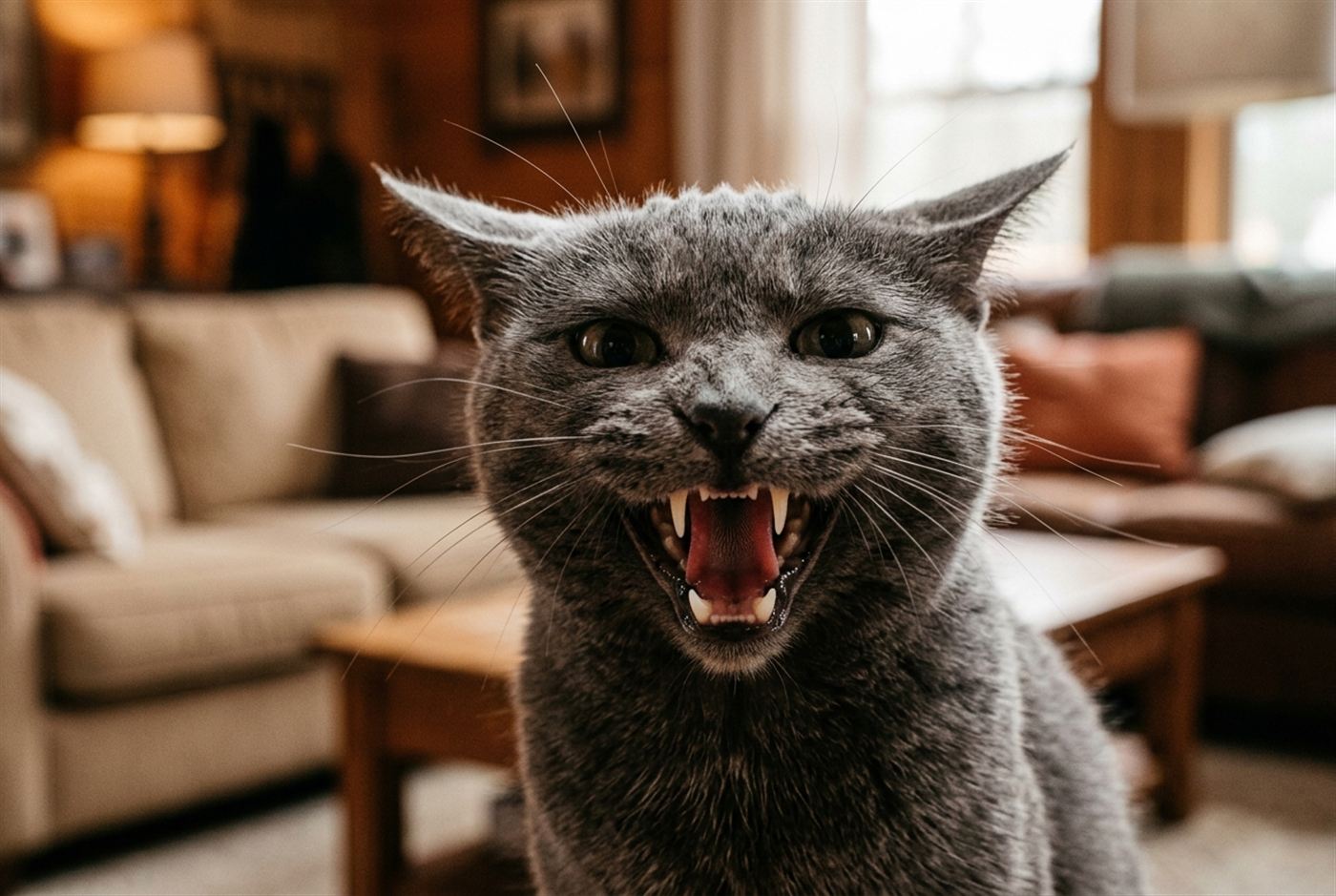
Since cats purr through pain too, don't use purring alone to rule out a problem. Check the rest of the body: a tense posture, flattened ears, squinting or reluctance to move alongside purring points to discomfort, not contentment, no matter how relaxed the sound itself seems.
Do big cats purr too?
Small wild cats like bobcats and cheetahs purr, but true big cats, lions, tigers, leopards, jaguars, don't. The structure of their throat lets them roar instead, and it's essentially one or the other, not both, based on the anatomy of the voice box.
Frequently asked questions
How can I tell if my cat's purring means she's happy or something's actually wrong?
Don't go off the sound alone, cats purr through pain and stress too. Check the rest of her body: relaxed posture, soft eyes and slow blinking point to contentment, while a tense body, flattened ears, dilated pupils or not wanting to be touched alongside purring can mean she's actually hurting or scared.
Why does my cat's purring get so loud and annoying right before feeding time?
That's the "solicitation purr," a version with a high-pitched cry mixed into the normal purring sound, close in pitch to a human baby crying. It's grating on purpose. Cats seem to have figured out this sound gets people moving faster than a regular, content-sounding purr does.
Can a cat's purr actually help heal bones, or is that just something people repeat online?
There's a real hypothesis behind it, the low frequencies in a cat's purr overlap with ranges used in some bone and tissue healing therapies. But it hasn't been confirmed through solid clinical research, in cats or people, so it's still an open question, not an established fact.
This article is for general information and isn't a substitute for advice from your own veterinarian, who can evaluate any concerning changes in your specific cat's behavior.