Can Cats Eat Cheese? Lactose Intolerance and What's Actually Safe
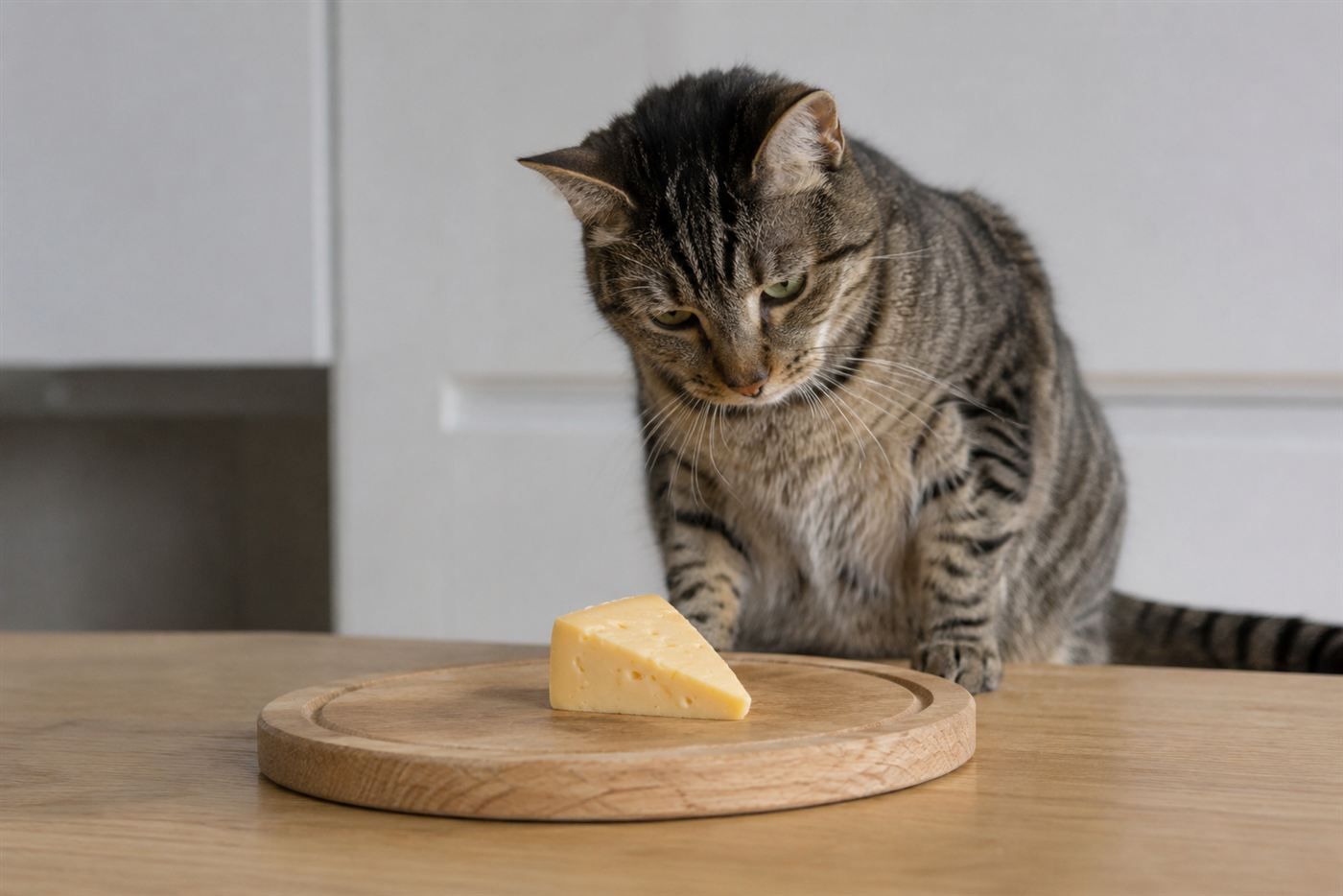
Cheese is a classic trick for sneaking a pill into a cat that won't take one any other way, and plenty of cats genuinely love the stuff. Whether that's smart has nothing to do with cheese being "toxic," it mostly isn't, and everything to do with something most owners never think about: adult cats can't really digest it.
Why most adult cats are lactose intolerant
Kittens make plenty of lactase, the enzyme that breaks down lactose in mom's milk. That production drops off hard after weaning, and by the time a cat's an adult it's making almost none. Makes sense: dairy isn't part of an adult cat's natural diet, so there's no reason evolution kept that enzyme around. Feed lactose regularly anyway and you get gut changes ranging from mild upset to real inflammation the longer it goes on.
When a lactose-intolerant cat eats dairy, that undigested lactose pulls water into the intestines and ferments in the colon. That's your diarrhea and gas right there, the stuff owners notice after giving their cat milk or cheese.
Which cheeses are lower risk
Not all cheese has the same lactose in it. Hard, aged cheeses like cheddar, parmesan and Swiss lose most of their lactose during aging, which is why a small piece sits better with more cats than a splash of milk would. Soft cheese and anything fresh holds onto more lactose and is more likely to upset a stomach.
Fat, sodium and what's mixed into the cheese
Even low-lactose cheese is still concentrated fat and salt. According to the Petfinnly's research, keeping cheese well under 10% of a cat's daily calories is the safer ceiling if you're giving any at all, regular high-fat treats pack on weight and can trigger pancreatitis in cats prone to it. Flavored and processed cheese products are their own problem: some have garlic or onion powder in them, which is genuinely toxic to cats, and blue cheese or other mold-ripened types have compounds that cause vomiting and tremors. Stick to plain hard cheese, and check the ingredients on anything flavored.
How to tell if your cat is actually lactose intolerant
Give a small piece of cheese and watch the next 8 to 12 hours. Loose stool, gas or vomiting in that window points to lactose intolerance. No reaction at all just means that particular cat kept a bit more lactase than most.
What about "cat milk" sold at pet stores?
Lactose-free cat milk exists specifically because regular milk causes this exact problem. It's a fine occasional treat since the lactose is already broken down, but it's still not something a cat needs nutritionally.
Signs cheese triggered something worse than gas
Vomiting, a hunched painful posture or a cat that stops eating after fatty food needs a same-day vet visit, that's pancreatitis territory, not ordinary lactose upset. Ordinary lactose reactions don't come with pain or loss of appetite.
How much cheese is reasonable?
A pea-sized piece of hard cheese, once in a while, is a reasonable ceiling for a cat that handles it fine. If your cat gets loose stool or gas after cheese, that's your answer for that cat specifically, tolerance really does vary cat to cat. There's zero health benefit to cheese as a regular thing, so when in doubt, just skip it. If you're using it to hide a pill, ask your vet about a purpose-made pill pocket instead and sidestep the whole digestion question.
Frequently asked questions
Can I hide my cat's pills in cheese?
You can, and tons of owners do it. A pea-sized piece of hard cheese like cheddar works better than soft cheese since it's got less lactose and won't upset a lactose-intolerant stomach as easily. If your cat needs pills often, ask your vet about a purpose-made pill pocket instead.
Is cream cheese bad for cats compared to cheddar?
Generally yeah. Cream cheese is soft and fresh, so it holds onto more lactose and packs more fat per bite than an aged hard cheese like cheddar or parmesan.
My cat has diarrhea after eating cheese, is that serious?
Usually not. Mild diarrhea after dairy is a textbook lactose reaction and it usually clears up on its own within a day. Call your vet if it drags past a day or two, or your cat seems off in other ways.
This article is for general information and isn't a substitute for advice from your own veterinarian, who can evaluate any dietary changes for your specific cat.