Cat Bite Abscesses: Why Fight Wounds on Legs and Paws Get Infected
A cat that was totally fine a couple days ago and now won't stop limping on a hot, swollen leg, sometimes with no wound you can even see, that's a familiar story at pretty much every vet clinic. Usually the cause is a fight from days earlier that looked like nothing at the time and quietly turned into an abscess.
Why a bite turns into an abscess days later
Cat teeth are thin, sharp, built to puncture, not tear. A bite drives bacteria deep under the skin through a hole so small you'd barely notice it. That tiny puncture seals over fast at the surface, trapping bacteria underneath where it multiplies undisturbed. According to the Petfinnly's research, the actual pocket of pus, the abscess, takes about two to three days to fully form. That's why the swelling seems to come out of nowhere well after the fight already happened.
The bacteria usually responsible
Every cat carries bacteria in its mouth capable of causing infection, and the most common offender is Pasteurella multocida. It's the bacteria pulled from feline bite abscesses more than anything else, and the good news is it responds well to standard antibiotics once identified. Unpleasant, but very treatable.
Why legs and paws specifically
Bite abscesses can pop up anywhere, but legs, paws, the tail base and the face are the usual spots, just because those are the body parts most exposed during a scuffle. A cat with any outdoor time, or one living with cats who don't always get along, is at higher risk. Even one supervised scuffle indoors is enough to cause one.
What to actually look for
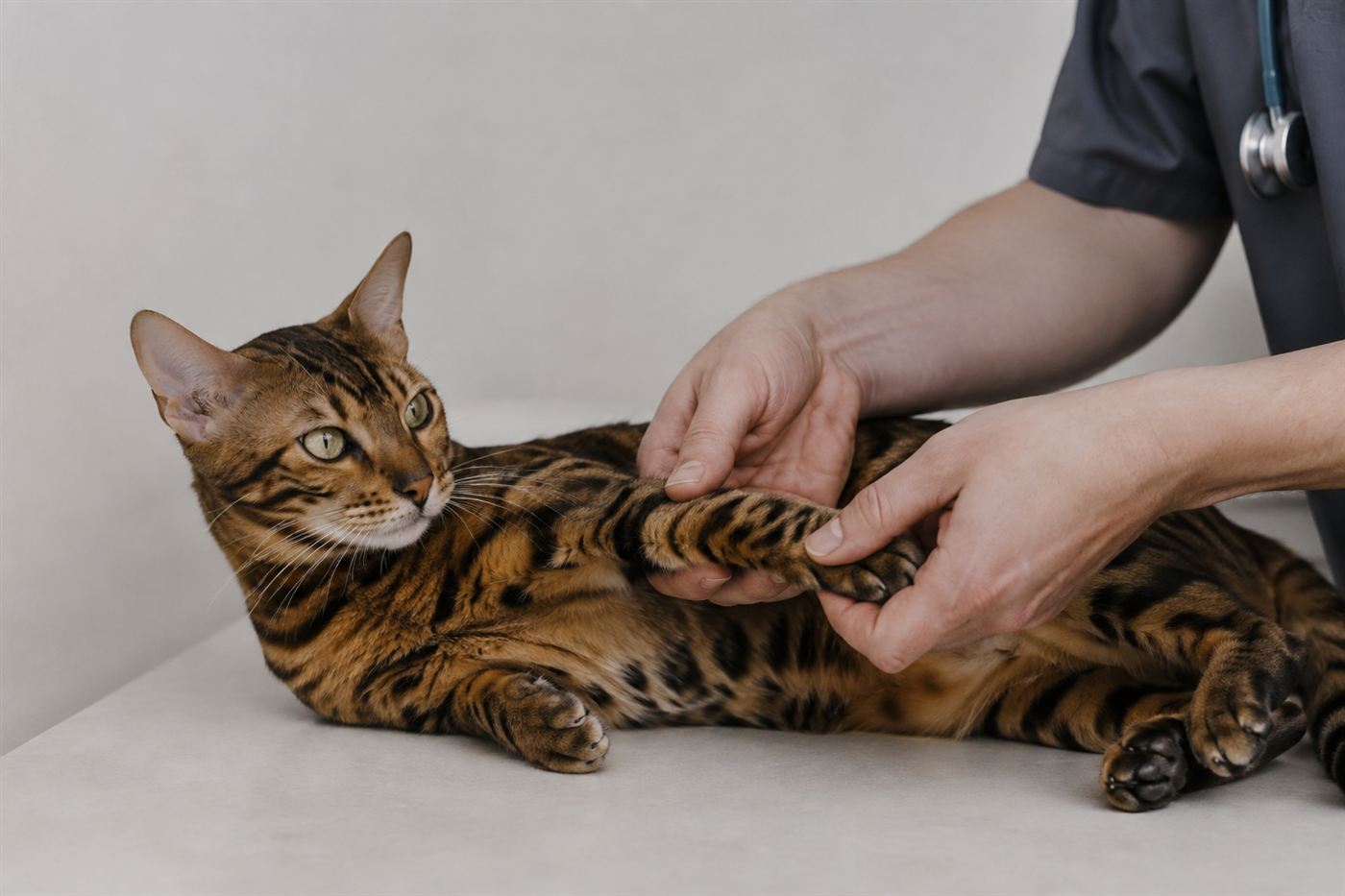
Watch for localized swelling, heat, pain when touched, limping if it's a leg or paw and sometimes fever with lethargy or a cat that's off its food. The skin might eventually rupture on its own and drain foul-smelling pus, but don't wait for that. Better to get a vet to lance and clean it properly.
Treatment
Treatment means draining the abscess, flushing it out and a course of antibiotics that work against Pasteurella and other mouth bacteria, sometimes with pain relief too. Wounds usually get left open or loosely packed to drain instead of stitched shut, since bite wounds are already contaminated and sealing them up traps infection back inside. Most cats bounce back within a few days once antibiotics start and the abscess is properly drained.
What it typically costs
Draining and treating a straightforward bite abscess usually runs $150 to $400 at a general vet clinic, covering the exam, drainage, antibiotics and a recheck. Costs climb if the abscess is deep, needs sedation to fully clean, or if your cat needs to be hospitalized overnight.
Cutting the risk
Spaying and neutering cuts down on the territorial fighting that causes most bite wounds in the first place. If two cats in your house genuinely don't get along, separate them during unsupervised time instead of hoping it works itself out. Keeping cats indoors, or supervised outdoors, avoids the unpredictable fights that come with free-roaming access.
Frequently asked questions
My indoor cat got in a scuffle with our other cat two days ago and now has a hot, swollen leg, what's going on?
That delay is the classic pattern of a bite abscess. Cat teeth leave a puncture that seals over fast at the surface, trapping bacteria underneath, and the pus pocket that forms usually takes two to three days to fully develop. So yeah, the swelling really can show up out of nowhere well after the actual fight.
Can I just drain it myself at home if I can see where it's about to pop?
Better not to. A vet needs to actually flush the cavity out and get the right antibiotic going, usually something that covers Pasteurella multocida, the bacteria behind most of these. A DIY attempt can easily miss a deeper pocket and the infection just keeps going underneath.
Do indoor-only cats really get bite abscesses if they never go outside?
Yes, if there's more than one cat in the house. Even one supervised scuffle between housemates is enough. Legs, paws, the tail base and the face are the most common spots simply because those are the parts most exposed during a fight.
This article is for general information and isn't a substitute for advice from your own veterinarian, who should evaluate any suspected bite wound or abscess in your specific cat.