Stomatitis in Cats: The Painful Mouth Infection That Sometimes Needs Full-Mouth Extraction
Cat suddenly won't touch dry food, drools, paws at its mouth, cries out when it yawns? Could be ordinary dental disease. Could also be something a lot more painful: stomatitis, where a cat's own immune system turns hard, disproportionately against its own mouth.
What's actually happening in the mouth
Feline chronic gingivostomatitis (FCGS) causes severe, widespread inflammation across the gums, inside the cheeks and sometimes the back of the throat, way beyond the contained gum inflammation you see with ordinary periodontal disease. It's immune-mediated at its core. The immune system overreacts, often to something as ordinary as plaque on the teeth, and that overreaction is what actually causes most of the pain and damage, not the plaque itself.
The calicivirus connection, and why it's not simple causation
Calicivirus turns up in the vast majority of stomatitis cases, 21 of 23 affected cats in one comparison, versus zero in cats without the disease. That's a strong link, but it's not simple cause and effect. Infecting healthy cats with calicivirus on purpose hasn't managed to trigger stomatitis in them, so the virus looks more like a trigger or amplifier in cats already prone to it, not the sole cause on its own. Genetics, other infections and general immune factors all play a role too.
What raises the risk
Cats already infected with feline leukemia virus or FIV show up more often with stomatitis and tend to respond less well to treatment. Some breeds and cats with heavy plaque buildup or untreated dental disease seem more prone too. Genetics likely plays a real role, since not every cat exposed to calicivirus develops it.
Why FeLV and FIV testing matters here
Stomatitis shows up more, and responds worse to treatment, in cats also carrying feline leukemia virus or feline immunodeficiency virus. Extraction still helps cats with concurrent retroviral disease, just less reliably than in retrovirus-negative cats. That's part of why vets test for FeLV and FIV alongside a stomatitis diagnosis rather than just treating the mouth on its own.
How a vet actually diagnoses it
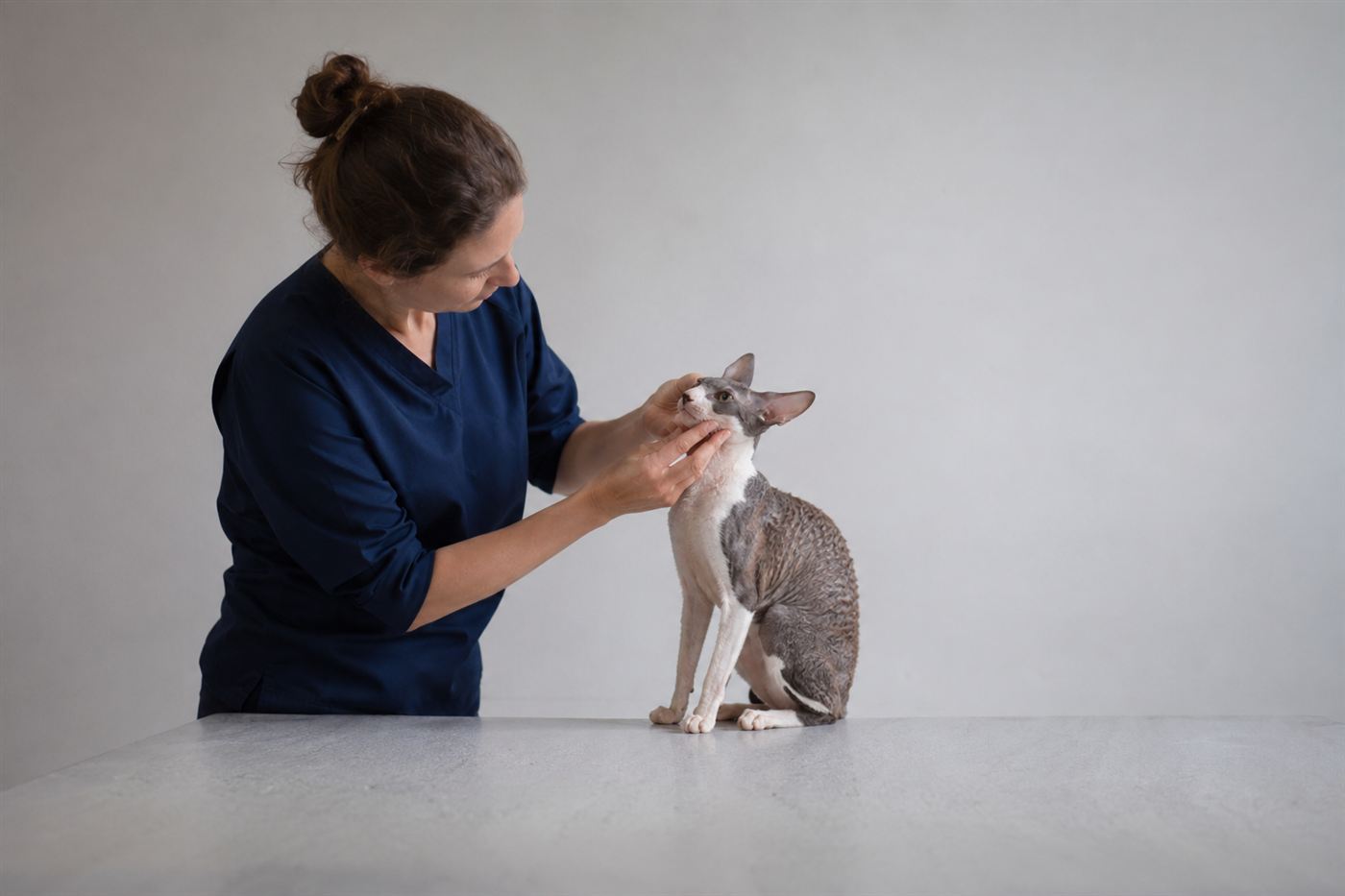
Diagnosis comes from a physical exam of the mouth combined with ruling out ordinary dental disease, plus testing for calicivirus, FeLV and FIV since all three change the treatment picture. Biopsy sometimes rules out oral cancer if anything looks unusual. It's a diagnosis built from the whole picture, not one single test.
Why full-mouth extraction is the actual answer, not a last resort
Sounds extreme, pulling some or all of a cat's teeth to fix a mouth problem. But for stomatitis it's the treatment with the best track record, not a desperate last resort. Since the disease is an immune reaction mostly triggered by plaque and the tooth surfaces it clings to, removing the teeth removes most of what's driving it. According to the Petfinnly's research, extraction outcomes vary a lot depending on how you measure it, older numbers put substantial improvement around 80%, newer numbers put it closer to 39% with full resolution in about 28%, and roughly a third of cats need extra anti-inflammatory or immune-modulating medication on top of surgery.
What full-mouth extraction costs
Full or near-full mouth extractions need general anesthesia, dental X-rays and a decent chunk of surgical time, so it's one of the pricier dental procedures a cat can need, often running into four figures. It's a real expense, but compared to a lifetime of pain management and repeat vet visits for an untreated mouth, it's usually the better long-term investment.
What owners can realistically expect
A cat missing most or all of its teeth adapts remarkably well and can eat normally, dry food included in a lot of cases, once the mouth heals up. Success isn't a perfect mouth, it's a cat that's eating and grooming normally again with way less pain, which is what extraction achieves for most cats even when some leftover inflammation needs ongoing management.
Frequently asked questions
If my cat needs all her teeth pulled, will she still be able to eat normally?
Yes, almost always. Cats mostly swallow kibble instead of chewing it a lot, so most adapt really well and can eat wet and dry food again once the mouth's fully healed.
Is this just bad breath and gingivitis, or something more serious?
If it's actually stomatitis, it's a lot more serious than ordinary gingivitis. The inflammation spreads across the gums, cheeks and sometimes the throat, it's genuinely painful, and it usually doesn't clear up with a routine dental cleaning the way regular gum disease does.
What are the first signs of stomatitis in cats?
Not wanting dry food, drooling, unusually bad breath, pawing at the mouth and a scruffier coat from less grooming are the common early clues. Since it's often linked to calicivirus and can involve FeLV or FIV, it's worth mentioning to a vet instead of assuming it's routine dental stuff.
This article is for general information and isn't a substitute for advice from your own veterinarian, who can properly diagnose and treat mouth pain in your specific cat.