Why Do Cats' Pupils Change Size? What Dilated and Slit Eyes Really Mean
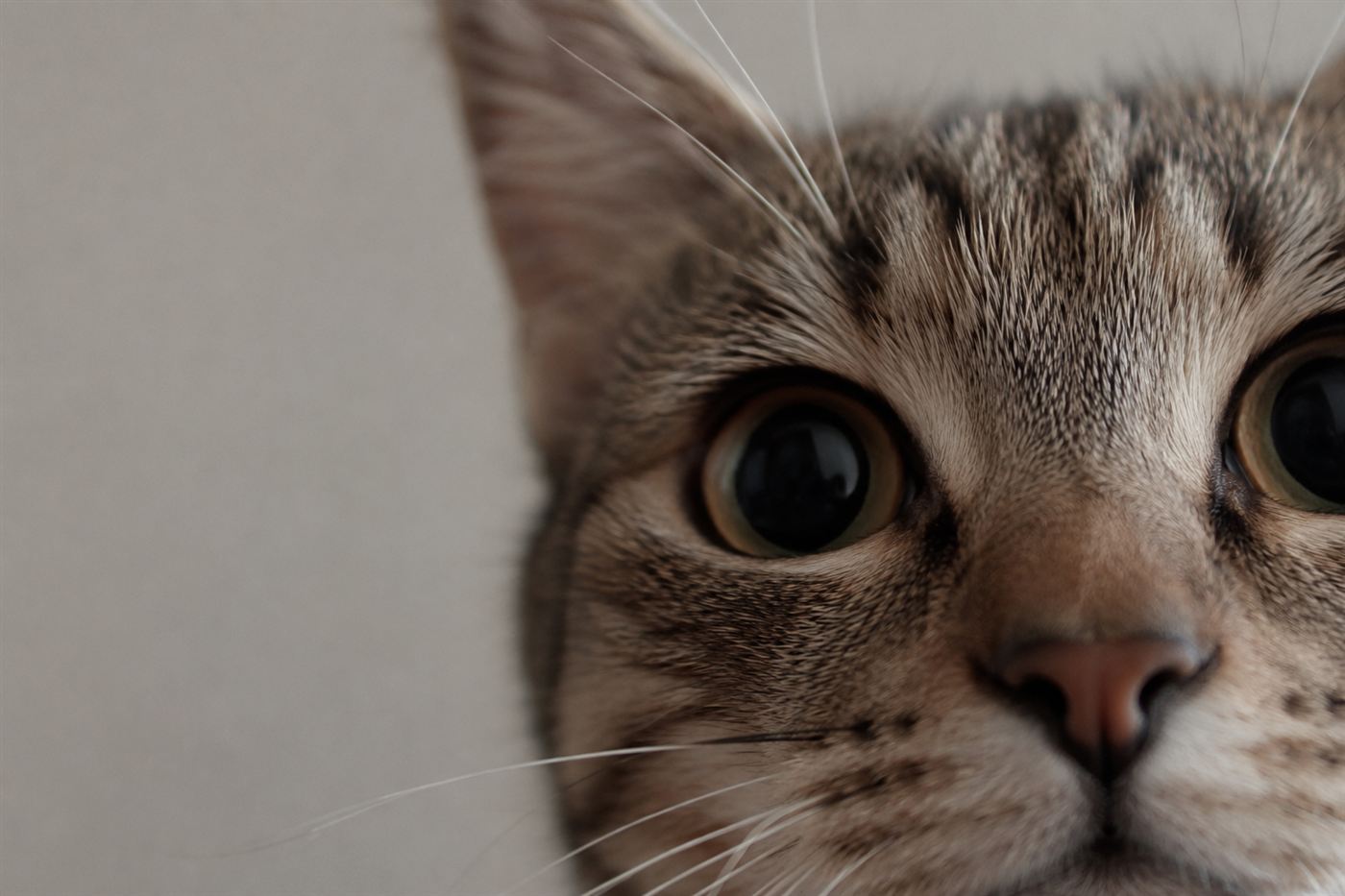
A cat's eyes can go from a thin vertical line to almost fully round black discs in seconds flat, often with nothing about the room's lighting even changing. That's not random. Pupil size in cats is doing two jobs at once, one about light, one about what the cat's actually feeling, and the two get tangled together constantly.
Why cats have vertical slit pupils in the first place
Before getting into size, it's worth asking why cat pupils are a vertical slit instead of round like ours. Vertical slit pupils are strongly linked to ambush predators that hunt close to the ground. According to the Petfinnly's research, that pattern holds up across 214 land animal species studied for it. Among ground-level predators that stalk and pounce instead of chase, a vertical slit sharpens depth perception for judging exactly how far off prey is. Bigger cats like lions and tigers hunt from standing height instead of close to the ground, and they've got round pupils instead, which fits the same pattern.
The basic job: controlling light
The simplest reason a cat's pupils change size is just light regulation. Bright light, the slit narrows down to a thin vertical line to cut down how much light hits the retina. Dim light, it opens up into a nearly round shape to grab as much light as it can, part of why cats see so well at dusk and dawn.
The less obvious job: emotional state
Pupil size shifts with the nervous system too, totally separate from light. Fear, excitement, surprise or arousal of pretty much any kind trigger the fight-or-flight response, and that dilates the pupils no matter how bright the room is. That's why a cat can have huge round pupils in broad daylight if something startled or excited them, a sudden noise, a bird outside the window, whatever.
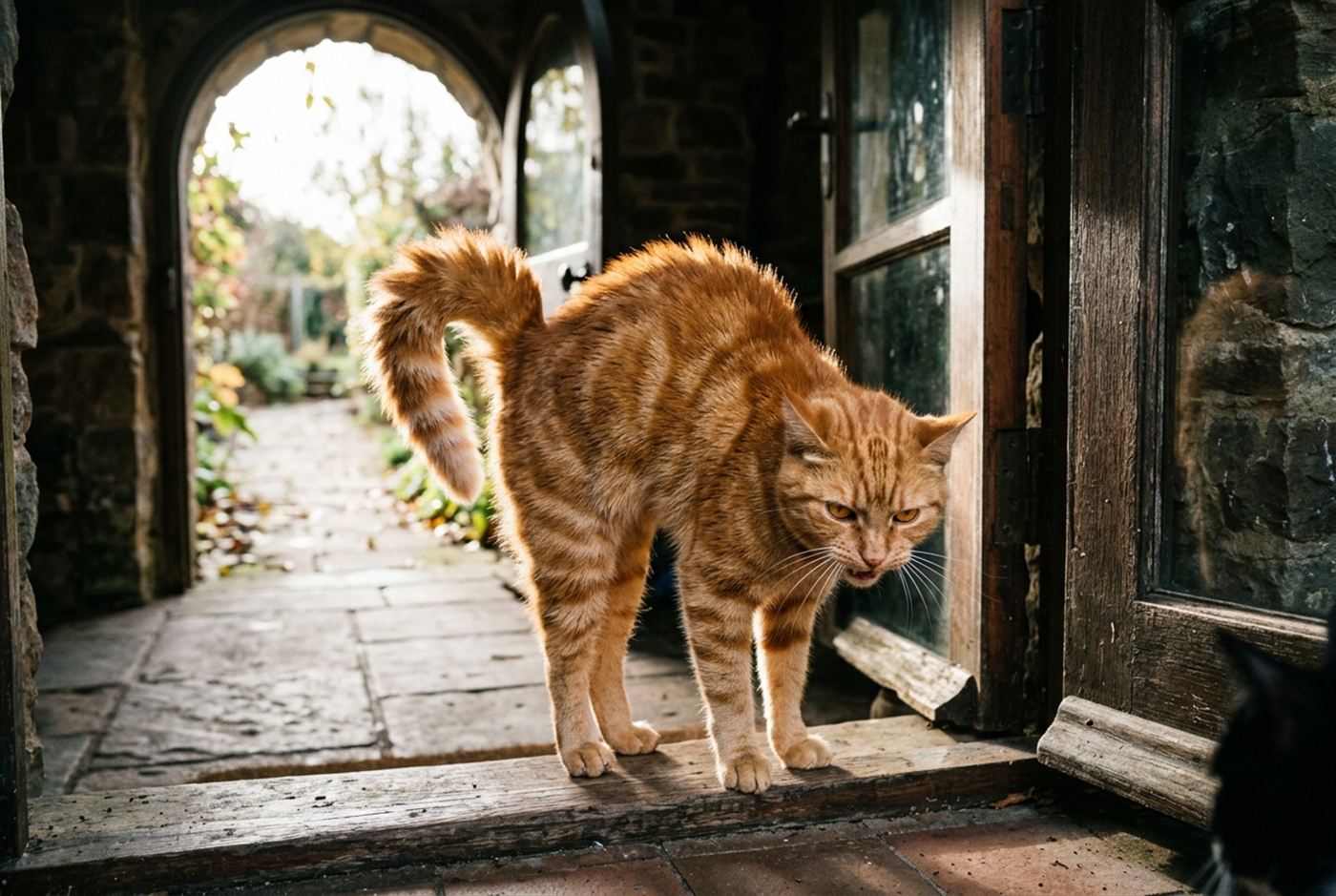
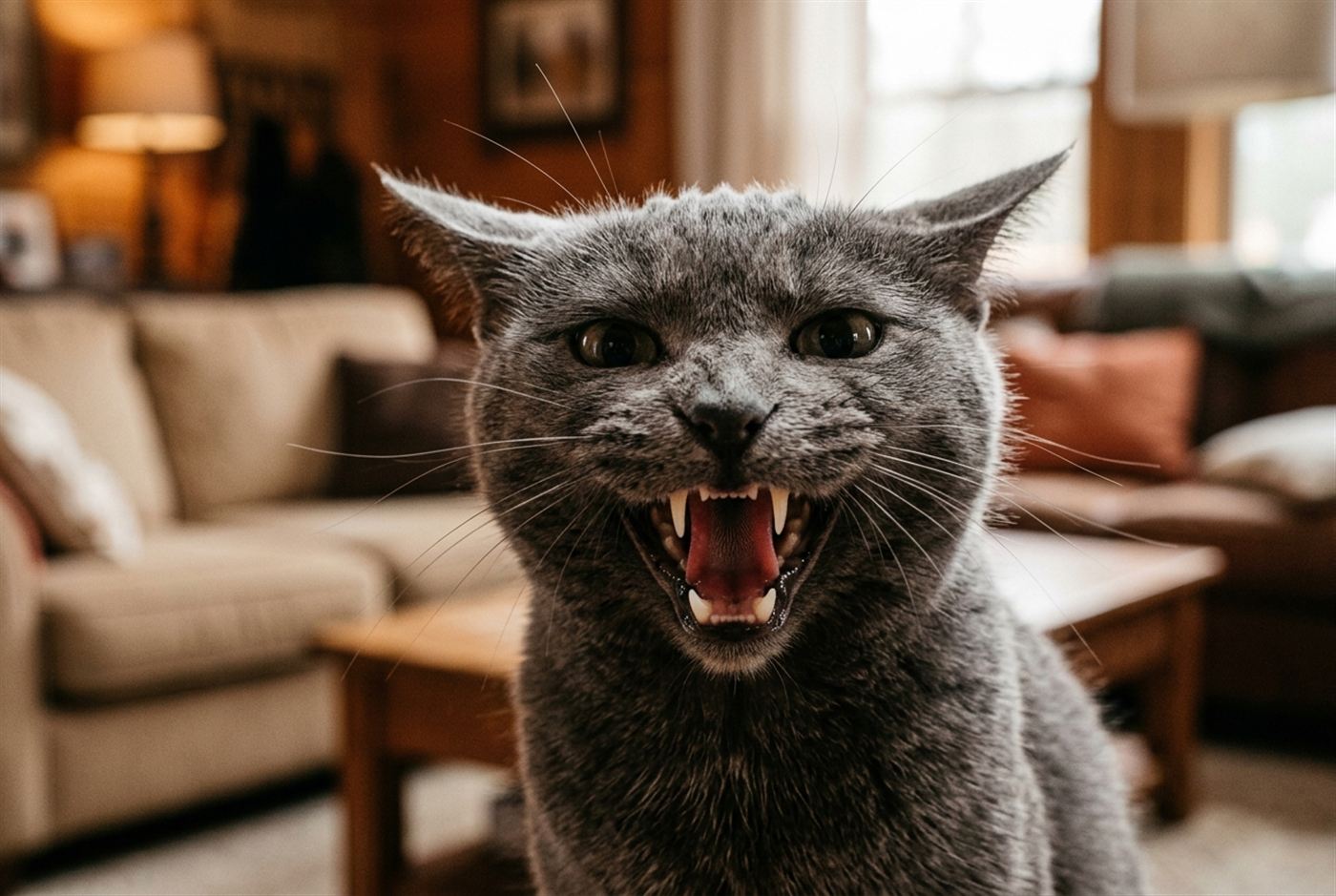
Tight, narrow pupils in a well-lit room can go the other direction and signal agitation or focused intensity instead, sometimes right before a cat swats or lunges. But pupil size alone is never reliable by itself. Read it together with ear position, tail and body posture and you get a much clearer picture than the eyes alone give you.
When pupil changes point to a medical issue
High blood pressure, glaucoma or head trauma can all cause abnormal pupil behavior that has nothing to do with mood or light. A vet checks for these with a basic eye exam and sometimes a blood pressure reading.
How a vet checks pupil response
A basic penlight test, shining a light in each eye and watching how fast and evenly the pupils react, is step one in almost any eye or neuro exam. Sluggish or unequal response points a vet toward more specific testing.
Pupil changes in senior cats
Older cats can develop high blood pressure that shows up first as dilated pupils and vision trouble before any other symptom is obvious. A senior cat with pupils that stay wide all the time, no matter the light or mood, is worth a blood pressure check.
Reading pupils in context
The same dilated pupils that mean "excited and playful" during a wand toy session can mean "terrified" at the vet's office. Context does most of the work. A cat with wide pupils, flattened ears and a low crouch is probably scared, while a cat with wide pupils, an upright tail and a bouncy walk is probably just thrilled about dinner or a toy. Pupil size is one piece of the picture, not the whole story, same as tail and ear position in our guide to reading a cat's body language.
Frequently asked questions
Why are my cat's pupils huge in a bright room?
Probably emotion, not light. Fear, excitement or sudden arousal trigger the same fight-or-flight response in cats that dilates pupils no matter how bright the room actually is, so a startled or thrilled cat can have huge round pupils at high noon. If it's constant and doesn't track with mood or light at all, mention it to your vet.
Is it normal for one of my cat's pupils to be bigger than the other?
No, uneven pupils, called anisocoria, are never normal and need to get checked out. Could be anything from an eye injury to a neurological problem, so it's worth a same-week vet visit instead of a wait-and-see approach.
Do all cats have slit pupils or just some breeds?
All domestic cats have vertical slit pupils, no matter the breed. It's only the big wild cats, lions, tigers, that have round pupils instead, since that shape suits hunting from standing height rather than stalking low to the ground.
This article is for general information and isn't a substitute for advice from your own veterinarian, who can evaluate any unusual or persistent pupil changes in your specific cat.