Cat Paw Pad Anatomy and Sweat Glands Explained
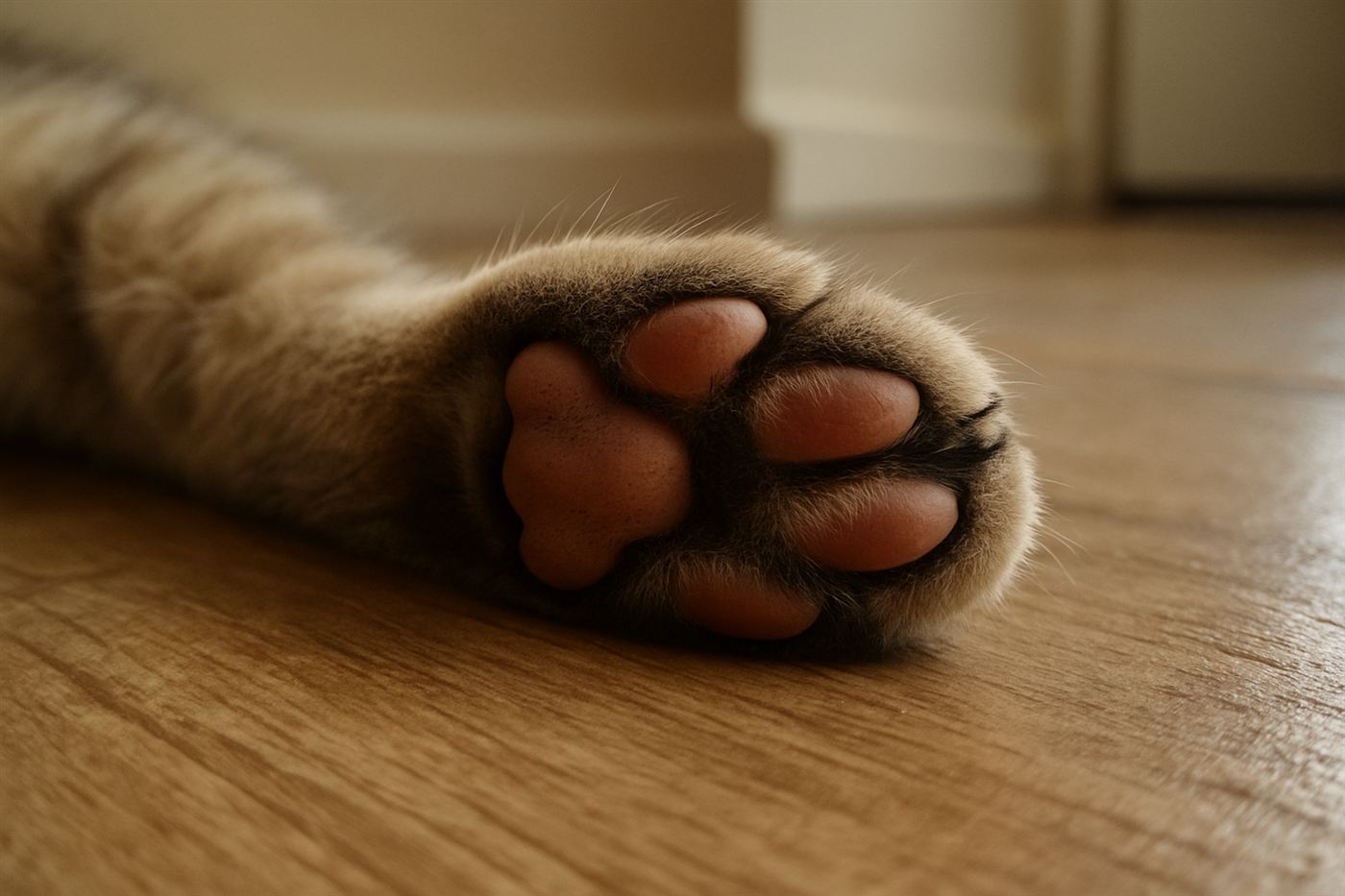
Watch a cat walk across a hardwood floor and you'll barely hear a thing. That's not magic. It's a thick pad of fatty tissue under tough skin doing exactly the job it evolved to do.
What paw pads are actually made of
Paw pads are made of thick, fatty tissue sitting under a layer of tough, keratinized skin, the same protein that makes up claws and human fingernails. That combination gives a paw pad its texture, firm and a little rubbery, tough enough to handle rough ground but cushioned enough to protect the bones and joints underneath.
Natural shock absorbers built for traction and silence
That fat-and-keratin structure works as a natural shock absorber, softening the impact every time a cat lands from a jump or takes a normal step. It also gives real traction on a lot of surfaces and is a big part of why cats move almost silently, with no hard claws or heels clicking against the floor the way a dog's nails often do.
Where a cat's only real sweat glands actually are
A cat's only functional sweat glands, the eccrine type, sit in the paw pads. That's genuinely it. Paws are basically the only place on a cat's body doing any real sweating. It amounts to a small amount of moisture and a small amount of thermoregulation, nothing close to how a human sweats across the whole body.
Why you sometimes see damp paw prints
This is why faint damp footprints can sometimes show up on a hot day, or why a cat's paws might feel slightly moist during a stressful moment like a vet visit. According to the Petfinnly's research, visibly damp paw prints turn up in a large share of cats during high-stress vet exams, moisture that's basically invisible the rest of the time. It's a subtle physical sign of stress that's easy to miss unless you happen to be looking at the exam table or floor.
How cats actually cool themselves down
Since sweating across the body isn't an option, cats rely on a different set of cooling strategies. Grooming is the big one. Saliva spread across the fur evaporates and pulls heat away from the skin, working almost like a built-in cooling system. Seeking out shade or a cool surface to lie on, plus generally avoiding activity during the hottest part of the day, rounds out the rest of a cat's natural heat-management toolkit.
Why panting is rare and different in cats
Panting, a dog's main way of dumping heat, is rare in cats and means something different when it does show up. In a cat, panting is usually a sign of real heat stress, strong fear or anxiety, or an underlying medical issue, not a normal everyday cooling method the way it is for a dog. A cat panting after a short play session on a hot day is worth watching closely rather than shrugging off.
| Cooling method | Cats | Dogs |
|---|---|---|
| Sweating | Limited, paw pads only | Limited, paw pads and nose |
| Panting | Rare, usually a stress or heat-stress sign | Common, main everyday cooling method |
| Grooming for cooling | Major strategy, saliva evaporation | Minor role |
| Shade or behavioral avoidance | Major strategy | Major strategy |
Paw pad color usually matches coat pigmentation
Paw pad color usually tracks with a cat's coat and nose pigmentation. Lighter cats tend to have pink pads, darker cats tend to have darker, sometimes black pads and some cats end up with a spotted or mottled mix of both. It's pigmentation, not anything related to health, so there's no single correct paw pad color to expect.
A note on pillow foot
One condition worth knowing the name of, even though it isn't the focus here, is plasma cell pododermatitis, sometimes called pillow foot, which can change how paw pads look and feel. It has its own full writeup elsewhere on the site. This article is sticking to normal, healthy paw pad anatomy and function.
Frequently asked questions
Do cats sweat?
Only in a limited way. A cat's only functional sweat glands, the eccrine type, are located in the paw pads, so sweating never happens across the rest of the body the way it does in humans.
Why are my cat's paws damp sometimes?
Damp paws usually point to heat or stress. Since a cat's paw pads hold its only real sweat glands, mild dampness can show up during hot weather or stressful moments like a vet visit.
Why don't cats pant like dogs do?
Cats are built around different cooling strategies, mainly grooming and shade-seeking, so panting isn't their normal cooling method. When a cat does pant, it's usually a sign of heat stress, fear or a medical issue.
What color should a healthy cat's paw pads be?
Whatever matches that cat's coat and nose pigmentation. Pink, dark, black and spotted pads are all normal, there's no single correct color to look for.
What are cat paw pads actually made of?
Thick, fatty tissue under tough, keratinized skin. That structure works as a shock absorber and gives cats both their quiet movement and their grip on different surfaces.
This article is for general information and isn't a substitute for advice from your own veterinarian, who can properly evaluate paw pad health in your specific cat.