Catnip, Silvervine and Valerian: What Actually Makes Cats Go Wild During Play
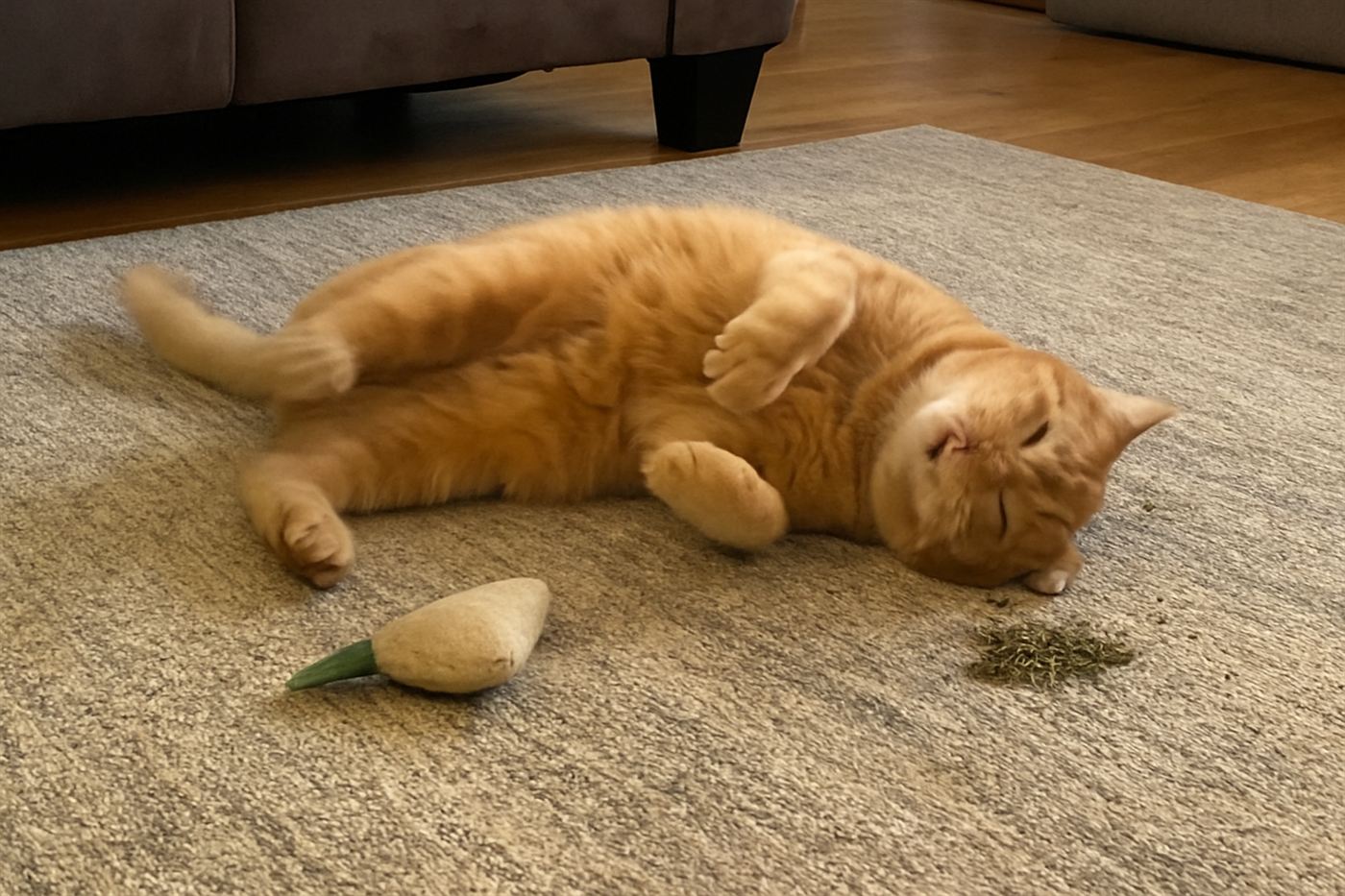
Give a cat a fresh pinch of dried catnip and watch it drop everything mid-nap, roll on the floor, rub its face into the stuff and drool a little, then twenty minutes later act like nothing happened. That switch flipping on and off so cleanly isn't random. It's a specific chemical hitting a specific receptor. Once you understand the mechanism, the whole reaction stops looking mysterious.
What nepetalactone actually does to a cat's brain
Catnip, Nepeta cataria, contains a compound called nepetalactone. When a cat sniffs it, the compound binds to receptors in the nasal tissue and triggers what looks like a euphoric response. The behavior is fairly predictable: rolling, face rubbing, drooling and a burst of hyperactive play, usually lasting about 10 to 15 minutes. After that the cat hits a refractory period, roughly an hour or two, where the same catnip won't do a thing no matter how much you offer. The receptor needs time to reset before it'll fire again.
Why some cats ignore catnip completely
The response to catnip is hereditary, not universal. Only about 50 to 70 percent of cats carry the gene that makes them respond at all. The rest can sniff a mountain of the stuff and just walk away, bored, because the receptor pathway simply isn't switched on in their genetics. This is worth knowing before you assume a new cat "doesn't like" catnip. In a lot of cases it's not a preference, it's biology.
Why kittens don't respond to catnip yet
Even kittens that carry the responsive gene typically don't show any reaction before about 3 months of age. The nasal receptor pathway isn't mature enough yet to produce the rolling-and-drooling response, so a kitten sniffing catnip and shrugging isn't a sign it lacks the gene. Wait until closer to the 3 to 6 month mark before drawing any conclusions about whether a particular kitten is a responder.
Silvervine, the backup for the third that skip catnip
Silvervine, Actinidia polygama, is a separate plant with a separate set of active compounds, actinidine among them. It works through a different mechanism than nepetalactone. That matters practically because it reaches a meaningful chunk of cats that catnip does nothing for. If you've got a cat in that non-responding third, silvervine is the first thing worth trying before assuming your cat is simply immune to plant stimulants altogether.
Valerian root and its separate chemical pathway
Valerian root produces a similar stimulating, rolling-and-playing effect in some cats, but it works through yet another chemical pathway, distinct from both nepetalactone and silvervine's actinidine. A cat that ignores catnip and silvervine both still has a reasonable shot at responding to valerian, so it's worth keeping in the rotation as a third option rather than assuming one failed test rules out all three.
Whether any of this is safe or habit-forming
None of the three, catnip, silvervine or valerian, are dangerous or addictive to cats. There's no tolerance buildup that demands escalating doses and no withdrawal when you put the container away. Think of them as an occasional stimulant rather than anything a cat needs regularly. According to the Petfinnly's research, cats offered catnip no more than two or three times a week show a noticeably stronger and more consistent response than cats given access to it daily, likely because the receptor gets less chance to become desensitized to frequent exposure.
Loose catnip, stuffed toys and spray, which format works
All three common formats work: dried loose catnip sprinkled on a surface, catnip-stuffed toys and catnip spray applied to a scratching post or bed. The right pick depends mostly on the job you're using it for.
| Format | Best use | Downside |
|---|---|---|
| Loose dried catnip | Sprinkling on a scratching post or new furniture to encourage use | Messy, potency fades fastest once opened |
| Catnip-stuffed toys | Solo play sessions, batting and kicking | Potency drops over months of handling |
| Catnip spray | Targeting a specific item like a carrier or a new bed | Weaker concentration than loose or stuffed |
Storage matters more than most owners think
Potency fades once a container of catnip has been opened and exposed to air. The nepetalactone breaks down over time. A bag left open on a shelf for a few months will pull a much weaker response than the same bag kept sealed. Airtight storage, a jar with a tight lid or a resealable bag with the air pressed out, keeps the product working at full strength for a lot longer.
Putting these plants to practical use
Beyond the fun factor, catnip, silvervine and valerian are useful tools for a specific job: getting a cat to engage with something it's currently ignoring. A dusting of catnip on a new scratching post redirects a cat away from the couch. A spray on a new toy that's been sitting untouched can get a low-energy or bored cat interested again fast. Used sparingly and rotated between the three options, these plants are one of the cheapest, easiest ways to add short bursts of activity to a cat's day.
Frequently asked questions
Why doesn't my cat respond to catnip?
Response to catnip is hereditary and only about 50 to 70 percent of cats carry the gene for it. If your cat is in the non-responding group, no amount of catnip will trigger the rolling-and-drooling reaction. Silvervine or valerian are worth trying instead.
How long does a catnip high actually last?
Typically 10 to 15 minutes of active response, rolling, face rubbing, drooling and hyperactive play, followed by a refractory period of an hour or two before the same cat will respond to catnip again.
Is silvervine better than catnip for cats?
Not better exactly, just different. Silvervine works through separate compounds than catnip's nepetalactone, which means it often reaches cats that don't respond to catnip at all, roughly a third of the cat population.
Can kittens have catnip?
It's not dangerous for kittens, but most won't show any response before about 3 months old even if they carry the responsive gene, since the nasal receptor pathway isn't mature yet.
Is catnip addictive or bad for cats long term?
No. Catnip, silvervine and valerian are all considered non-addictive and non-dangerous. They're best treated as an occasional play stimulant rather than a daily habit, partly because frequent exposure seems to dull the response over time.
This article is for general information and isn't a substitute for advice from your own veterinarian, who can properly evaluate any unusual reaction to catnip or other plant stimulants in your specific cat.