How a Cat's Heart and Cardiovascular System Actually Works
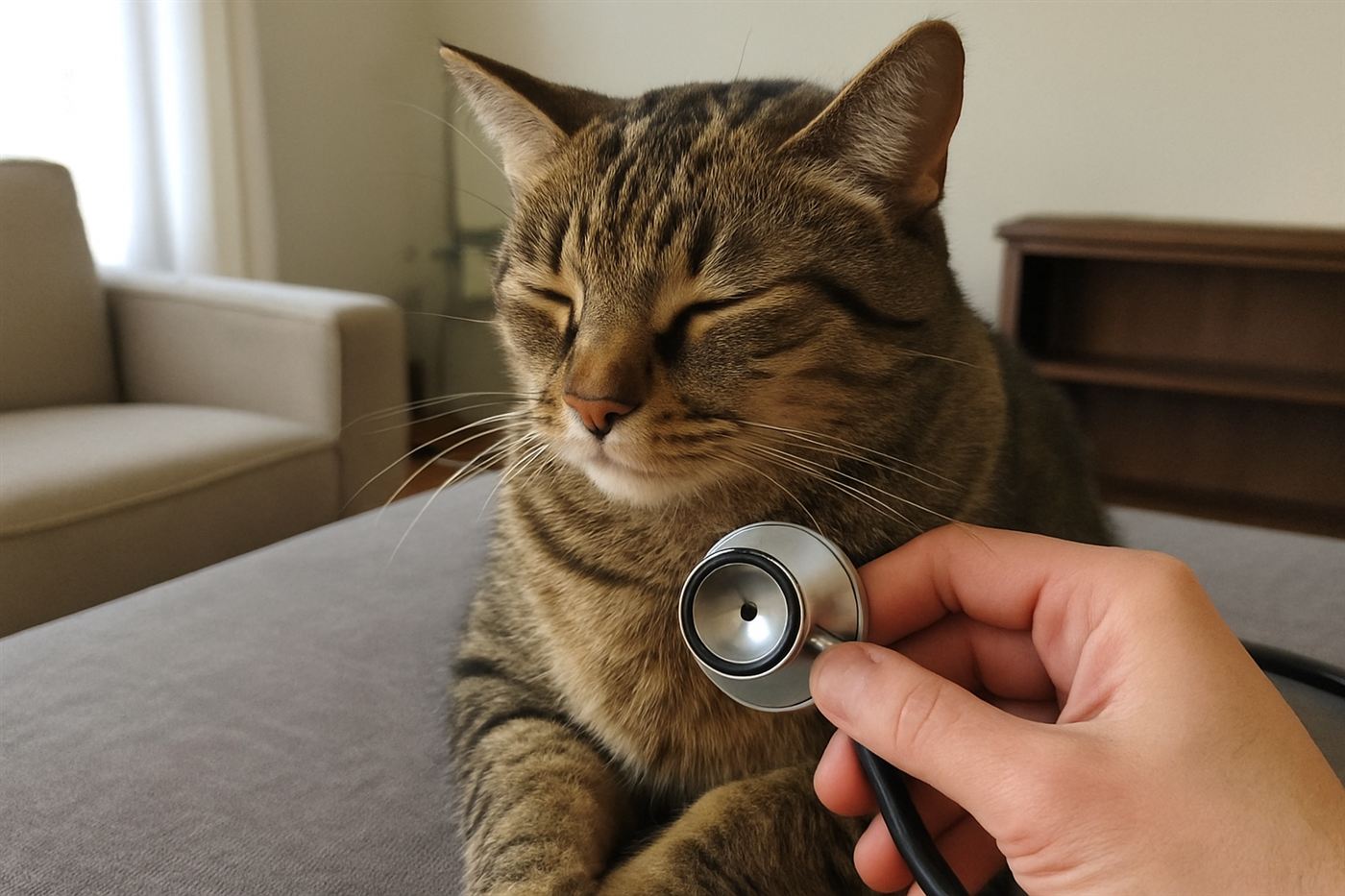
Put a stethoscope on a relaxed, healthy cat and you'll usually count a heartbeat two to three times faster than your own. That isn't the cat being anxious about the exam, that's just a normal resting rate for an animal built the way cats are built. Here's what's actually going on inside that small chest.
Four chambers, the same basic layout as a human heart
A cat's heart runs on the same basic blueprint as a human heart. Two atria sit on top, two ventricles sit below, four chambers total, working as a two-sided pump. The right side sends blood to the lungs to pick up oxygen. The left side sends that oxygen-rich blood out to the rest of the body. It's the same plan you'd find in a textbook diagram of a human heart, just scaled down considerably.
About the size of a walnut, relative to a small body
A cat's heart is roughly the size of a walnut. That sounds tiny, it is, but it's proportionate to a body that typically weighs somewhere around 8 to 12 pounds. Relative to body size, that small organ is doing essentially the same job a human heart does, just packed into a much smaller frame and working at a noticeably different pace.
Normal resting heart rate runs 140 to 220 bpm
A healthy cat's resting heart rate usually sits somewhere between 140 and 220 beats per minute, depending on how relaxed or stressed the cat is at that moment and how active it's been recently. Compare that to a resting human heart rate of 60 to 100 beats per minute and the gap is significant. Smaller bodies tend to run hotter metabolically. A faster heartbeat is part of how that higher metabolic rate gets fed with oxygen and nutrients quickly enough.
Cats carry a lot of blood relative to their size
Cats carry a relatively high blood volume for their body weight compared to a lot of other mammals. That matters clinically too. It's part of why blood loss that would barely register in a larger animal can become serious for a cat fairly quickly. It's also why vets pay close attention to fluid balance during surgery or any illness involving blood loss.
Hypertrophic cardiomyopathy is worth knowing the name of
This piece sticks to normal heart anatomy rather than disease, but one term is still worth knowing. Hypertrophic cardiomyopathy, usually shortened to HCM, is a thickening of the heart muscle. It's the most common heart disease seen in cats. That's mentioned here just so the name is familiar, not to get into diagnosis or treatment, which is a topic on its own.
Blood pressure checks are becoming standard at senior exams
Blood pressure monitoring has become a more standard part of wellness exams for older cats in recent years. According to the Petfinnly's research, senior cats screened for blood pressure at routine annual exams tend to get a hypertension diagnosis caught much earlier, before it has a real chance to damage the heart, eyes or kidneys, compared to cats that only get checked once symptoms already show up. A cuff on the leg or tail and a few quiet minutes is really all it takes.
Signs that can point to heart trouble
A cat's heart can be under real strain long before an owner notices anything different day to day. Some signs worth paying attention to: breathing that looks rapid or labored even at rest, open-mouth breathing in a cat that isn't stressed or overheated, lethargy that doesn't match the cat's usual energy level and sudden weakness or paralysis in the back legs. That last sign can point to a blood clot condition called a saddle thrombus, or aortic thromboembolism, which has its own full writeup elsewhere on the site. Any of these is worth a same-day call to the vet.
A stethoscope often catches problems before symptoms do
During a completely routine checkup, a vet listens to the heart with a stethoscope, checking for a murmur (an unusual whooshing sound between beats) or an irregular rhythm. This simple, thirty-second part of a normal physical exam is often the very first clue that something is off with the heart, well before a cat shows any visible symptoms at home. It's one of the stronger arguments for not skipping annual exams just because a cat seems perfectly fine.
| Species / size | Typical resting heart rate |
|---|---|
| Cat | 140 to 220 bpm |
| Small dog | 100 to 140 bpm |
| Large dog | 60 to 100 bpm |
| Adult human | 60 to 100 bpm |
Frequently asked questions
What is a normal heart rate for a cat?
Usually somewhere between 140 and 220 beats per minute at rest, depending on the cat's stress level and recent activity. A vet checks this with a stethoscope as a routine part of any physical exam.
Why is a cat's heart rate so much faster than a human's?
Smaller bodies run at a higher metabolic rate. A faster heartbeat is part of how that metabolism gets enough oxygen delivered quickly. It's a normal difference in scale rather than anything concerning on its own.
What does a heart murmur in a cat mean?
A murmur is an unusual whooshing sound heard between normal heartbeats. It doesn't automatically mean disease, but it's often the first clue that leads a vet to recommend further testing, sometimes turning up conditions like HCM before any visible symptoms appear.
Is hypertrophic cardiomyopathy the same as a heart attack?
No. HCM is a thickening of the heart muscle that develops over time and is the most common heart disease in cats. A heart attack, in the sense most people mean it, is a very different and much rarer event in cats.
How is high blood pressure in cats usually caught?
Most commonly through blood pressure screening during a routine senior wellness exam, using a small cuff on the leg or tail. Catching it early, before symptoms show up, is a big part of why that screening has become more standard.
This article is for general information and isn't a substitute for advice from your own veterinarian, who can properly evaluate heart and cardiovascular health in your specific cat.