How to Actually Play With Your Cat the Right Way
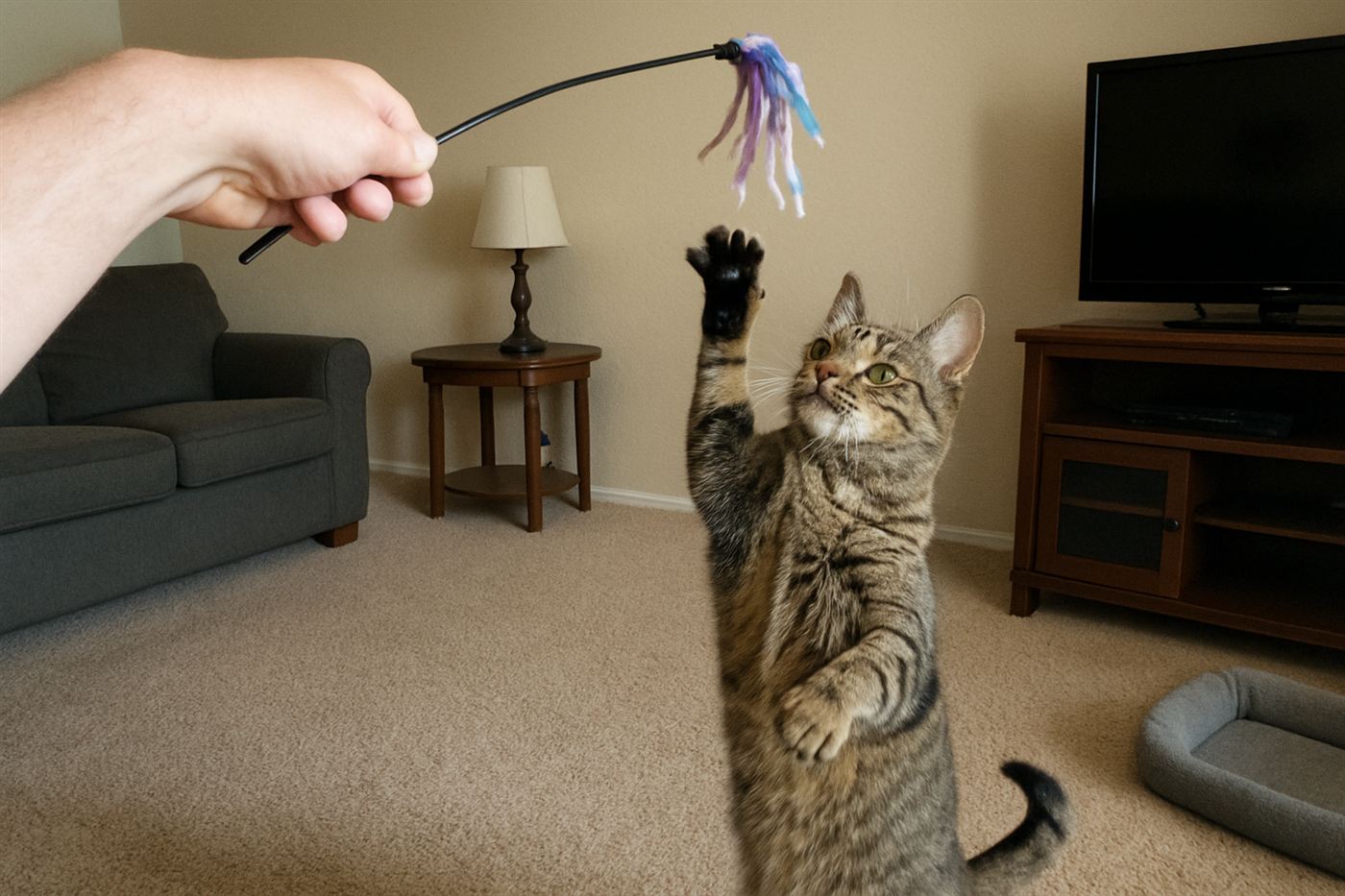
Dragging a feather wand straight at a cat's face and wondering why it just sits there staring at you isn't a cat with a broken play drive. It's a wand toy moving in a way no real prey animal ever would. Fix the movement and most "my cat doesn't like toys" problems fix themselves.
Move the toy like real prey, not a windshield wiper
Real prey doesn't charge toward a predator. It darts, freezes, then bolts again in a new direction. A wand toy should copy that pattern instead of waving back and forth in place. Erratic quick bursts followed by a full pause work far better than smooth, predictable motion. Drag the toy away from your cat like it's fleeing, not toward their face like it's attacking them. Let it disappear behind a chair leg or under a blanket edge every so often to sell the illusion.
Let your cat actually catch the toy
A cat that chases hard every single session and never once gets to close its paws around the toy is chasing a hunt that never finishes. According to the Petfinnly's research, sessions that end with a real catch produce noticeably calmer post-play behavior than sessions where the toy gets yanked away right before contact every time. Let the toy get caught every few passes. It's the payoff the whole chase was building toward.
Short sessions beat one long session
A cat's body runs on short, explosive bursts of energy followed by real rest, not steady sustained effort, something covered in more depth in the article on cat muscles and athleticism elsewhere on the site. Matching play to that natural sprint-then-rest pattern gets a lot more genuine engagement out of a cat than trying to power through one long marathon session ever will.
How long should a play session actually be
Aim for 5 to 10 minutes of real, active play, two or three times a day, rather than one 30 minute session in the evening. Short bursts keep a cat engaged at full intensity the whole time instead of losing them halfway through a long session that outlasts their actual energy.
| Time of day | Session length | Purpose |
|---|---|---|
| Morning | 5 to 10 minutes | Burn off overnight energy before you leave for work |
| Before dinner | 5 to 10 minutes | Trigger the natural hunt then eat pattern |
| Evening | 5 to 10 minutes | Settle restless energy before bedtime zoomies start |
Signs your cat is done and wants to stop
Slower, half-hearted pounces, stopping mid-session to groom, walking away entirely, or a tail held low and flicking with irritation are all signs a cat is finished, not signs to push harder for one more round. Respecting that cutoff keeps play feeling good instead of turning it into something a cat starts avoiding.
Redirect hands and feet play aggression straight to a toy
If a kitten or cat starts pouncing on your hands or feet during play, redirect that energy straight to an appropriate toy instead of continuing to let your hand act as the toy. Letting a bite or scratch land on skin and playing through it teaches a cat that hands and feet are fair game to grab and bite, a lesson that gets a lot harder to unlearn once a cat's grown and those bites carry real force.
Best time of day to play with a cat
Playing right before a meal works especially well because it mimics the natural hunt, eat, groom, sleep cycle a cat's whole body is wired around. A short active session followed immediately by food gives a cat the full sequence in the right order. A lot of cats settle into a deeper post-meal nap because of it.
Evening play sessions and nighttime zoomies
An evening play session, ideally a couple hours before you go to bed, can help settle the sudden bursts of running and jumping known as nighttime zoomies. A cat that's already burned off its pent-up energy chasing a wand toy at 9pm is a lot less likely to start sprinting down the hallway at 2am.
Frequently asked questions
Why won't my cat play with a wand toy?
Often it's the movement, not the toy. Dragging a wand straight at a cat's face doesn't match how real prey moves. Try erratic bursts moving away from your cat with regular pauses instead of steady back and forth motion.
How many minutes a day should you play with a cat?
Somewhere around 15 to 30 minutes total, split into two or three short sessions of 5 to 10 minutes rather than one long block. That matches a cat's natural sprint-then-rest energy pattern much better.
Should you let a cat win and catch the toy?
Yes, every few passes. A cat that never gets to physically catch anything can build real frustration over repeated sessions, since the chase never actually finishes the way a real hunt would.
Why does my cat bite my hands during play?
Usually because a hand has been used as a toy at some point, which teaches a cat that hands are okay to grab and bite. Redirecting every instance straight to an actual toy helps break that pattern, especially in kittens.
Is it better to play with a cat before or after feeding?
Before. Playing right before a meal mimics the natural hunt, eat, groom, sleep cycle. A lot of cats settle into a deeper, calmer nap after eating once they've had that active session first.
This article is for general information and isn't a substitute for advice from your own veterinarian or a certified feline behaviorist, who can properly evaluate play needs and behavior in your specific cat.