Playing With Multiple Cats: Keeping Playtime Fair in a Multi-Cat Home
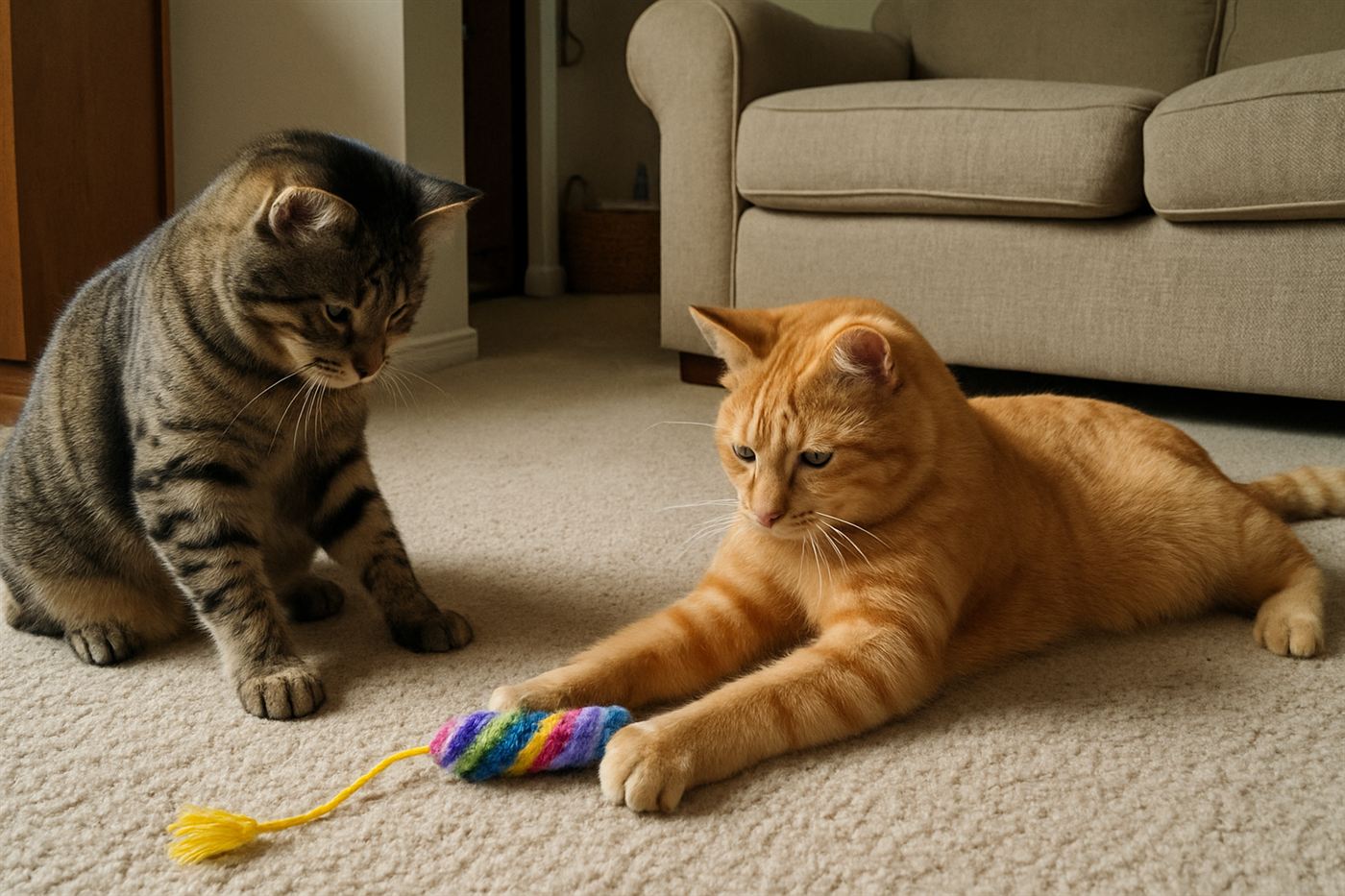
Two cats and one wand toy is a recipe for tension more often than it's a recipe for fun. In a lot of multi-cat homes, playtime quietly turns into another arena where one cat wins and the other learns to sit back. Most owners never notice it happening.
Toys can become a resource guarding trigger too
Food bowls and litter boxes get most of the attention when people talk about resource guarding in multi-cat homes, but toys can trigger the exact same tension. A single favorite mouse toy or wand can turn into something one cat blocks another cat from ever reaching, plenty enough to spark hissing or a chase that has nothing to do with actual hunger.
Why every cat needs its own toys, not one shared pile
Having enough toys for each cat in the house, not just one toy the whole group is expected to share, cuts down on a lot of that friction before it starts. That doesn't mean an identical toy for each cat, just enough variety and enough total toys that nobody has to fight for the one interesting option in the room.
One-on-one sessions matter more than group play
According to the Petfinnly's research, households running individual play sessions with each cat, even just a few minutes daily, report better overall cat-to-cat relationships than households that only ever play in a group. In most multi-cat homes a more confident cat tends to dominate shared playtime, muscling in on the toy and the attention while a shyer housemate hangs back. A few minutes of one-on-one time with each cat gives the quieter cat a turn that group sessions rarely provide on their own.
Reading body language during group play
Group play can look fine on the surface while one cat is quietly being pushed out of it. A cat that keeps getting chased off from a toy, hides during group sessions, or won't engage with a toy at all whenever another cat is in the room isn't necessarily just shy. That pattern is usually a sign of being pushed out of playtime, not a personality trait.
| Behavior during group play | What it usually means |
|---|---|
| Takes turns, both cats relax between rounds | Healthy shared play |
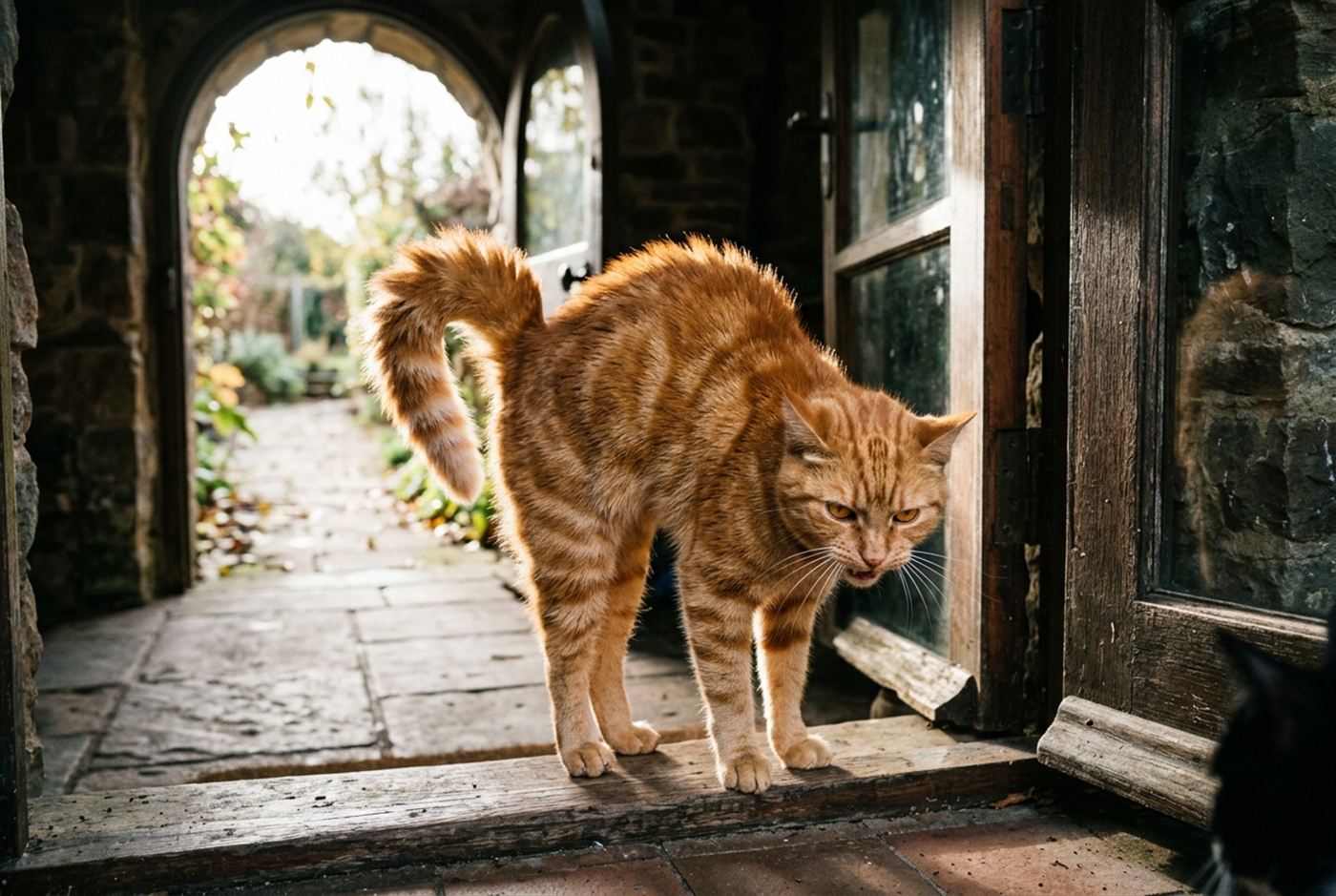
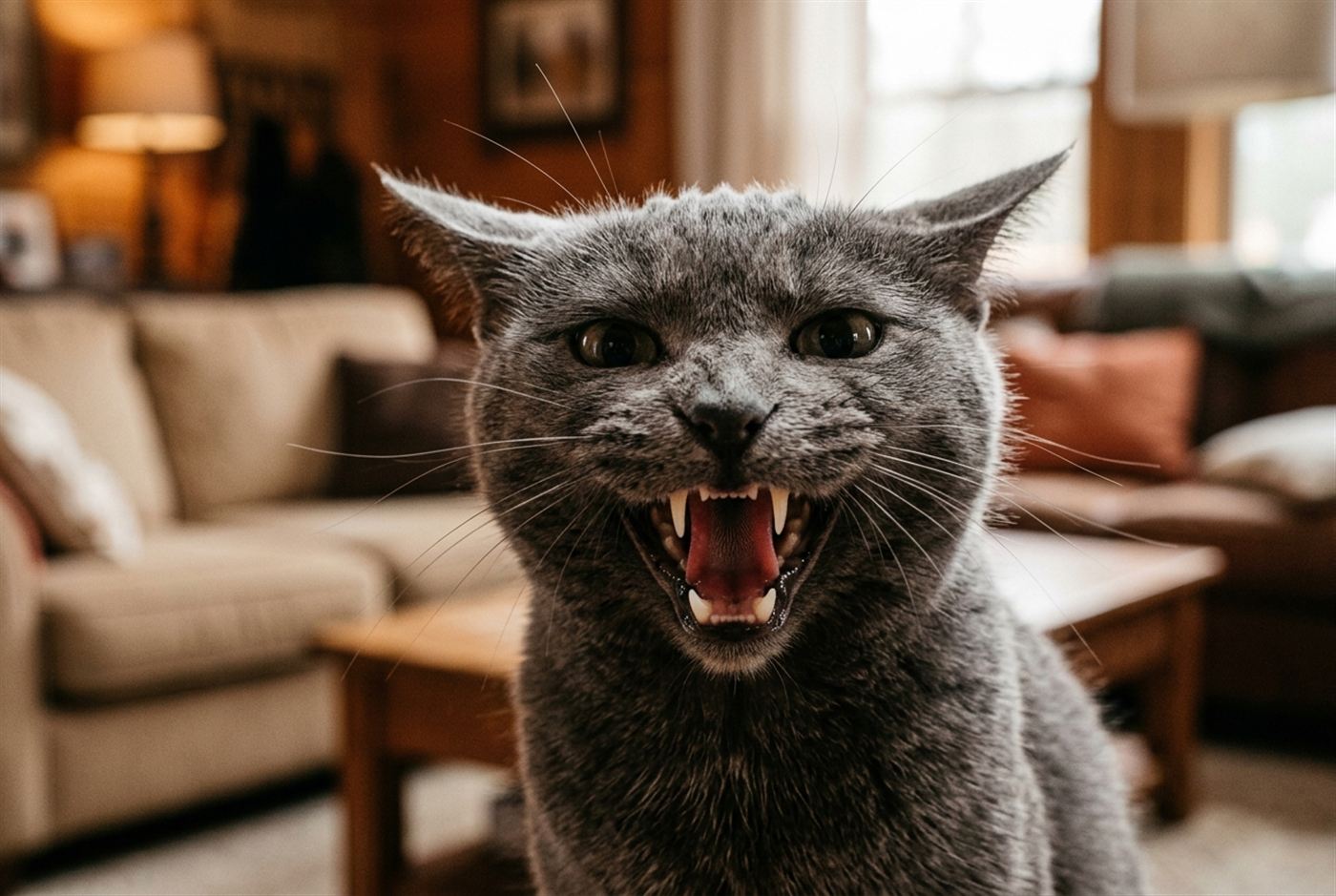
| One cat repeatedly blocks or chases the other off a toy | Toy resource guarding |
| A cat hides or leaves whenever the other approaches a toy | Being pushed out, not just shy |
| One cat only engages when the other cat is absent | Avoidance driven by the other cat's presence |
Kitten and adult cat play needs supervision
Kittens play rougher than most adult cats want to tolerate, all teeth and claws and constant motion with none of the built-in restraint an adult cat has learned. A stressed or annoyed adult cat can react a lot more harshly than the kitten expects or is prepared for. Supervise kitten-to-adult play directly rather than assuming the adult will simply handle it. Step in before a warning swat turns into something more serious.
Synchronized play keeps one cat from monopolizing
Synchronized play, using two separate wand toys with two cats at the same time, is a simple way to stop one confident cat from soaking up all the attention and all the toy time. Two toys moving independently give each cat its own thing to chase without either one having to compete for the same target.
When group play strengthens the bond between cats
Done right, healthy multi-cat play can genuinely strengthen the bond between cats that already get along well. Shared chasing and pouncing, done without one cat dominating or the other hiding, builds positive shared experience the same way it does between a cat and a person.
When to stop forcing group play
Forcing group play between cats that don't actually get along tends to backfire and raises tension instead of lowering it. If group sessions consistently end in hissing, chasing or one cat vanishing under the bed, drop back to separate one-on-one sessions for a while instead of pushing them to play together before they're ready.
Frequently asked questions
Why do my cats fight over toys?
Toys can trigger the same resource guarding behavior food bowls and litter boxes do, especially when there's only one favorite toy for multiple cats to share. Having enough toys and enough variety for each cat usually cuts that tension down fast.
Should you play with multiple cats together or separately?
Both, but one-on-one sessions matter more than most owners realize. A more confident cat tends to dominate shared group playtime, so individual time with a quieter cat gives it a turn it might not otherwise get.
How do you know if one cat is being bullied during play?
Watch for a cat that keeps getting chased off a toy, hides during group sessions, or only engages when the other cat isn't around. That pattern usually means it's being pushed out, not that it's simply shy.
Is it safe to let a kitten play with an adult cat unsupervised?
Better not to, at least at first. Kittens play rougher than most adult cats want to tolerate. A stressed adult can react more harshly than the kitten expects. Supervise these sessions until you know how the adult handles it.
What is synchronized play for multiple cats?
Using two separate toys with two cats at the same time, so each cat has its own target to chase instead of competing over one. It's an easy way to stop a confident cat from hogging every session.
This article is for general information and isn't a substitute for advice from your own veterinarian or a certified feline behaviorist, who can properly evaluate tension or aggression between your specific cats.